How stars shape galaxies
DOI: 10.1063/pt.mirv.xgdp


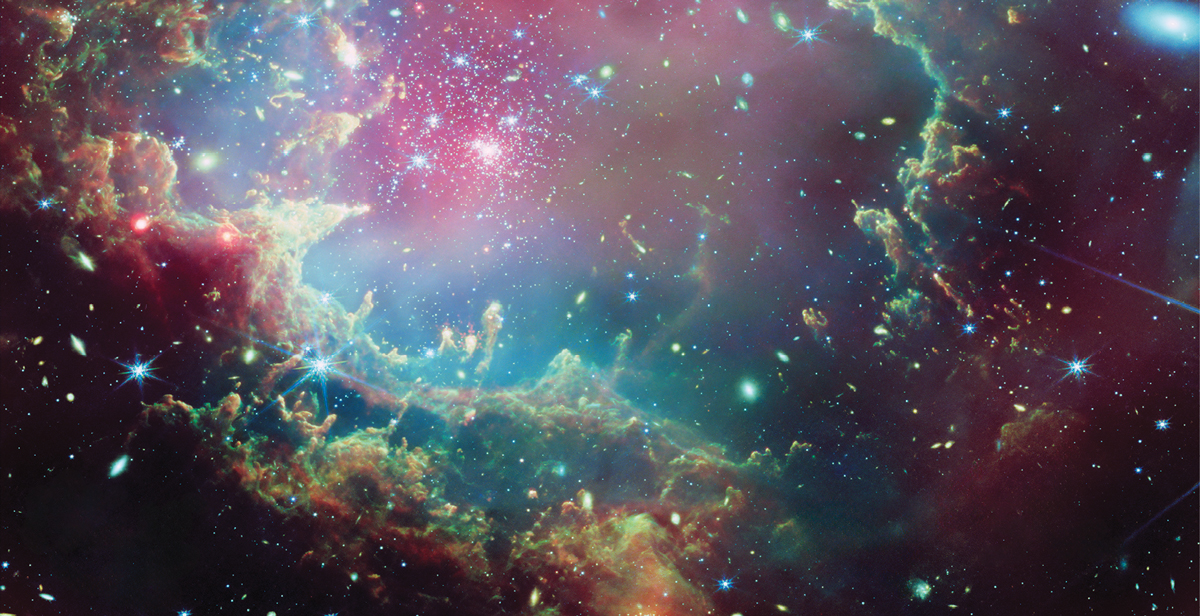
UV radiation and stellar winds from the young star cluster NGC 602 have created an expanding hole of low-density gas in the surrounding nebula. (Image composite: x-ray image from NASA/CXC; IR image from ESA/Webb, NASA and CSA, P. Zeidler, E. Sabbi, A. Nota, and M. Zamani; image processing by NASA/CXC/SAO/L. Frattare and K. Arcand.)

The birth of stars is a complex process. Far from being an isolated event, star formation is strongly influenced at every stage by the surrounding dust and gas that make up the interstellar medium (ISM) in a galaxy. And those new stars also dramatically shape their galactic environments through processes known collectively as stellar feedback. That complexity is on display in the Small Magellanic Cloud, a dwarf galaxy that is falling into our own Milky Way. Inside, the young star cluster NGC 602 is rapidly destroying the molecular cloud that birthed it: Hot stellar winds and ionizing radiation from massive stars in the cluster are blasting away the surrounding gas. The changed environment is unlikely to undergo continued star formation, but localized regions that have been compressed are more likely to form a new generation of stars.
Interactions between young stars and their environment are fundamental to the evolution of stars, 1 galaxies, 2 and the greater universe. Turbulence, magnetic fields, and gravitational instabilities can all compress a molecular gas cloud, and that compression, in turn, can trigger a new round of star formation. 3 Yet those same dynamics can also disperse gas and inhibit star formation.
Figure 1.

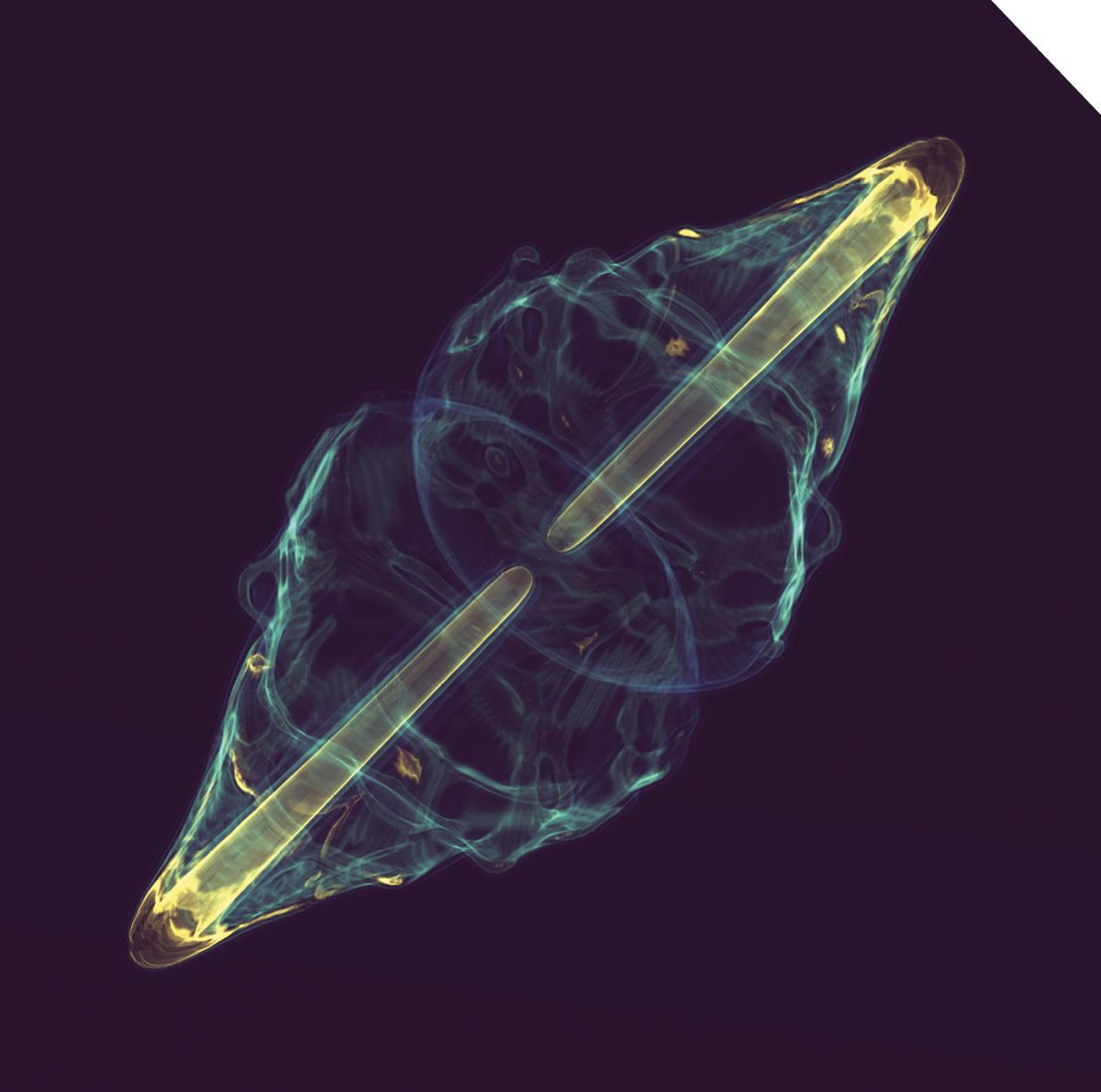
A volume rendering of a stellar jet. Numerical simulations can help visualize an idealized jet. This one shows the distribution of gas around a bipolar protostellar jet caused by a star of 5 solar masses. Shock waves have pushed gas away from the jet. A real jet is much more complex. (Visualization by Sabrina Appel.)

There are multiple mechanisms through which stellar feedback influences the ISM, as detailed in box
The many forms of stellar feedback
As stars evolve, they inject energy and momentum back into their surroundings. The various forms of that feedback influence the interstellar medium (ISM) and subsequent generations of stars. Stellar feedback is a catchall term that encompasses several processes.
Photoionizing radiation. Massive stars emit intense UV radiation that ionizes and heats surrounding gas, creating ionized areas known as H II regions. By altering the gas temperature and pressure, the radiation can both trigger and inhibit star formation, depending on the local conditions. H II regions are often seen around young star clusters and can drive complex interactions in the ISM.
Radiation pressure. Radiation pressure from young, massive stars can push against the surrounding gas, particularly dust grains, and affect gas distribution and dynamics. The pressure can disperse star-forming regions or compress gas in other areas, potentially initiating new star formation. The influence of radiation pressure becomes significant when massive stars exert enough force to disrupt gas clouds, thus reshaping the stars’ environment.
Stellar winds and jets. Stellar winds, particularly from massive stars, inject momentum and energy into the ISM. They can carve out cavities in the surrounding gas, thereby creating in clouds such structures as bubbles and shells that impact the formation of new stars. Additionally, young stars often produce jets that collide with nearby gas, reshape the stars’ natal environments, and affect the formation of nearby stars.
Supernovae. When massive stars—specifically those with a mass greater than about 8 solar masses (M☉)—end their lives in supernova explosions, the shock waves release vast amounts of energy and material throughout the ISM. The explosions can compress nearby gas and lead to new star formation, or they can disperse gas and inhibit star formation in the vicinity.
Cosmic rays. High-energy particles accelerated primarily by supernovae but also by other energetic processes can ionize gas and influence its temperature and pressure. Such cosmic rays are often considered as a separate form of feedback from supernovae because they can penetrate deep into molecular clouds, where other forms of feedback cannot reach, and affect the chemistry and dynamics of star-forming regions.
Star-formation inhibition
The effects of stellar feedback range from triggering individual star-forming sites in a molecular cloud to setting the stage for later generations of stars across an entire galaxy. Feedback mechanisms are critical in driving the dynamics of gas. By regulating the availability of gas on small and large scales, they shape galaxy evolution as much as accreting flows of gas from outside the galaxy do.
The formation of a generation of stars in a molecular cloud takes only a few million years, a brief span of time when compared with the many-billion years that a star like our Sun lives. In fact, Sun-like stars are barely considered to be stars in their first few million years because hydrogen has not yet begun to fuse in their cores. In contrast, stars of more than 8 solar masses (M☉) evolve faster and take only a few hundred thousand years to initiate nuclear fusion in their cores. They are already radiating starlight while the surrounding molecular cloud is still forming additional stars.
Those massive stars, however, can quench nearby star formation. Because of their high surface temperatures, they emit significant UV radiation that is readily absorbed by gas and dust grains in the surrounding ISM. 4 The transferred energy heats and ionizes the atoms and molecules, and the transferred momentum simultaneously imparts an outward force. Both effects prevent further star formation. The thermal pressure from the hot, ionized gas provides support against self-gravitational collapse and drives the expansion of ionized bubbles. The outward force pushes dense gas away from star-forming sites.
Additionally, the UV radiation gets absorbed by metal ions—those heavier than hydrogen—in the atmosphere of massive stars. The ions’ large effective cross sections result in significant forces that launch stellar winds exceeding 3000 km/s. When the winds slam into the surrounding ISM, they produce shocks and generate bubbles hotter than 107 K that expand and impart significant momentum against gravitational collapse.
Feedback from less massive stars also moves gas away from where they were formed, albeit on a more local scale. A young star is surrounded by a disk of gas that rotates because of conservation of angular momentum. Strong magnetic fields near the protostar can funnel gas into powerful outflows, directed perpendicular to the disk. Those outflows can reach speeds of a few hundred kilometers per second and take on a biconical shape, as seen in figure
Protostellar outflows expel gas that would otherwise contribute to the growth of the star and impart momentum to the surrounding region; they thus can potentially cut off the disk’s gas supply. As a result, they play a crucial role in regulating the final mass of stars. But because of the outflows’ narrow geometry and limited momentum, their effects are mostly confined to the immediate region.
Collectively, the radiation and winds from clusters of young, massive stars in the same stellar nursery are strong enough to create large-scale expanding bubbles that halt star formation locally and across entire molecular clouds. 5 , 6 The destructive shredding of such molecular clouds is stunning. As seen in the opening image, the dense portions of clouds are blown away and have evaporated, revealing the young star cluster inside.
But it’s not all bad news for future star formation: The interaction of expanding bubbles with the surrounding ISM also produces localized compression that can trigger new sites of star formation. The Pillars of Creation in the Eagle Nebula are an iconic example of that phenomenon. The prevailing view among astronomers is that triggered star formation is localized and that the overall impact of radiation and stellar-wind feedback is in limiting the fraction of gas in a molecular cloud that can form stars. The remainder of the gas is dispersed elsewhere in the galaxy, where it may eventually cool, condense, and be recycled to form stars.
Subsequent generations of stars are crucially affected by violent stellar feedback in the form of supernovae. The most massive stars—those with masses greater than about 8 M☉—begin to exhaust their fuel for nuclear fusion when they are a few million years old. After using the available hydrogen in their cores, those stars rapidly consume more-massive elements in an attempt to sustain fusion. Ultimately, they are unable to support themselves against the crushing pressure of gravity. The core collapses and triggers a supernova, one of the most violent types of explosions in the universe. A core-collapse supernova produces cosmic rays and injects into the ISM about the same amount of energy that our Sun produces in 8 billion years. The explosion distributes heavier metals throughout the galaxy, and subsequent generations of stars can form with those materials already incorporated.
Figure 2.

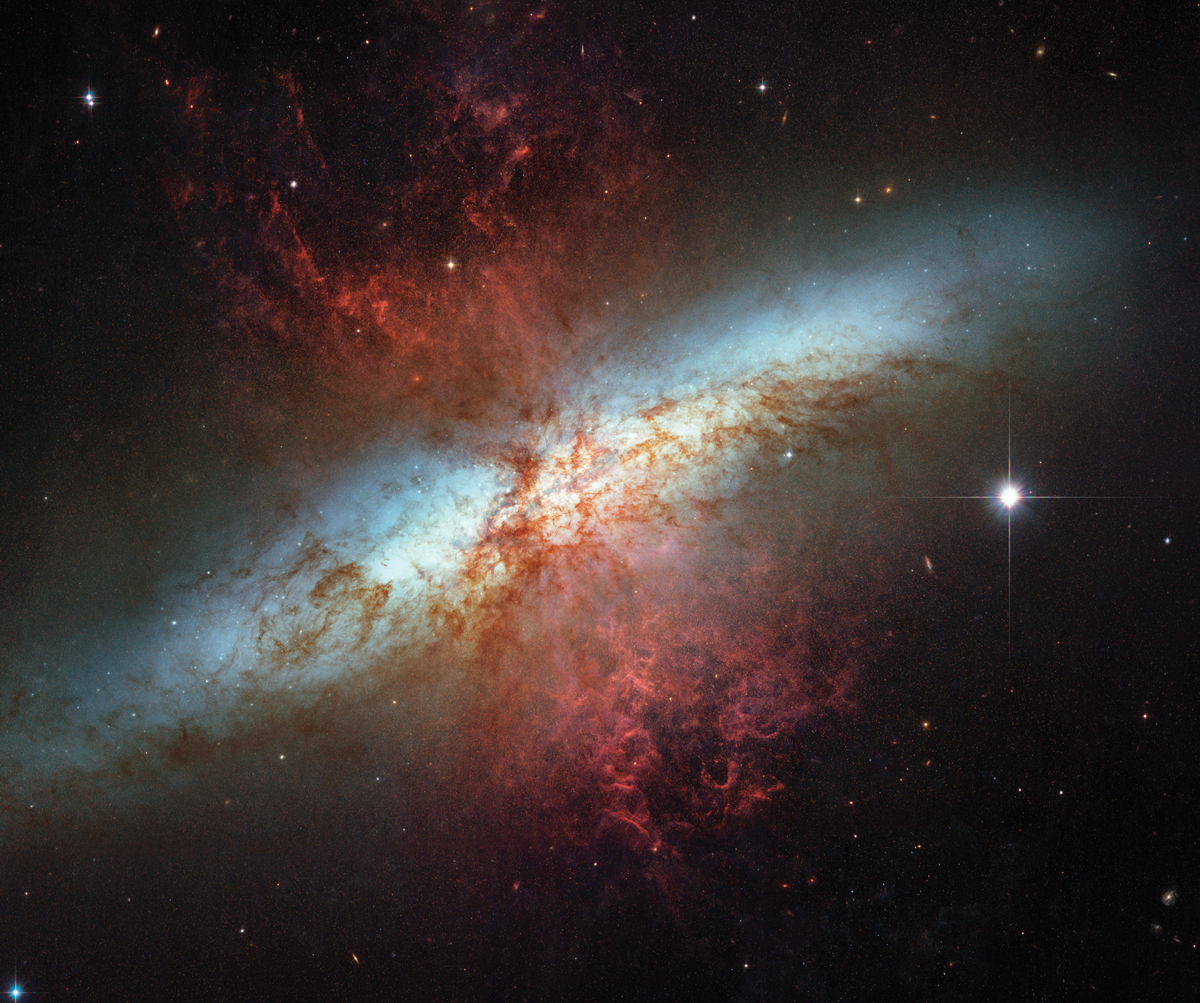
Thousands of supernovae are exploding nearly simultaneously in the nearby galaxy Messier 82. The supernovae are expelling hot hydrogen gas (red) and dust from the galaxy. Messier 82 is undergoing a massive burst of star formation in its center, causing the outflows. (Image from NASA, ESA, and the Hubble Heritage Team/STScI/AURA.)

Explosive regulation
Star formation, in its strictest sense, is the result of gravity compressing gas to ultrahigh densities in clouds. Were gravity left to its own devices, that process would occur 50–100 times as fast as we observe in the nearby universe. 7 The relative inefficiency of star formation that we see in most galaxies today is because of energy and momentum injected into the system by feedback that opposes gravity.
Supernovae are incredibly efficient at returning energy to the ISM. Over the course of a few days or weeks, the supernova explosion of a single star releases more energy in its burst of light and high-velocity ejecta—which can approach 10% of the speed of light—than the light output of entire galaxies over the course of weeks or months. (Locally, the Crab Nebula is a remnant of one such explosion; when the supernova occurred in AD 1054, it shone so brightly that it appeared briefly as a star in the daytime sky.) As shock waves from supernovae expand into the surrounding ISM, they sweep up gas and dust into a swiftly moving shell that imparts energy and momentum back into the ISM.
The rapid influx of energy from only a small number of supernovae is sufficient to power the dissipation of turbulent energy throughout the ISM on galactic time scales. A mere trickle of star formation is required to maintain a balance between the pull of gravity and the stirring action of turbulence on the scale of kiloparsecs. Thankfully, less than 1% of stars end their lives as supernovae; most exhaust their hydrogen cores in a more tranquil fashion. Too many supernovae would tip the balance and lead to galaxies tearing themselves apart via explosions.
One spectacular feature of supernova feedback comes from processes of star formation and stellar feedback on smaller scales. Stars form around the same time in tight clusters in a molecular cloud, so supernovae are also clustered in time and space. For example, the largest molecular clouds span a few hundred light-years and form stars with a combined total mass of 10 000–100 000 M☉. From those stars, hundreds to thousands of supernovae are expected. The explosions often occur in such tight temporal and spatial proximity that the shock fronts overlap to form a single expanding shell, known as a superbubble. 8
Unlike an individual supernova, a superbubble can grow to fill the entire height of the ISM. When a bubble reaches the edge of the galaxy and ruptures, it drives dramatic outflows of multiphase gas that, in turn, propels matter thousands of light-years outside the galaxy, as seen in figure
Feedback from active galactic nuclei
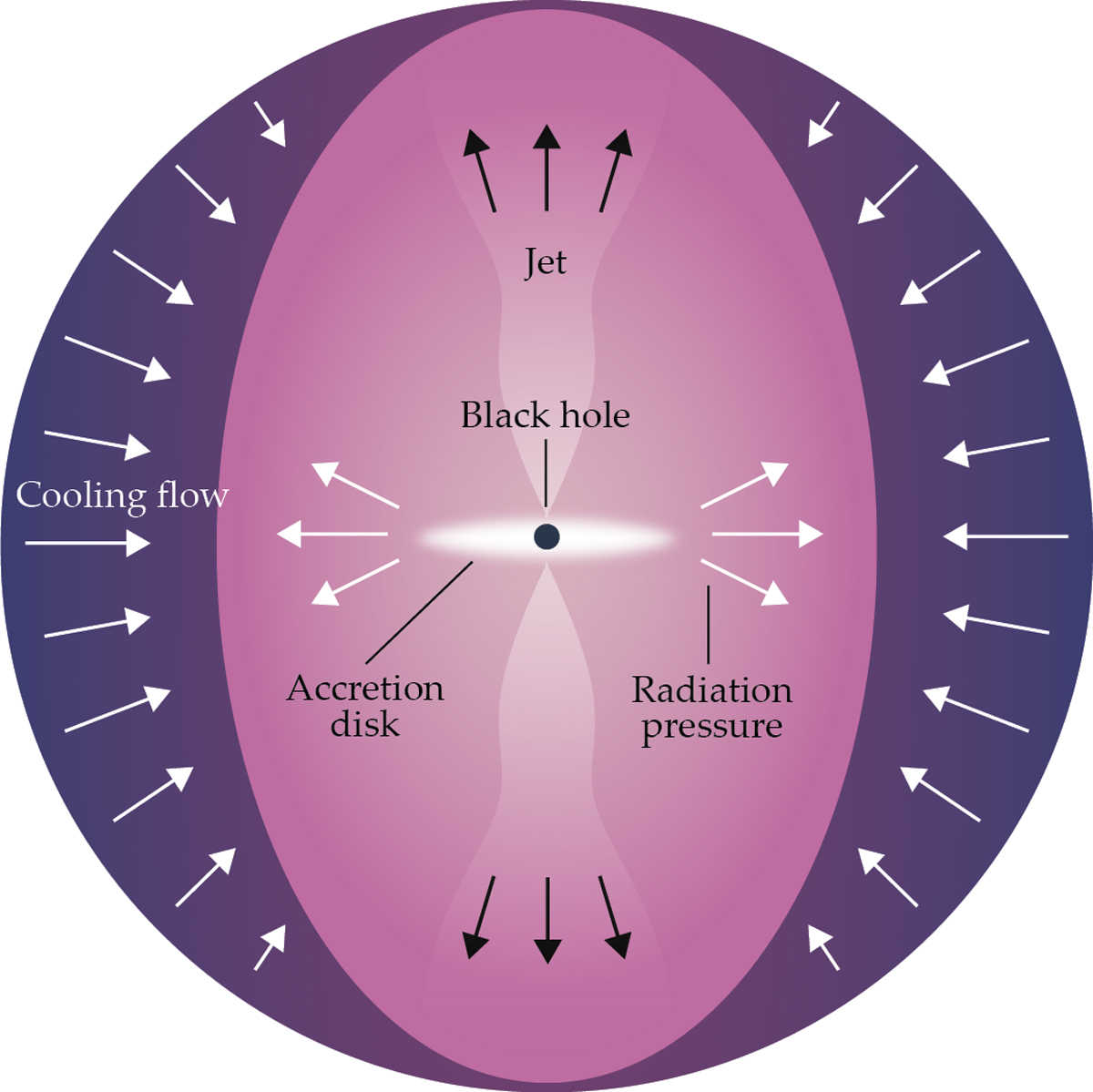
In addition to stellar feedback processes, feedback from active galactic nuclei (AGNs) is one of the most significant mechanisms shaping the evolution of galaxies. It often regulates star formation on larger scales than stellar feedback alone. AGNs are disks of material that surround supermassive black holes at the centers of galaxies and expel copious amounts of radiation. The two primary types of AGN feedback, distinguished by the dominant form of energy released, are the radiative (or quasar) mode and the mechanical (or radio) mode.
High-luminosity AGNs release most of their energy through intense radiation from the accretion disk; that radiation heats the surrounding interstellar medium (ISM) in the galaxy and circumgalactic medium (CGM) in the galaxy’s immediate vicinity. The heat prevents the CGM from cooling and collapsing into the galaxy and, subsequently, from creating star-forming regions. Additionally, the radiation can drive powerful outflows of gas and expel the gas from the galaxy altogether. Those outflows can remove large reservoirs of cold gas, effectively limiting the fuel necessary for stars to form. That quenching is responsible for transforming blue, star-forming disk galaxies into elliptical galaxies colloquially referred to as “red and dead.” Such galaxies are characterized by little to no new star formation because of the lack of cold CGM gas falling into the galactic ISM.

(Illustration by Jason Keisling.)

In the mechanical mode, AGNs eject high-velocity jets of relativistic particles and winds from the vicinity of the supermassive black hole. The jets can extend well beyond the galaxy, into the surrounding CGM, and even into the intergalactic medium (IGM) that permeates the space between galaxies. The interaction of the jets with the surrounding gas creates shock waves that heat the CGM and IGM, further preventing the cooling and inflow of gas. By heating and disrupting the CGM, AGN feedback can prevent cold gas from replenishing the galaxy’s ISM, effectively halting star formation in the galaxy.
AGN feedback is a key factor in galaxy evolution models and causes many massive, gas-rich galaxies to cease forming stars. Without fresh cold gas entering a galaxy, star formation cannot continue, and the galaxy transitions into a quiescent phase. Furthermore, AGN feedback is believed to regulate the size and structure of galaxies, playing a role in limiting the growth of the most massive ones by curbing star formation and expelling gas.
Spiral galaxies like the Milky Way have maintained a consistent increase in their stellar mass for more than half of the age of the universe. Scenarios that consider different gas dynamics underscore how delicate the balance was that created the universe we see today. If a galaxy didn’t have any additional gas supply, the gas reservoirs needed to form new stars would have been depleted within a few billion years. The intergalactic medium—gas outside the galaxy—is able to supply gas at a rate comparable to the rate that gas gets incorporated into stars and so maintains a consistent amount of gas in the ISM. Without supernova feedback, however, all the gas would be converted to stars in a few tens of millions of years, a time scale not even reaching back to the extinction of dinosaurs on Earth. Simply put, gas would not last long enough to form an ISM. There would be almost no gas in galaxies and no active star formation; nearly all observable matter in the universe would be found in stars.
In some extreme environments with exceptionally large amounts of gas in a local region, stellar feedback can fail to regulate star formation: The sheer amount of collapsing material around a young, massive protostar is able to absorb the effects of photoionizing radiation, stellar winds, and nearby supernovae without being pushed away or the protostar dissipating.
Figure 3.

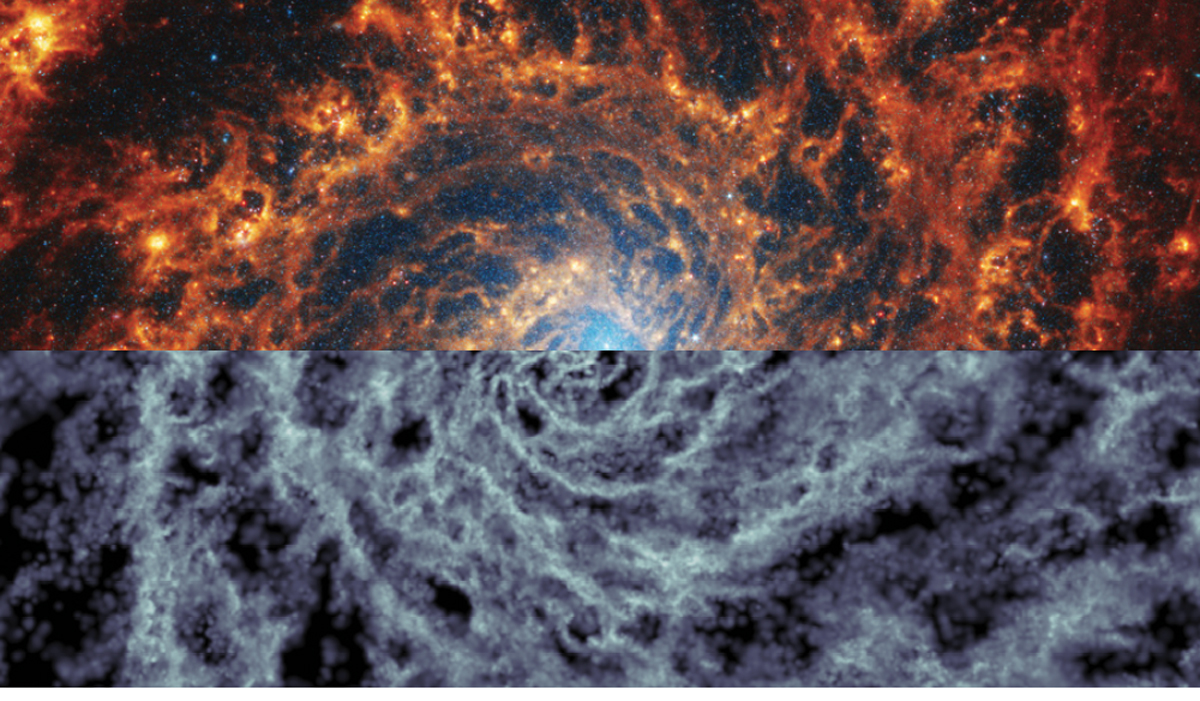
Simulations versus observations. New simulations, such as those by the FIRE (Feedback in Realistic Environments) collaboration,

In such conditions, star formation is accelerated. Gas collapses into stars until so much is consumed that the remaining material can no longer fully absorb the momentum and energy of the stellar feedback. At that point, the dregs are finally blown away, and stars no longer form. The stars do not tend to drive massive outflows because their feedback has been largely contained. Such exotic cases were likely a common mode of star formation in the early universe and may have produced the ancient globular clusters seen in our galaxy. 9
Challenges of simulating feedback
The multiscale nature of feedback-regulated star formation presents significant numerical challenges for simulations. Ideally, a model would accurately capture processes ranging from small-scale turbulence to galaxy-wide feedback effects, a span of at least nine orders of magnitude. Simultaneously resolving the physics across that range is far beyond the limits of current technology. Researchers often focus their efforts on a couple orders of magnitude at a time to maximize the ability of their models to resolve different aspects of stellar feedback. At each scale of simulation—from individual star-forming clouds to whole galaxy clusters—researchers must choose how to treat the physical processes of feedback and at what resolution to apply them.
Various groups have found success with that approach. Simulations that model large volumes with comparatively coarse resolution in any individual galaxy have been able to match many of the properties of galaxy populations observed in massive surveys, such as the Sloan Digital Sky Survey. Groups whose simulations focus on individual galaxies have pushed the goalposts further: They match the observed properties and structures within galaxies. Figure 3 shows one such comparison between a nearby spiral galaxy imaged with the James Webb Space Telescope and dense gas and dust structures of a spiral galaxy from a simulation by the FIRE (Feedback in Realistic Environments) collaboration. 10 On still-smaller scales, theorists who look at patches of galaxy disks or at individual star-forming clouds have begun to advance our fundamental understanding of the interplay between star formation and stellar feedback on the scale of individual stars. The IR imaging capabilities of Webb have opened up vital comparison observations at all scales.
Feedback in its various forms is a critical part of the story of star formation and the evolution of galaxies. As a catchall term for the physical processes that return energy, momentum, and mass back to the surrounding gas, feedback covers many length and time scales, from parsecs to megaparsecs and from hours to hundreds of millions of years. Astronomers and astrophysicists have spent the better part of the past century piecing together the impact and centrality of feedback and are approaching the ability to model it accurately on galaxy scales.
This article was originally published online on 16 May 2025.
References
1. D. Prialnik, An Introduction to the Theory of Stellar Structure and Evolution, 2nd ed., Cambridge U. Press (2009).
2. H. Mo, F. van den Bosch, S. White, Galaxy Formation and Evolution, Cambridge U. Press (2010).
3. E. Schinnerer, A. K. Leroy, Annu. Rev. Astron. Astrophys. 62, 369 (2024).https://doi.org/10.1146/annurev-astro-071221-052651
4. R.-P. Kudritzki, J. Puls, Annu. Rev. Astron. Astrophys. 38, 613 (2000))https://doi.org/10.1146/annurev.astro.38.1.613
5. B. G. Elmegreen, C. J. Lada, Astrophys. J. 214, 725 (1977).https://doi.org/10.1086/155302
6. G. Liu et al., Astron. Astrophys. 696, A117 (2025).https://doi.org/10.1051/0004-6361/202452774
7. P. F. Hopkins, E. Quataert, N. Murray, Mon. Not. R. Astron. Soc. 417, 950 (2011))https://doi.org/10.1111/j.1365-2966.2011.19306.x
8. M. E. Orr et al., Astrophys. J. 932, 88 (2022).https://doi.org/10.3847/1538-4357/ac6c26
9. M. Y. Grudić et al., Mon. Not. R. Astron. Soc. 483, 5548 (2019).https://doi.org/10.1093/mnras/sty3386
10. P. F. Hopkins et al., Mon. Not. R. Astron. Soc. 480, 800 (2018).https://doi.org/10.1093/mnras/sty1690
More about the authors
Matt Orr and Shyam Menon are postdoctoral fellows working with Blakesley Burkhart at Rutgers University in New Brunswick, New Jersey, and at the Flatiron Institute in New York City to study the process of star formation and how it is influenced by stellar feedback, physical mechanisms, and magnetic turbulence.