Science in Ukraine and in Iraq: Two sides of the same coin
DOI: 10.1063/PT.3.5227
Toni Feder deserves kudos for her report on the impact of the war in Ukraine on science and scientists in that country and its wider reverberations across physics research (see Physics Today, June 2022, page 22 ). The topic of the most recent invasion, which was launched by Russia in February 2022, rightfully took pride of place in that issue, with a photograph of a demolished Ukrainian school displayed on the cover. Science is a universal enterprise, and those engaged in it are its trustees. It is proper to speak up in support of scientists who face impediments and restrictions on their activities.
Physics Today also on many occasions supported scientists in the Soviet Union during that era by publishing voices speaking out against persecution. But as we mark the 20th anniversary of the US invasion of Iraq, I want to point out that the magazine has been mostly silent when it comes to the obliteration of Iraqi science, physics included, and the persecution and murder of scientists in the country.

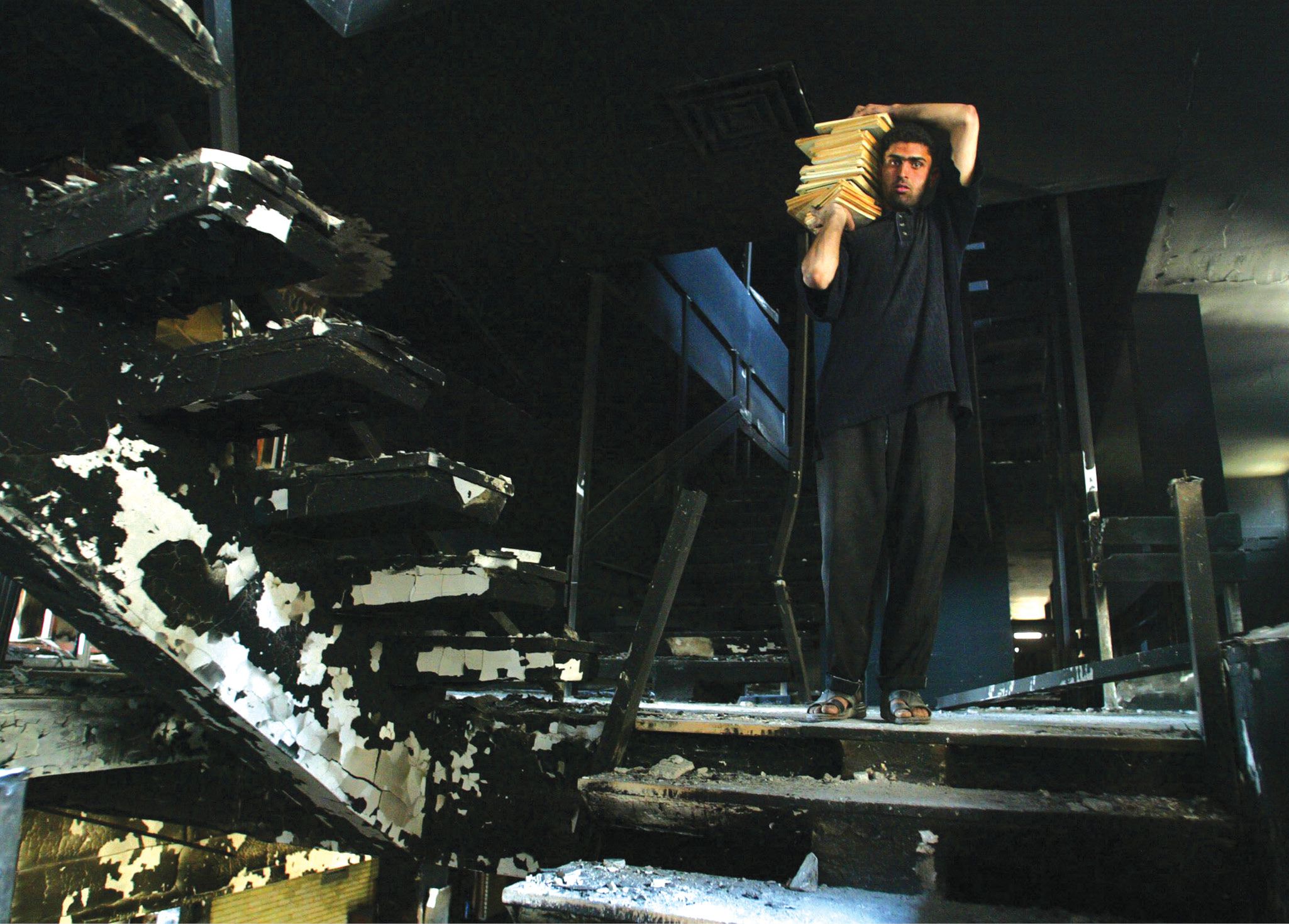
A man gathers books from the ruins of Baghdad’s National Library and Archive during the US invasion of Iraq in April 2003. (Image from Gleb Garanich/Reuters/Alamy Stock Photo.)

Iraq used to boast a vibrant scientific community, but with the onset of the brutal Iran–Iraq War (1980–88), academic activity in the country declined: “Promising students ceased being sent abroad to the US and the UK for their higher degrees, and funds dried up for purchases of books and journal subscriptions,” wrote the Islamic and Middle East specialist Jeff Spurr (as quoted in Physics Today, November 2005, page 24 ). Scores of young minds were killed in the war, and that was happening with the support of the US, which was operating under a “the enemy of my enemy is my friend” mindset.
After the Persian Gulf War (1990–91), Iraq suffered under a dictatorship and crippling sanctions from the United Nations. Many scientists attempted to flee, though travel was severely restricted. The academic enterprise in the country was gutted. Iraq could not even import pencils because they contained graphite and were therefore classified as a material with potential military applications.
The US-led war that began in 2003, initiated partially on the false grounds that Iraq possessed weapons of mass destruction, added insult to injury. It unleashed violence that specifically targeted scientists. By January 2005 about 300 university administrators and academics had been murdered, 1 including a former president of the University of Baghdad, Mohammed al-Rawi, who was killed in his medical clinic. Iraq, its academic institutions, and its scientists continue to suffer the consequences of misguided US foreign policies.
The effects on science caused by the wars in Ukraine and Iraq are two sides of the same coin. I applaud Physics Today for drawing attention to the travails of scientists across the globe, but I encourage inclusivity in that reporting.
References
1. C. Crain, “Approximately 300 academics have been killed,” USA Today, 17 January 2005.
More about the authors
Muthana Al-Ghazi, malghazi@uci.edu Tustin, California.