The birth of electrostatics
DOI: 10.1063/1.2364258
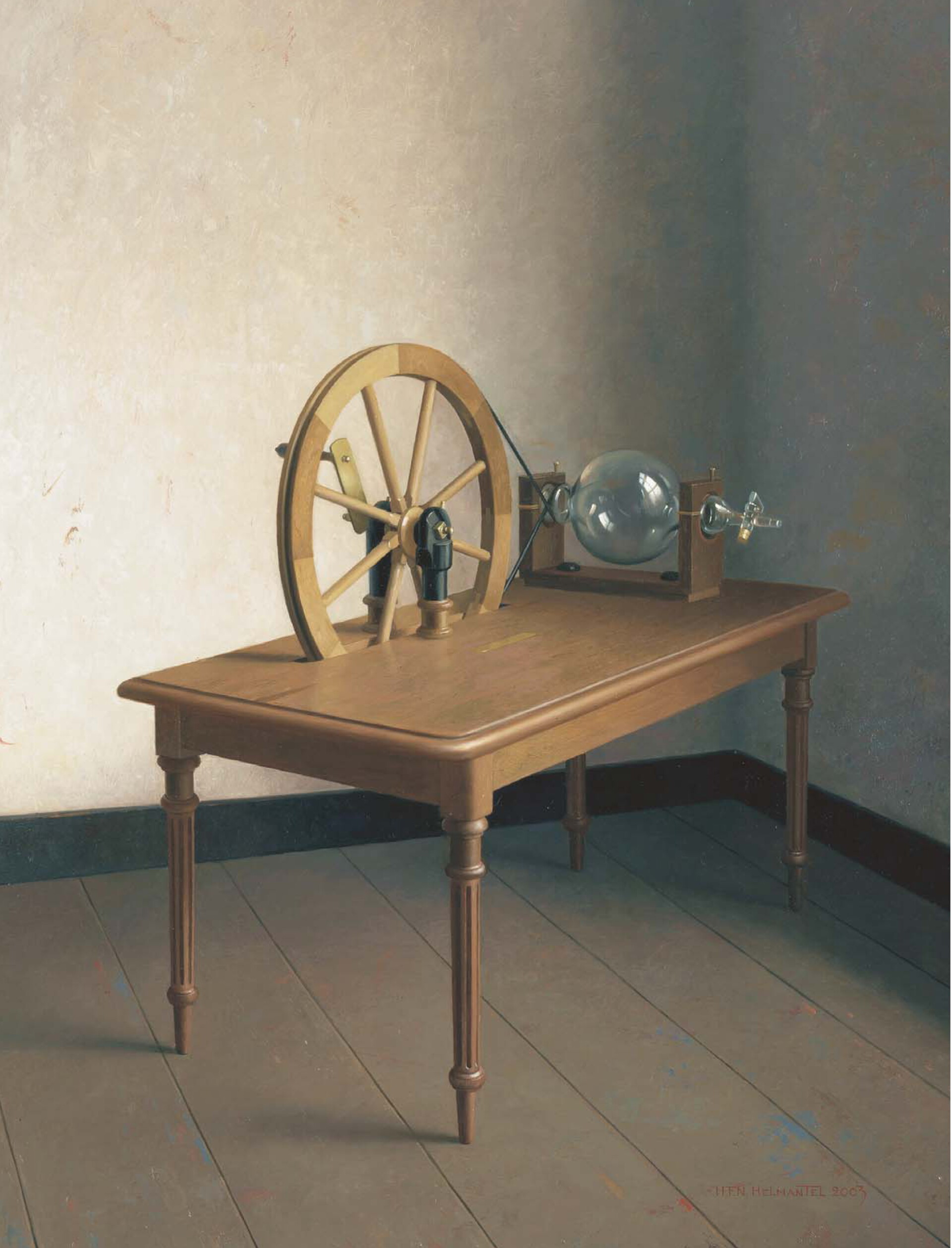
In 1676, French scientist Jean Picard noticed that when he moved his mercury barometer in the dark, a faint, diffuse, purplish light appeared around the meniscus—but only when the mercury in the tube moved downward, enlarging the vacuum space. Only some of the attempts to reproduce the effect were successful, and interest lapsed until 1700, when John Bernoulli at the University of Groningen demonstrated the importance of having the mercury purified and the meniscus clean. Bernoulli scaled up the effect by using a large glass vial evacuated with an air pump and sealed with a cork and wax; he called the vial his “perpetual phosphorus.” Six years later, in 1706, Francis Hauksbee in London went further, hooking up a glass globe, evacuated and partly filled with mercury, to a driving belt. Subsequent experiments showed similar effects with pieces of amber (“elektron” in Greek) inside the revolving globe and with dry sheep skin outside it. Furthermore, dry hands drew small sparks from an unevacuated globe. These early demonstrations of static electricity fueled the century’s investigations into the subject. Today’s Van de Graaff generator is a direct descendant.
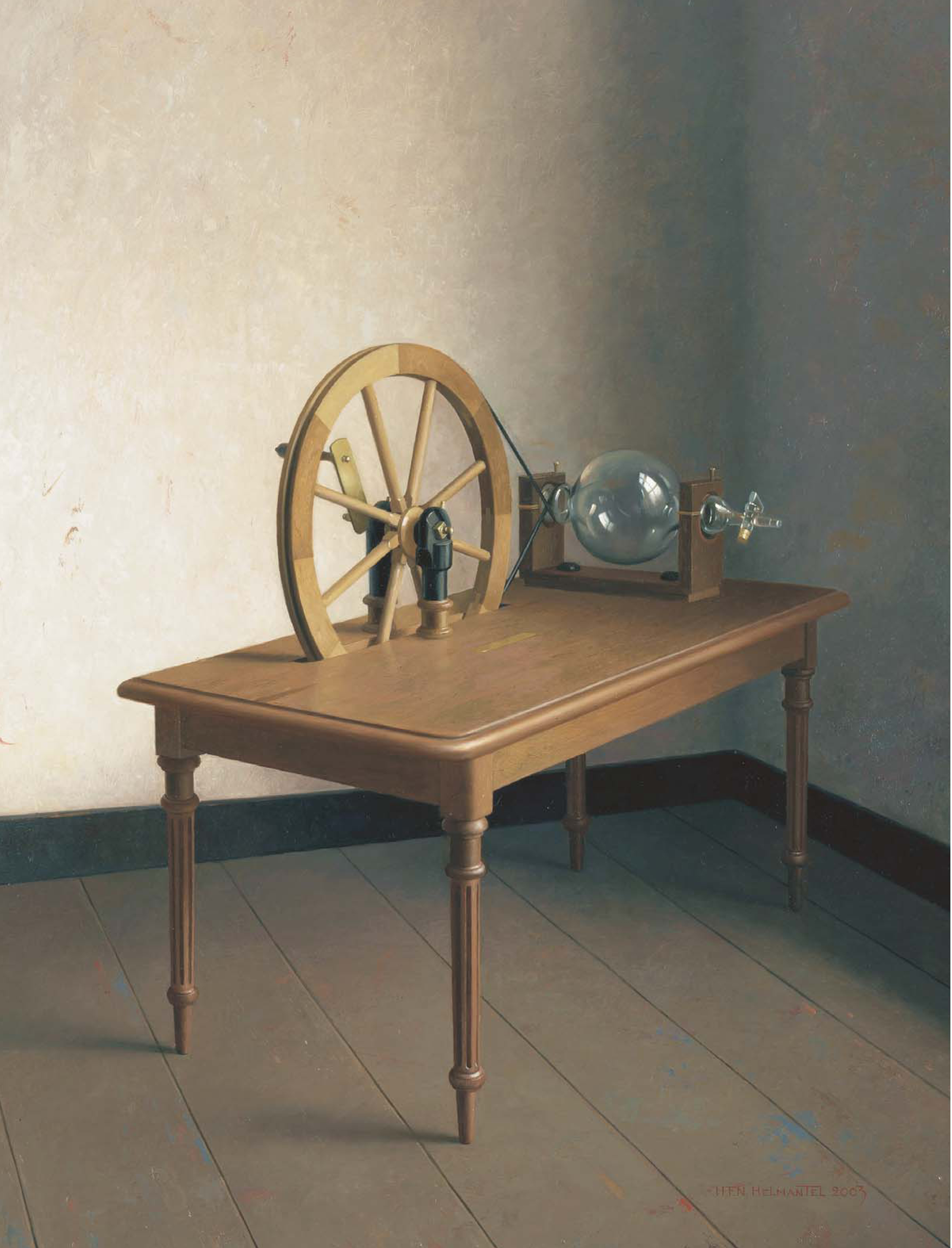
This painting by Henk Helmantel (www.helmantel.nl ) shows a replica of an 18th-century electrical machine similar to the one built by Hauksbee. At the University of Groningen, Henk Kubbinga designed the replica, and Rob Cornelissen and Geert Fikkers constructed it.
A more complete history is available with the online version of this Back Scatter.
To submit candidate images for Back Scatter, visit www.physicstoday.org/backscatter.html .

(Image courtesy of the University of Groningen and Art Revisited, www.artrevisited.com.)