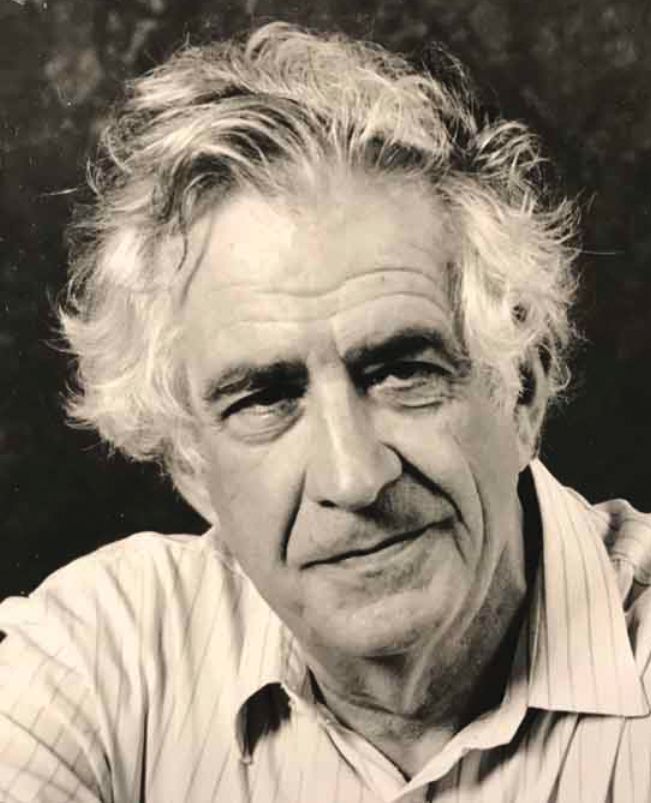
Wolfgang Stodiek
DOI: 10.1063/PT.3.4841
Plasma physicist Wolfgang Stodiek died on 7 March 2021 in Bielefeld, Germany, the town of his birth. Stodiek spent most of his career at the Princeton Plasma Physics Laboratory, where he pioneered much of the research on the biggest fusion devices of the day—the C-Stellarator, the Symmetric Tokamak (ST), and the Princeton Large Torus (PLT). His scientific contributions drove the world’s magnetic fusion program for many years.

Wolfgang Stodiek
PRINCETON PLASMA PHYSICS LABORATORY

Stodiek’s scientific career did not start auspiciously. Born on 22 May 1925, he was drafted into the German army at age 17 to be an electronics technician. Toward the end of World War II, he fled west across a wrecked bridge over the Elbe River intent on evading the Red Army and being captured by British soldiers, who immediately put Stodiek to work preparing military trucks for civilian use. He subsequently studied physics at Georg-August University in Göttingen, but he never finished his PhD.
Stodiek joined the Max Planck Institute for Physics under Werner Heisenberg, who had formed a small fusion group. In 1958 in Geneva, Stodiek snuck into the International Atomic Energy Agency Conference, where attendees discussed declassified studies of fusion energy. Motivated by his detailed conversations with Project Matterhorn team members from Princeton University, he traveled to its plasma physics laboratory in 1959 for a year’s commitment. Instead he stayed until he retired in 1996. He may not have been fluent in English when he arrived, but he learned the language quickly, paying his colleagues a nickel for every new word they taught him.
At Princeton, Stodiek first joined a team working on the B-3 Stellarator. The team members determined that plasmas heated ohmically by an electric current had plasma confinement dependent on Bohm’s diffusion—that is, proportional to the ratio of the magnetic field over the temperature of the plasma. In 1961 Stodiek joined the recently completed, larger C-Stellarator, designed by Lyman Spitzer Jr. Working with Donald Grove and others, Stodiek studied plasma energy confinement and many other phenomena over an enormous range of plasmas. They used ohmic heating, electron heating, ion heating, and injection from plasma guns. Stodiek was especially concerned about the losses of energetic ions and by the impact of the magnetic deformations caused by the coils providing the necessary field configuration.
After the Soviet Union demonstrated better performance by its T-3 tokamak, in 1969 Princeton converted its C-Stellarator to the ST. Stodiek planned the conversion and led the engineering team, which completed the project in only four months. The ST demonstrated good plasma performance with better plasma diagnostics than the Soviet Union had available.
While he was managing the ST, Stodiek worked with Harold Furth and others on the specification and initial design of the PLT, which began operation late in 1975. The PLT had twice the linear dimensions of its predecessor.
As head of the PLT operations for many years, Stodiek facilitated the efforts of 10 technical staff, roughly 30 dedicated physicists, and up to 20 visiting scientists. The PLT achieved excellent results from additional heating systems, particularly neutral-beam heating. It reached plasma temperatures of roughly 6 x 10⁷ K, giving the scientific community encouragement for the continued pursuit of fusion.
Stodiek was adroit at overcoming technical difficulties in device operations and thus facilitated the completion of many PLT experiments. He was gifted at finding inexpensive and quick solutions when issues arose with power supplies, coils, cooling systems, or the vacuum vessel. As a result, the PLT team published more than 150 groundbreaking papers on plasma confinement, stability, heating techniques, and plasma–wall interactions.
Although Stodiek should be remembered for his contributions in driving magnetic fusion devices forward, he was also an advocate for and made major contributions to better measurements of high-temperature plasmas. Because the PLT had much higher plasma temperatures than previous tokamaks, making diagnostics of fusion products became more important. Stodiek led the group that developed many neutron- and charged-fusion-product-detecting instruments, x-ray imagers, and spectrometers. All those diagnostic instruments are workhorses in understanding present-day fusion plasmas.
After leaving the PLT in 1981, Stodiek worked on various fusion studies and energy issues. In 2007 he and Elsmarie, his wife, returned to Bielefeld, the German town where they both were born.
Stodiek was rigorous and thorough in his scientific pursuits. Colleagues appreciated his realistic assessment of the difficulties to be encountered on the way to achieving practical fusion energy. His ideas and his understanding of the complexity of the engineering necessary for fusion devices influenced, to a considerable extent, the direction of the Princeton laboratory’s experimental program. He was effective at demolishing overhasty hypotheses and carelessly done experiments. But he nevertheless continued his dedicated pursuit of fusion energy while encouraging others to do the same. His thinking was not always easily understood, but his solutions could always be trusted. He could often be found assisting the engineers, even going so far as to help balance the generators necessary for storing electrical energy.
Stodiek was an avid photographer who specialized in black-and-white portraits. He was a charming and insightful physicist who is deeply missed by his coworkers.
More about the authors
Kenneth M. Young, Princeton Plasma Physics Laboratory, Princeton, New Jersey.
Dale M. Meade, Princeton Plasma Physics Laboratory, Princeton, New Jersey.
James D. Strachan, Princeton Plasma Physics Laboratory, Princeton, New Jersey.