Ukrainian physics journal celebrates a half century
DOI: 10.1063/pt.gtyq.nndi


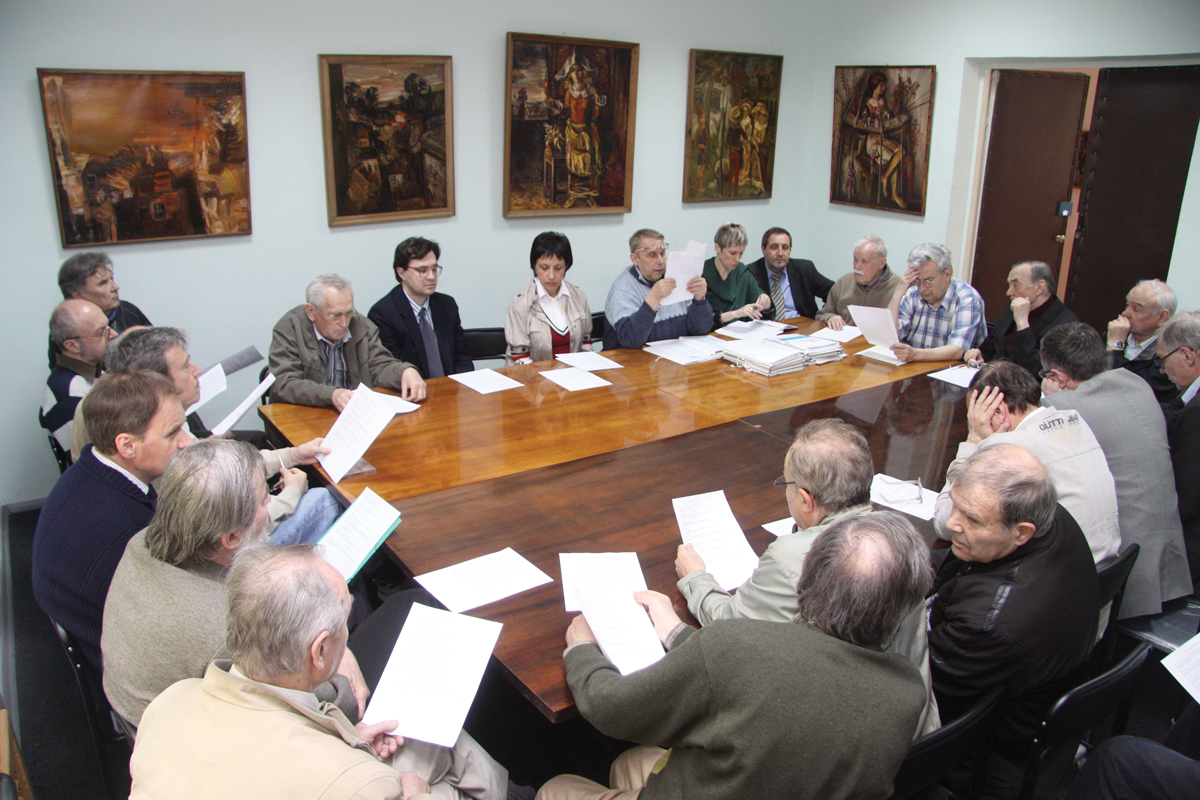
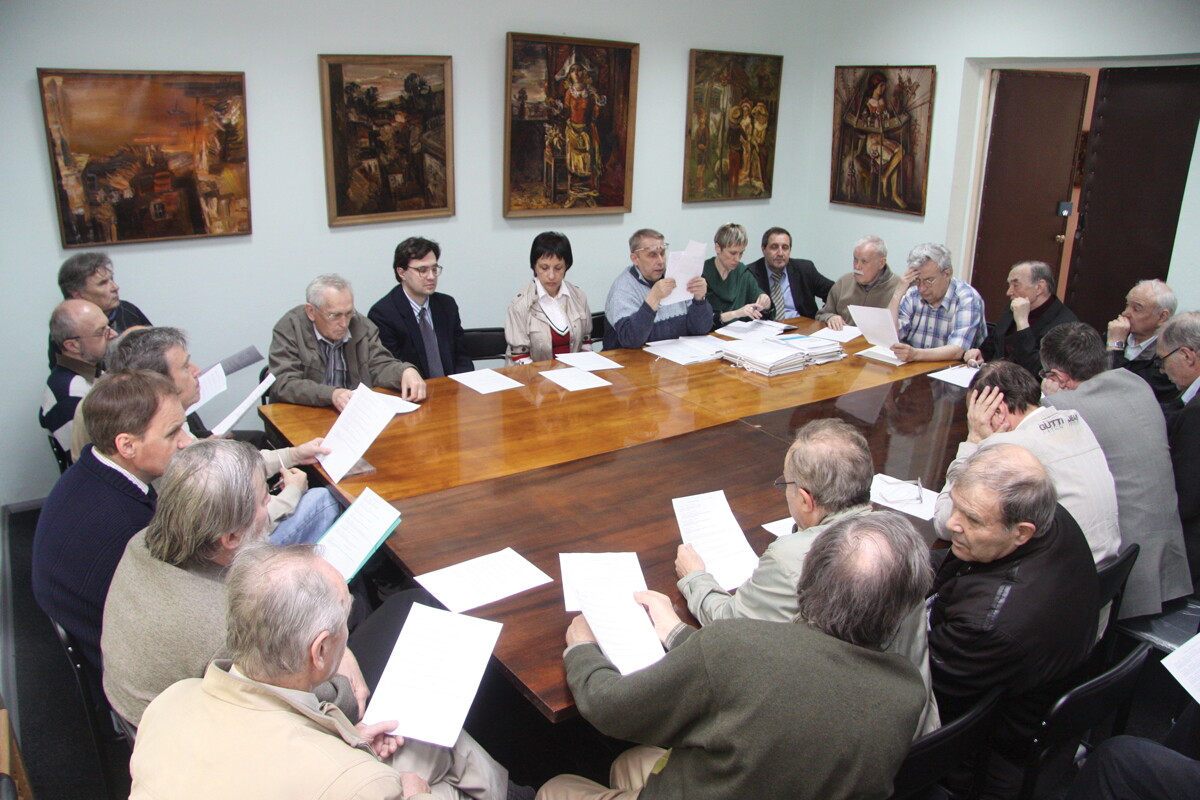
An editorial meeting of the Ukrainian journal Fizyka Nyzkykh Temperatur that took place before Russia’s 2022 invasion of Ukraine. (Photo from Fizyka Nyzkykh Temperatur.)
Not a month has passed since 1975 without the release of a new issue of Fizyka Nyzkykh Temperatur (FNT). The journal, which is published jointly by the B. Verkin Institute for Low Temperature Physics and Engineering and the National Academy of Sciences of Ukraine, marked 50 years in January. It is translated into English and published as Low Temperature Physics by AIP Publishing. (AIP Publishing is owned by the American Institute of Physics, which publishes Physics Today.)
Publishing FNT has been tough in the three-plus years since Russia invaded Ukraine in February 2022. The issues put together in the days and weeks following the invasion were the slimmest in the journal’s history. They were also the most difficult to prepare and publish. That’s according to Yurii Naidyuk, Konstantyn Matsiyevskiy, and Olexandr Dolbyn, respectively the journal’s editor-in-chief, its managing editor, and the acting director of the B. Verkin Institute for Low Temperature Physics and Engineering, where the journal is headquartered. (Ukrainian physicist Boris Verkin founded both the institute and the journal.) The three physicists responded jointly via email to Physics Today’s queries.

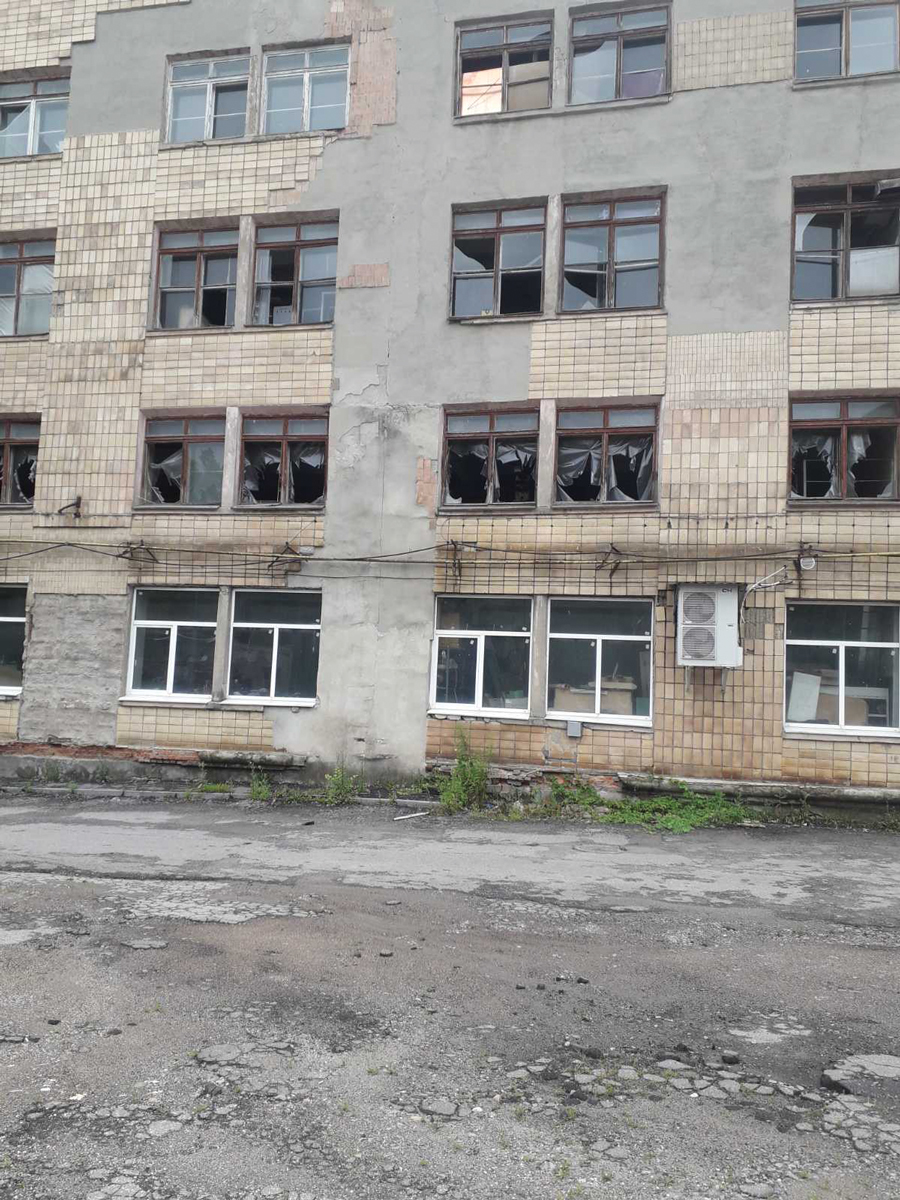
The journal headquarters in Kharkiv was damaged by multiple bombings early in the war. (Photo by Volodymyr Repin, deputy director of the B. Verkin Institute for Low Temperature Physics and Engineering of the National Academy of Sciences of Ukraine.)
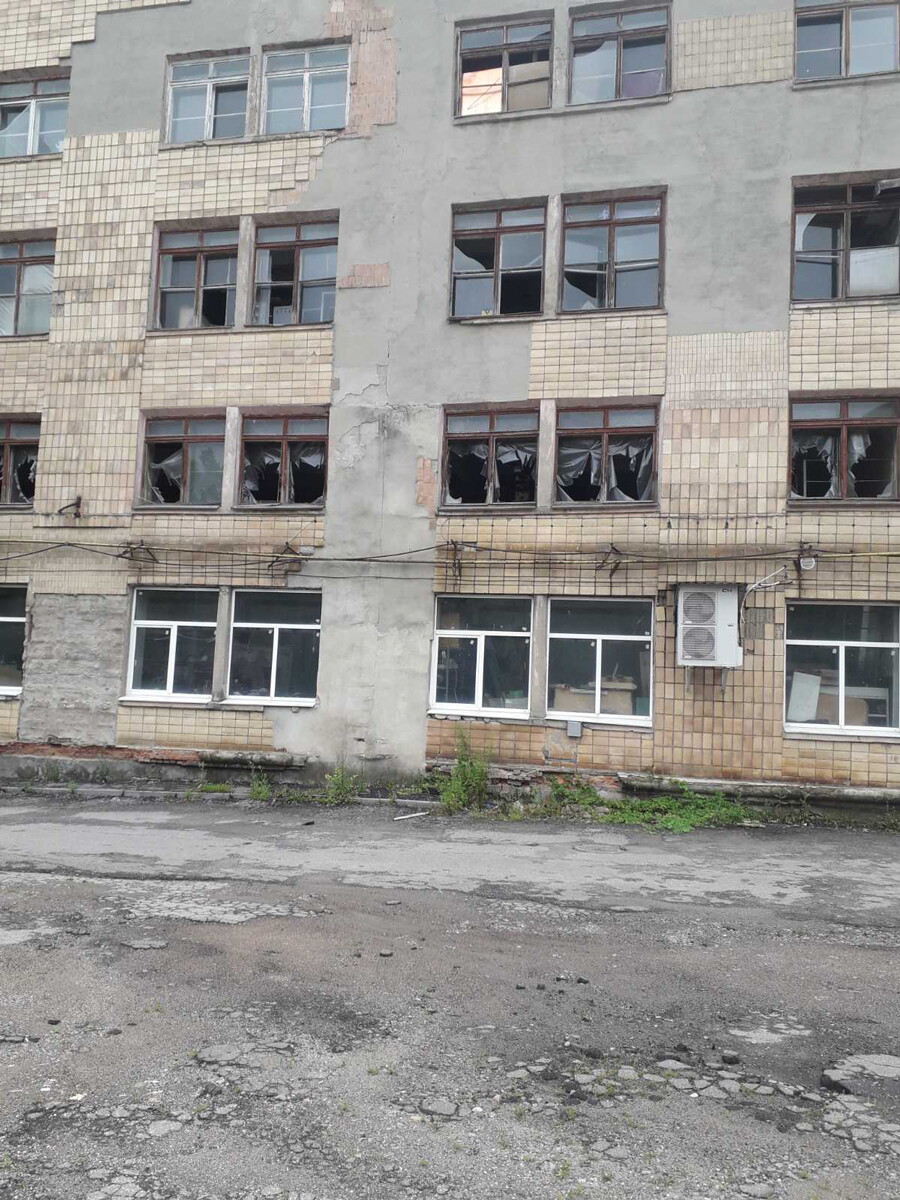
In the first few months of the war, bombs and artillery repeatedly damaged the institute, which is in Kharkiv, some 40 kilometers from the Russian border. More than 500 of the institute’s windows were destroyed, and its buildings were left without heat, electricity, water, or sewage services, according to the three physicists.
Editors and staff first had to “save their own families and children from the daily raids of enemy aircraft and artillery shelling,” the physicists wrote, noting that many employees sought refuge in western cities of Ukraine and in other European countries. For a while, the physicists added, editorial work and the monthly printing of the magazine from “within the walls of the institution was out of the question.” The Institute of Low Temperature and Structure Research of the Polish Academy of Sciences in Wrocław provided editorial space and computer servers for saving data and the journal’s website.
Six months after the invasion, FNT resumed publishing from its Kharkiv headquarters. The bombings and raids continue, and the editorial team is still scattered—in Ukraine, Poland, Switzerland, and beyond. As of press time, FNT had published 477 articles in the three years since the invasion. Authors hail from around the globe, but after the invasion, the journal stopped accepting submissions from Russia and Belarus, the FNT physicists wrote.
Over the half century of its existence, FNT has published some 10 000 articles in areas including quantum liquids, disordered systems, biophysics, and methods in low-temperature experiments. It has featured many special issues, including ones celebrating the centenary of the production of liquid helium (2008), the 30th anniversary of the discovery of high-temperature superconductivity (2016), and advances in quantum materials (2023).
This article was originally published online on 10 March 2025.
More about the authors
Toni Feder, tfeder@aip.org