Singapore, Slovakia host high-school physics competitions
DOI: 10.1063/1.2364238

In July, nearly 400 high-school students from 85 countries turned up to compete in the 37th International Physics Olympiad, which was held in Singapore. Around the same time in Bratislava, Slovakia, 135 students from 25 countries engaged in team “physics fights” at the 19th International Young Physicists’ Tournament (IYPT).
In total, olympiad contestants earned 37 gold, 49 silver, and 82 bronze medals. Indonesia’s Mailoa Jonathan Pradana earned the highest score, while China’s team was the only one to garner all gold medals.
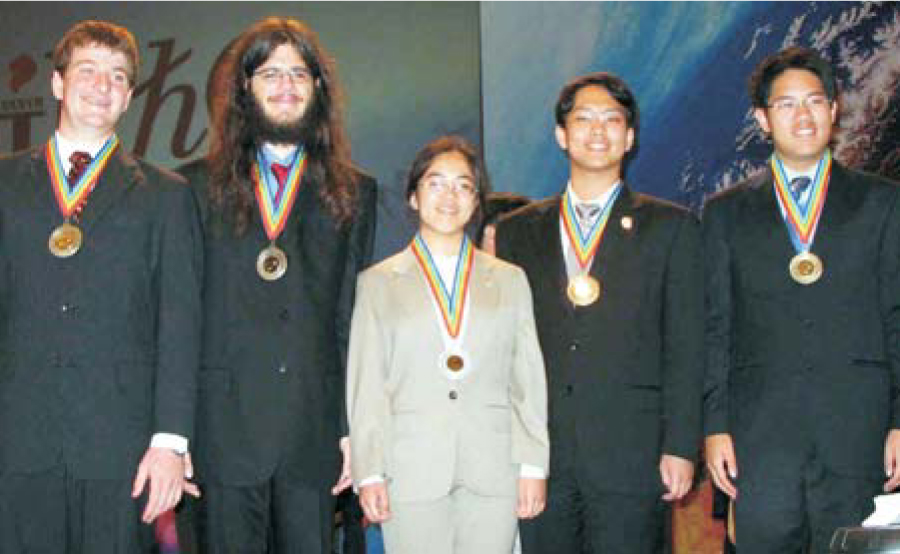
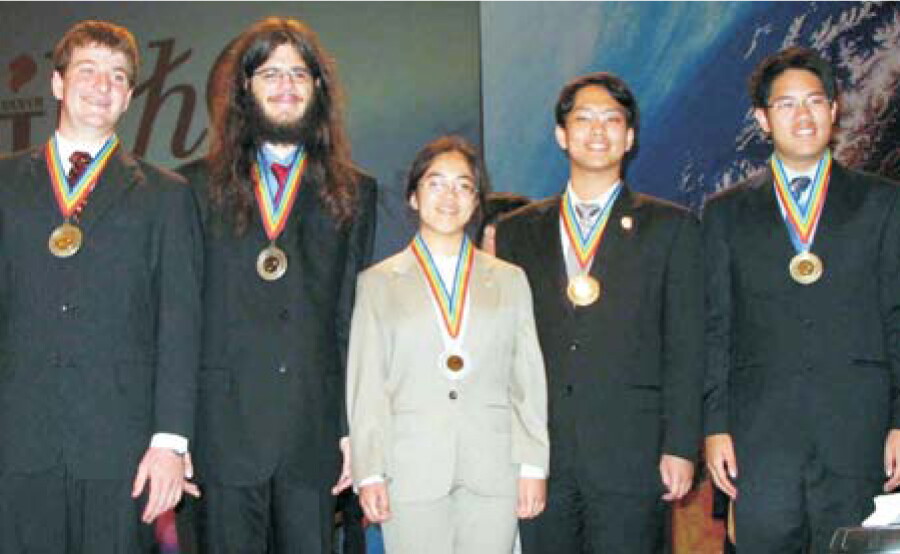
The US team placed second, with Otis Chodosh of Edmond, Oklahoma; Menyoung Lee of McLean, Virginia; William Throwe of Wading River, New York; and Henry Tung of San Diego, California, earning golds, and Sherry Gong of San Juan, Puerto Rico, winning a silver. The US team was sponsored jointly by the American Institute of Physics and the American Association of Physics Teachers.
The teams from Brunei, Cambodia, Ghana, Japan, Jordan, Laos, Macau, and Tajikistan were newcomers to the olympiad.
The experimental portion of the olympiad included setting up a Michelson interferometer to measure the wavelength of radiation emitted from a microwave source, determining the refractive index of a thin polymer film, investigating frustrated total internal reflection, and determining the lattice constant of a square lattice. In the theoretical part of the competition, students tackled problems involving gravity in a neutron interferometer, a moving rod as observed with a pinhole camera, and everyday objects and activities such as digital cameras and boiling an egg.
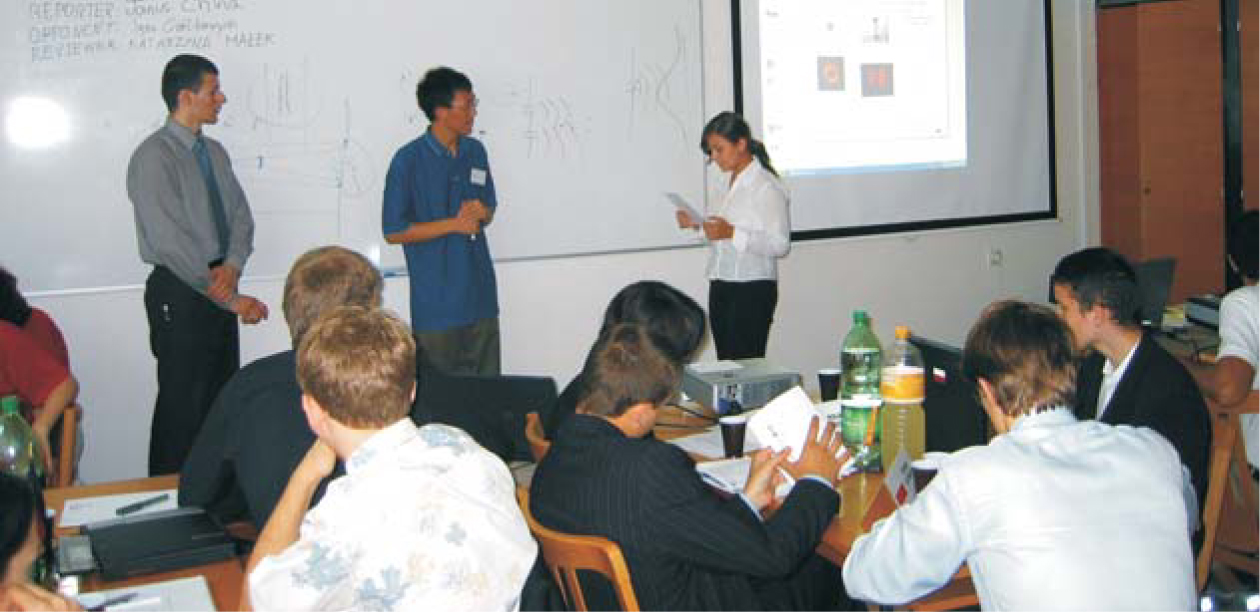
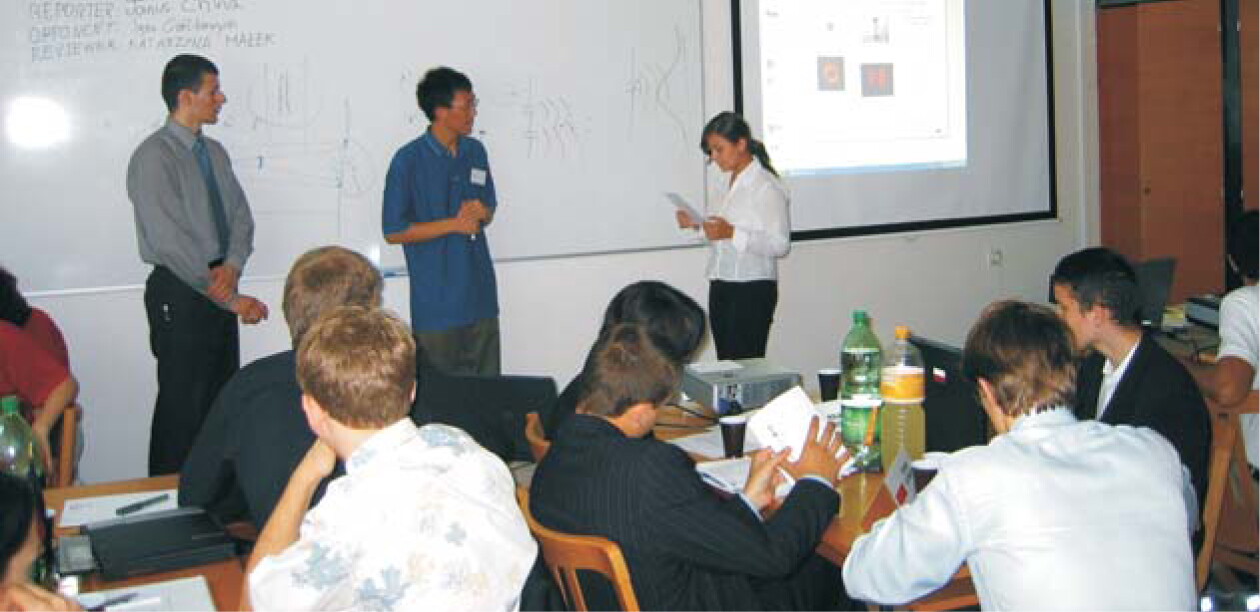
At the IYPT, students debated problems that they’d worked on for nearly a year (see Physics Today, December 2005, page 31 ). The behavior of a stream of fluid when it strikes the surface of a sponge and the information to be gleaned from patterns in shadows when light illuminates small nontransparent objects were among the topics that the US team drew this year. Croatia’s team took first place, with Germany and South Korea tying for second. The US team was selected and trained by the United States Association for Young Physicists Tournaments, a not-for-profit organization that is launching a US tournament next year.
Among the highlights during olympiad contestants’ free time were beach visits, mingling with four Nobel laureates—C. N. Yang, Douglas Osheroff, Masatoshi Koshiba, and Aaron Ciechanover—and attending a preview of Singapore’s 41st National Day celebrations. The IYPT participants enjoyed meeting team members from different countries and visiting castles and other sites in and around Bratislava.
Next year’s olympiad will be held in Iran; the IYPT will take place in South Korea.

The 2006 US olympiad competitors were (top, from left) Otis Chodosh, William Throwe, Sherry Gong, Menyoung Lee, and Henry Tung.
ROBERT SHURTZ AND PAUL STANLEY

One “physics fight” at the International Young Physicists’ Tournament pitted Janus China (bottom, center) of the US team against Igor Gotlibovych (left) of Germany, with Katarzyna Małek of Poland reviewing the debate.
TENGIZ BIBILASHVILI
More about the authors
Toni Feder, American Center for Physics, One Physics Ellipse, College Park, Maryland 20740-3842, US . tfeder@aip.org