Physics Olympians Compete in Spain
DOI: 10.1063/1.2117818

Salamanca, Spain, played host this past July to the 342 high-school students from 74 countries who competed in the 36th International Physics Olympiad. Hungary’s Gábor Halász and Taiwan’s Ying-Hsuan Lin tied for top score. A total of 46 students earned gold medals, with the teams from China and Taiwan each taking home all golds.
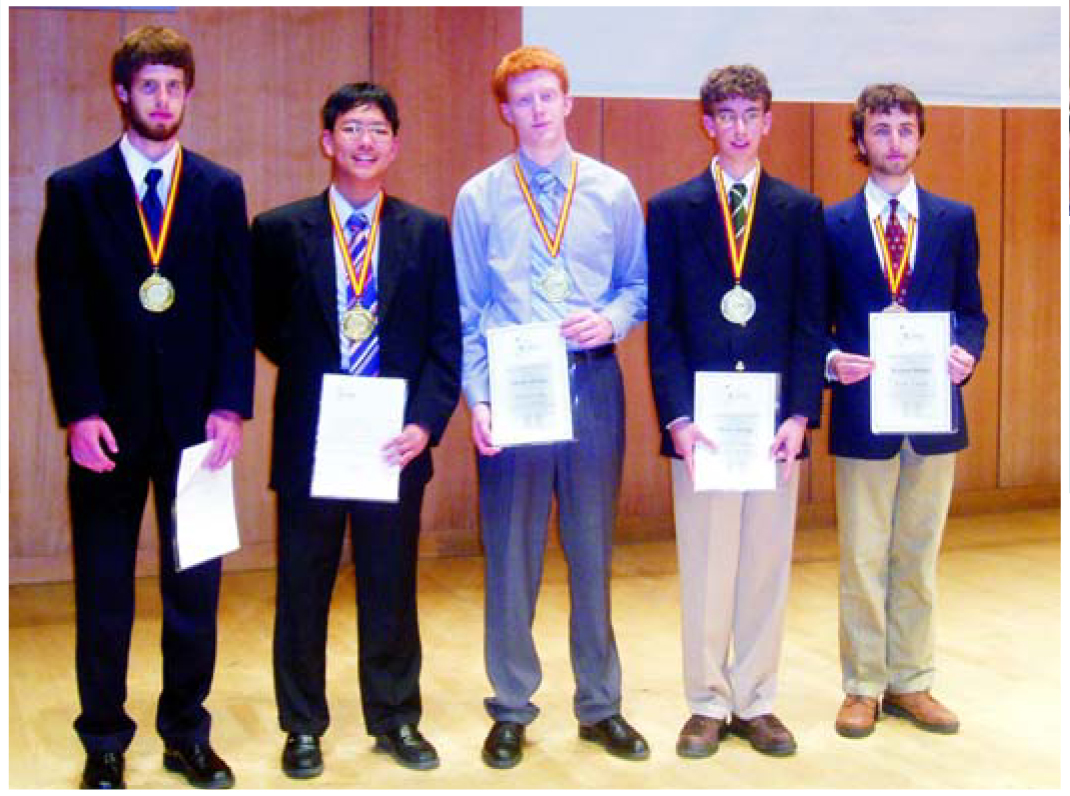
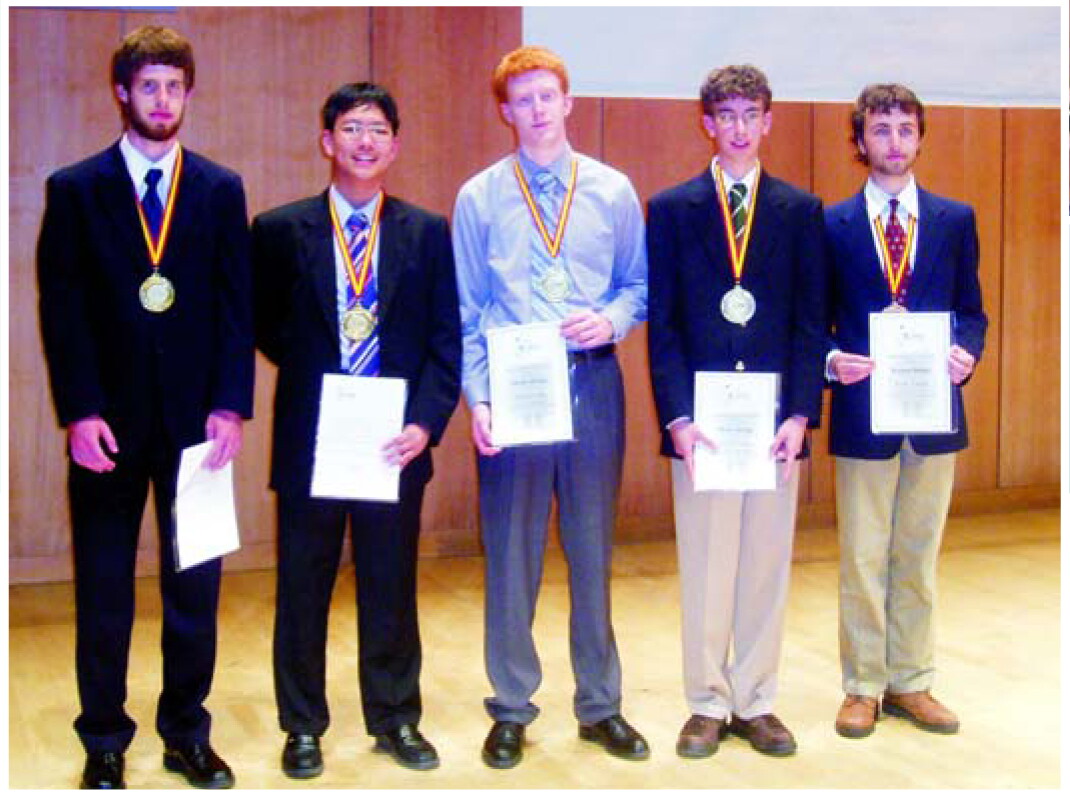
All five US competitors won medals: Menyoung Lee of Alexandria, Virginia, and Eric Mecklenburg of Gates Mills, Ohio, earned golds; Timothy Credo of Aurora, Illinois, and Nickolas Fortino of Andover, Massachusetts, garnered silvers; and Daniel Whalen of Andover won a bronze. The US team was sponsored by the American Association of Physics Teachers and the American Institute of Physics.
In one theory question, contestants were asked to calculate various parameters for a satellite, including the radial thrust necessary to escape Earth’s gravity. The other theory problems visited the historical determination of the ohm and ampere and contrasted classical and quantum mechanical behavior of a neutron bouncing in a channel. For the experimental part of the exam, contestants connected a circuit and made measurements to deduce Planck’s constant.
When they weren’t tackling physics problems, contestants took in the sights; one highlight was a flamenco performance. With a nod to the World Year of Physics, some people visited an exhibition on Einstein, and the US team handed out WYP favors: pins and “Einstein cubes”—folding cubes with physics-related images and sayings.
Next year’s physics olympiad will be held in Singapore.


Olympiad contestants at work on the experimental exam (top). The US competitors (left) were, from left: Eric Mecklenburg, Menyoung Lee, Timothy Credo, Nickolas Fortino, and Daniel Whalen.
MARY MOGGE
More about the authors
Toni Feder, American Center for Physics, One Physics Ellipse, College Park, Maryland 20740-3842, US . tfeder@aip.org