Mexico hosts physics olympiad
DOI: 10.1063/1.3226709

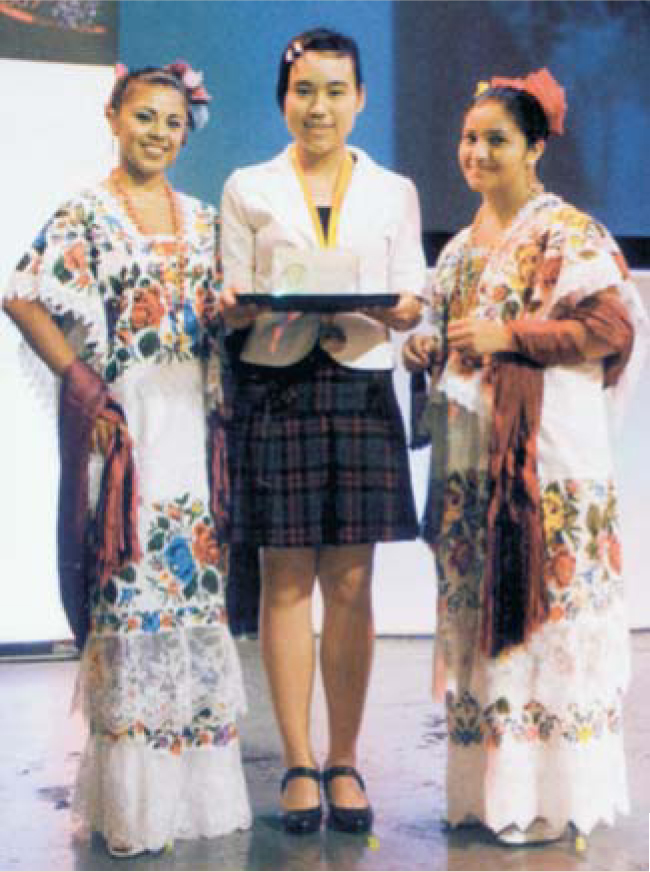
For the first time in the history of the International Physics Olympiad, a girl was the top scorer in this annual competition of high-school students. She was Shi Handuo of China (see top photo).

ORGANIZATION COMMITTEE OF THE IPHO2009
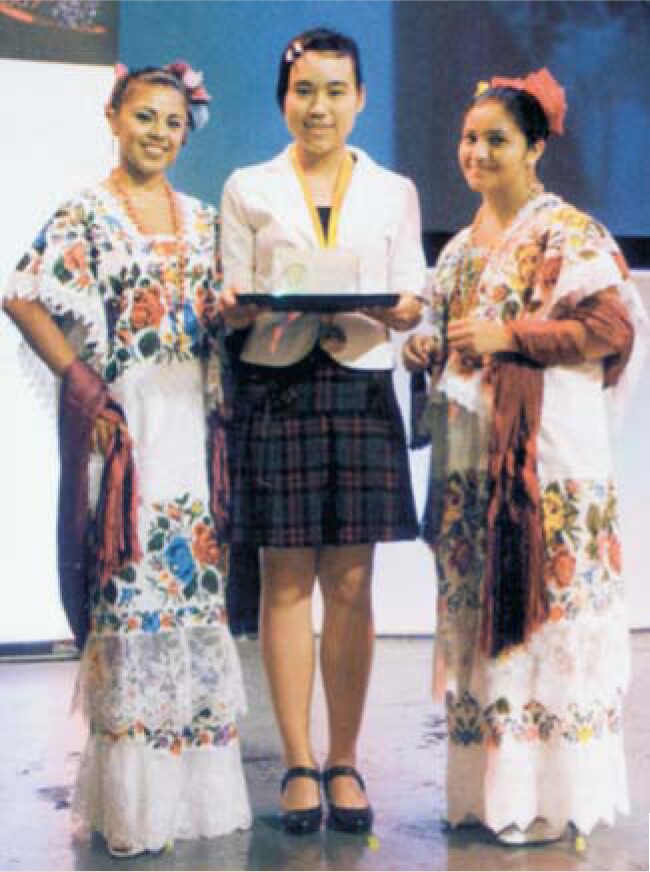
It was only the fourth time the Chinese team included girls—there were two this year—and, as is typical, the team took home all golds; it was the only team to do so and had the highest overall score. Some 316 students from 72 countries competed in the 40th physics olympiad, which was held in Mérida, Mexico, 12-19 July.
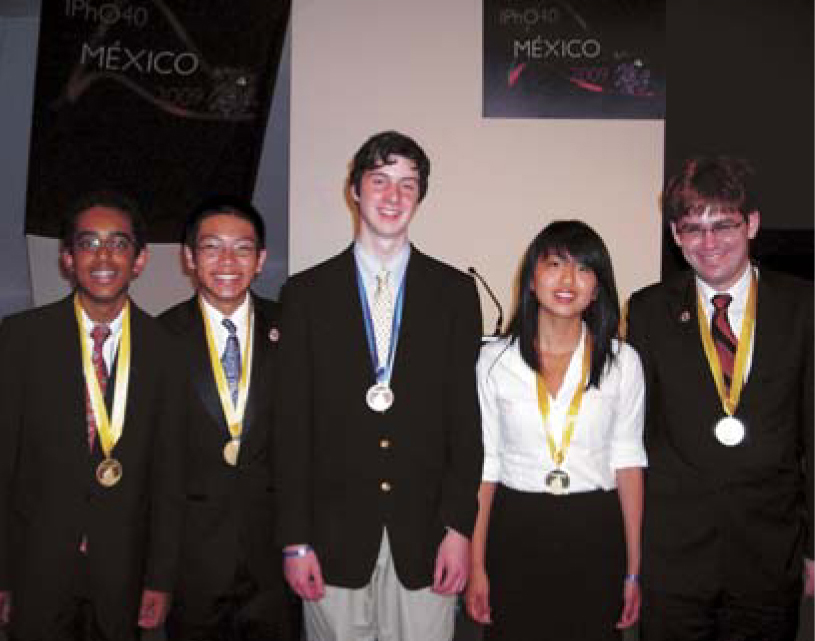
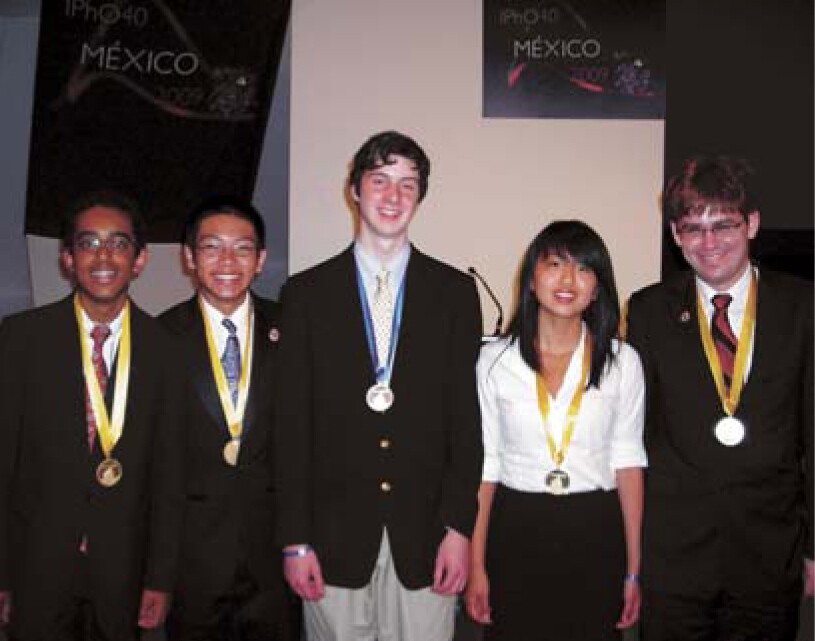
South Korea, India, and the US, with total scores in descending order, each took home four gold and one silver medal. The US competitors were David Field (silver medal; center in bottom photo) of Andover, Massachusetts, and, from California, Bowei Liu and Marianna Mao (flanking Field), a sophomore and senior, respectively, at the same high school in Fremont; Anand Natarajan of San Jose (far left); and Joshua Oreman of Los Angeles.
The theoretical questions this year concerned the size of stars, laser cooling and optical molasses, and the growing distance between the Moon and Earth as tidal torques transfer angular momentum to the Moon. The experimental portion of the exam involved using a razor blade to measure the wavelength of a laser and then determining the birefringence of a mica crystal. “This was fantastic,” says Paul Stanley, one of the coaches for the US team. “It was not a question of following cookbook instructions—plug in the wire, turn the dial, close the box, write down the measurements.” Instead, Stanley says, “This year’s experimental exam involved not only finesse at measuring but also in setting up the experiment. They had to think.”
The 2010 olympiad will be held 17-25 July in Zagreb, Croatia.

PAUL STANLEY
More about the authors
Toni Feder, American Center for Physics, One Physics Ellipse, College Park, Maryland 20740–3842, US . tfeder@aip.org