How a mineral that’s always wet gets wetter
DOI: 10.1063/pt.okra.wsde
In the quest to understand cloud formation, one mineral has been a central point of curiosity. Microcline is a potassium-rich type of feldspar, a class of minerals that accounts for 60% of Earth’s crust. More importantly for clouds, ice nucleation occurs unusually easily around microcline—and atmospheric scientists don’t know why.
Ice nucleation doesn’t necessarily happen at the mineral’s surface, but to solve the mystery, researchers still needed to see what the atomic structure looked like at the surface. Researchers led by Ulrike Diebold of the Technical University of Vienna used a new technique to prepare their sample for microscopy. 1 They found a honeycomb pattern of aluminum and silicon surrounding potassium ions that aligned with expectations of the field. Angelika Kühnle of Bielefeld University in Germany and colleagues found similar results using a different preparation technique. 2 The two groups’ findings are an important stepping stone in understanding the complexities of ice nucleation on feldspar. The experiments also revealed that it is difficult to keep the mineral dry for imaging.
Break through the rock
For ice to form in the atmosphere, water molecules must first assemble into a seed crystal, a process called nucleation. Water molecules can be attracted to atmospheric particulates of minerals, which facilitate that mode of ice nucleation. Many different minerals can help create ice clouds, but potassium feldspar—and microcline in particular—stands out. Ice nucleation on microcline has been observed to begin in environments approximately 20 K warmer than on most other minerals. 3
Previous experimental research has been limited to studying the mineral’s macroscopic properties. Prior to Diebold and Kühnle’s studies, the role of the surface chemistry—the details of the surface at the atomic scale and its reactivity with water—had not previously been explored experimentally. Atomic force microscopy (AFM) is a tool that can map the surface with atomic resolution and determine whether there’s any surface reconstruction, the rearrangement of atoms into a structure different from that of the bulk. It is its sensitivity to short-range forces that enables AFM to achieve atomic resolution. But obtaining a clear image is hard when the surface is wet or otherwise not atomically flat. (For more on AFM, see the article by Daniel Rugar and Paul Hansma, Physics Today, October 1990, page 23 .)

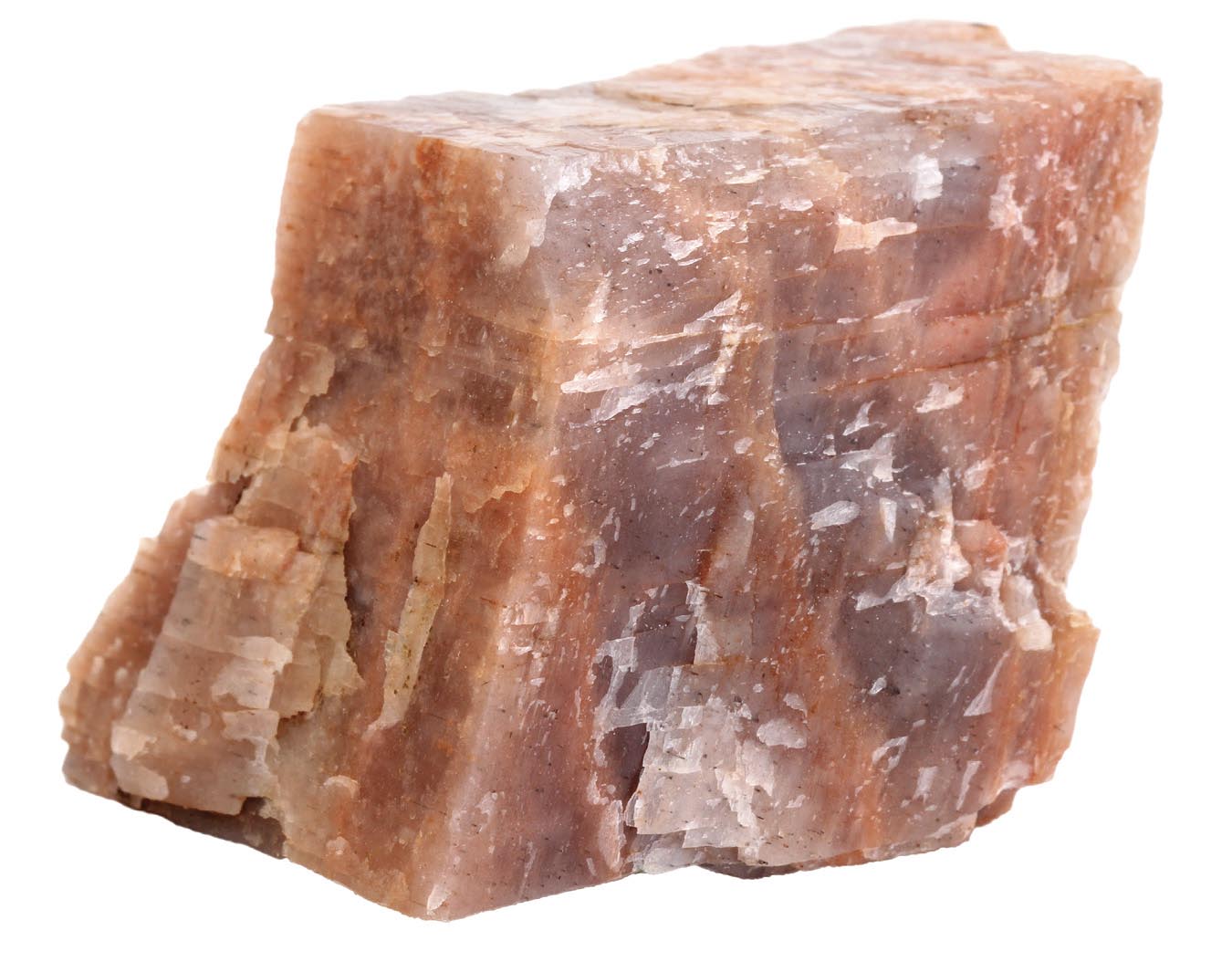
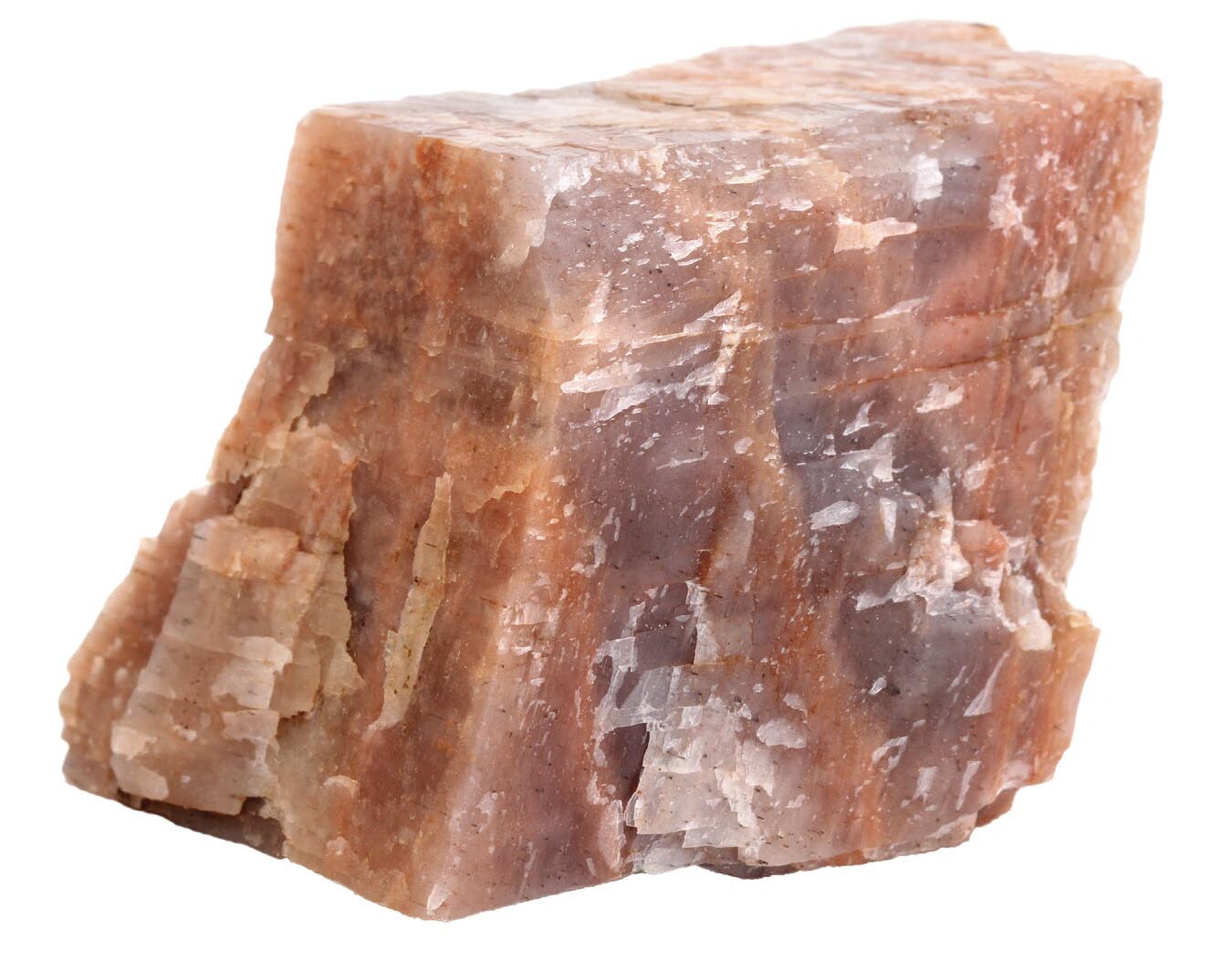
Potassium-rich feldspar is a common mineral that significantly contributes to atmospheric ice nucleation. The mineral exhibits preferential cleavage planes, conveniently creating a flat surface to study at the atomic level. (Image by iStock/FokinOl.)
To prepare the sample for study, Diebold’s team put microcline in a UHV chamber, which prevents any contamination from reaching the surface after its preparation. The rock is then cleaved, exposing a pristine, dry surface. The splitting creates a strong charge at the surface, which interferes with the AFM measurement. Traditionally, the sample is annealed to dissipate the charge—that was the method chosen by Kühnle and her colleagues in their study of the mineral. On the other hand, Diebold’s group used a technique they had tried for the first time in a study published just last year: irradiating the sample with x rays. 4 Each group independently studied the atomic surface structure of microcline, and both were met by the same initial surprise: The sample was immediately wet.
Just add water
“At the beginning it was really confusing,” says Giada Franceschi, a postdoc who coordinated the project in Vienna. “Because we were breaking the material apart, you would think the surface should be dry; we have such a perfect vacuum.” Multiple experiments confirmed that the sudden moisture on the surface wasn’t a fluke. Franceschi traced the hydroxyl groups to water that had been released from inside the rock when the sample was cleaved. The small amount of water was enough to immediately coat the mineral’s surface.
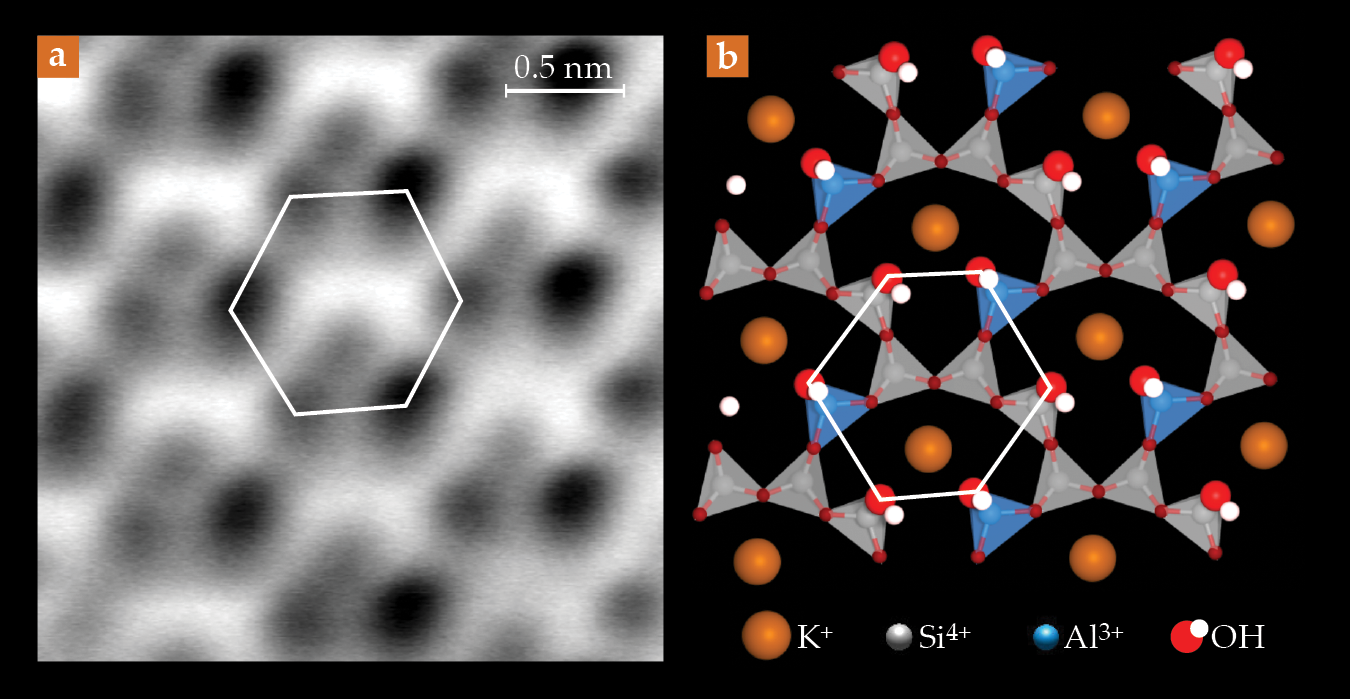
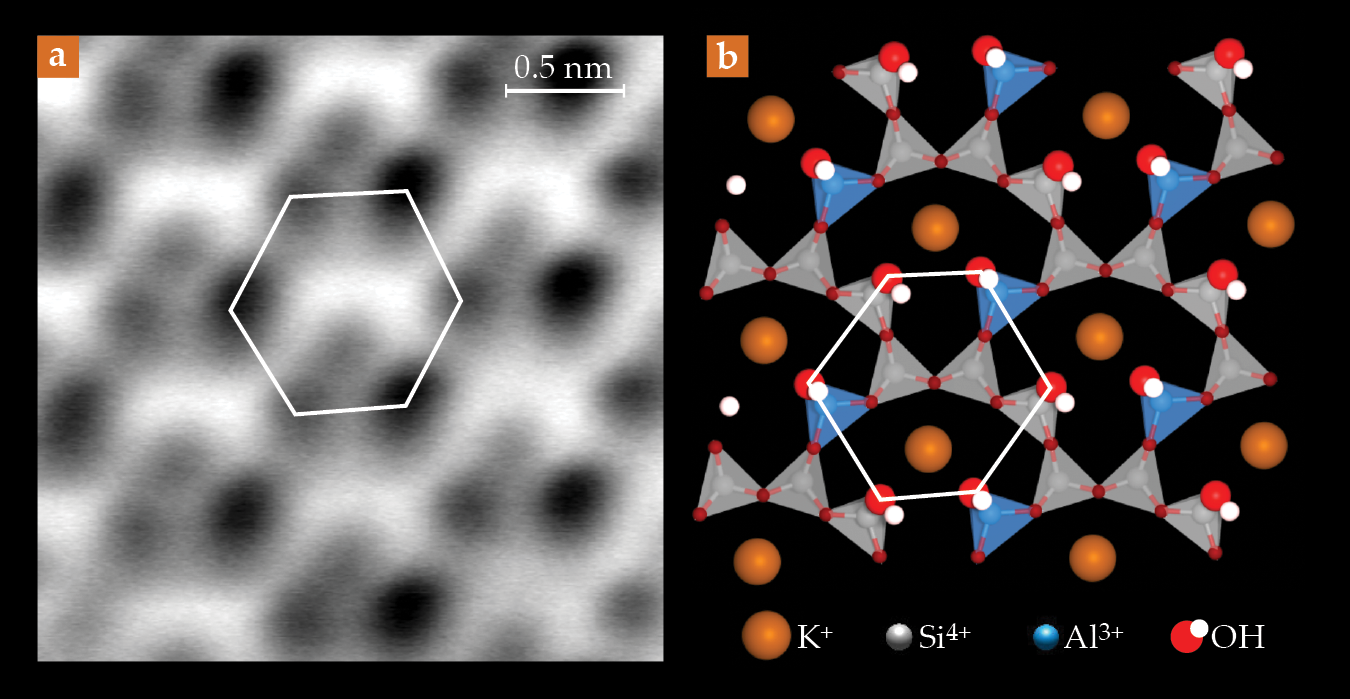
Although the surfaces were wet, both research groups were still able to use AFM to determine the underlying atomic structure of the microcline surface. The images showed that the mineral did not exhibit surface reconstruction. Al and Si atoms bound to OH groups surrounded the potassium ions in a regular, buckled honeycomb pattern. Franziska Sabath, a postdoc working with Kühnle, took the experiment one step further, imaging microcline with multiple layers of water molecules to get a 3D perspective of the interface between the solid and the liquid. “The first layer of water is really strongly bound, and the other layers are really mobile,” she says. Sabath suspects that the ease of ice nucleation could be attributed to how the initial layer of OH groups connects to both the surface structure and the next layers of water, although details of the flat surface studied in the current work likely differ.

Potassium feldspar’s surface was observed by researchers at both the Technical University of Vienna and Bielefeld University in Germany. (a) Atomic force microscopy revealed the hexagonal structure connecting aluminum hydroxyl groups (darkest dots) to the silicon hydroxyl groups. The groups’ experiments confirmed predictions based on the bulk material structure. (b) A diagram of the observed structure: aluminum atoms and silicon atoms bonded to hydroxyl groups, with gaps filled in by potassium ions. (Adapted from ref.
Although the immediate addition of OH groups to the surface was unexpected—the researchers were surprised to see how little water was needed to hydroxylate the surface—the rapid bonding of OH groups did align with what atmospheric scientists expect happens in nature. Dust particles in the atmosphere are surrounded by water and would also start from a hydroxylated state before any ice nucleation occurred. Establishing the pattern of the water bonds on the surface will improve the ability of atmospheric scientists to model the nucleation process and give them greater confidence in their simulations.
Atomic ordering
Determining the surface structure of microcline is only the first step to understanding ice nucleation on microcline. Ice nucleation requires more than an initial layer of water, and atmospheric particles are much smaller than lab samples. Sabath says she hopes to obtain a precise 3D structure of multiple layers of water on a surface with steplike defects.
Knowing the surface structure doesn’t completely solve the mystery of why microcline is so efficient at ice nucleation, but Franceschi thinks it might be a significant part of the story. As more water interacts with the surface, it encounters the Al–OH and Si–OH groups that have naturally formed bonds in specific orientations. “We think that the arrangement of these OH groups is really important to bind water in a precise way and then make periodic ice structures in the long term,” Franceschi says. The Vienna group is now studying other minerals that are less effective at ice nucleation; initial findings are showing a more disordered arrangement of hydroxyl groups.
References
1. G. Franceschi et al., J. Phys. Chem. Lett. 15, 15 (2024). https://doi.org/10.1021/acs.jpclett.3c03235
2. T. Dickbreder et al., Nanoscale 16, 3462 (2024), doi:https://doi.org/10.1039/d3nr05585j .
3. J. D. Atkinson et al., Nature 498, 355 (2013). https://doi.org/10.1038/nature12278
4. G. Franceschi et al., Nat. Commun. 14, 208 (2023). https://doi.org/10.1038/s41467-023-35872-y