Grassroots group fights harassment
DOI: 10.1063/PT.3.3196

Katey Alatalo, Heather Flewelling, and their friends had each other’s backs at astronomy conferences. They kept an eye on reputed harassers—sometimes even cautioning others to be careful with certain people—and made sure not to leave each other alone in potentially risky situations.
But then a male astronomer started stalking Flewelling, an astronomical survey researcher at the University of Hawaii’s Institute for Astronomy. “I did not feel safe,” she says. The stalking motivated Flewelling and Alatalo to create a more formal way to protect potential victims of bullying and sexual harassment. In January 2015 at the American Astronomical Society (AAS) meeting in Seattle, they rolled out the Astronomy Allies.

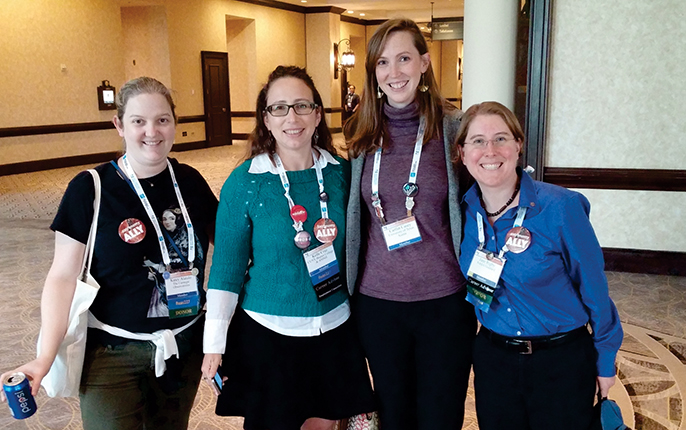
Astronomy Allies (from left) Katey Alatalo, Kelle Cruz, Caitlin Casey, and Jane Rigby at the American Astronomical Society meeting in Kissimmee, Florida, this past January.
ALEKS DIAMOND-STANIC
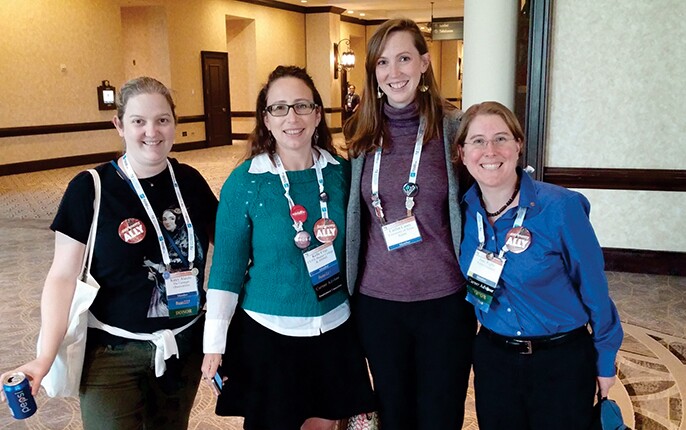
At AAS meetings, the Allies wear big red buttons to identify themselves as safe go-to people for anyone who feels threatened or uncomfortable. People contact them via text, tweet, or email, and “someone with an Allies insignia will find them,” says Alatalo, a postdoctoral fellow at the Carnegie Observatories in Pasadena, California. Allies—who number 75 and counting—are also available to walk conference attendees back to their hotels. That includes scheduled walks home from the AAS social; more than 50 people took them up on that offer at their launch meeting.
If someone reports harassment to the AAS, the society is obliged to investigate. “That is a huge burden for the victim,” Flewelling says. “It’s not the case with us, the Allies. We can give them advice and talk them through situations. It lowers the barrier to talking about these things.”
“The only people who can punish the harassers are those at the very senior level, and the people who usually are the ones targeted and need help are junior,” says Alatalo, who as a graduate student was bullied and sexually harassed by a senior astronomer. “There is no protection. And students depend on their advisers. One not entirely positive remark to a colleague can tank a junior person’s chances of being hired.” The aim of Astronomy Allies, she says, is to help the field without triggering a backlash against victims. “I wish I could say I am a rarity,” she says. “But a lot of people have gone through some sort of harassment.”
Most victims Alatalo has spoken with say they want the situation to end so they can do their work. “It’s not, ‘I want to punish the harasser.’ “ She adds that being harassed often lowers victims’ self-esteem and makes them question their abilities, saps their energy, and distracts them from their work.
“My hope,” she says, “is to get something akin to the Astronomy Allies in every astronomy department. Perhaps you could then stop harassment before it happens.” At conferences, says Flewelling, “random people come up to our button wearers and thank us for what we are doing. Others want us to talk to their students. The word is getting out.”
Members of the Entomological Society of America have started a similar Allies group.
More about the authors
Toni Feder, tfeder@aip.org