Future astro missions
DOI: 10.1063/1.4796833

To prepare for the upcoming astronomy and astrophysical decadal survey, in which researchers and the National Research Council set future directions for those fields, NASA announced in February that it will fund development of 19 concepts for major new observatories. The awards total about $12 million over two years.
The observatories include space telescopes to study organic molecules, take a census of black holes, test theories of inflationary expansion, and explore the origins of cosmic rays. Awards will also go to develop, among other things, several methods to search for and characterize exoplanets, telescopes that would observe filaments of intergalactic hydrogen gas (the cosmic-web gas), telescopes for studying star formation, next-generation optics for x-ray and optical astronomy, laser beacons on Mars to test general relativity, and an array of radio telescopes on the Moon to map clouds of hydrogen gas that formed in the infancy of our universe.

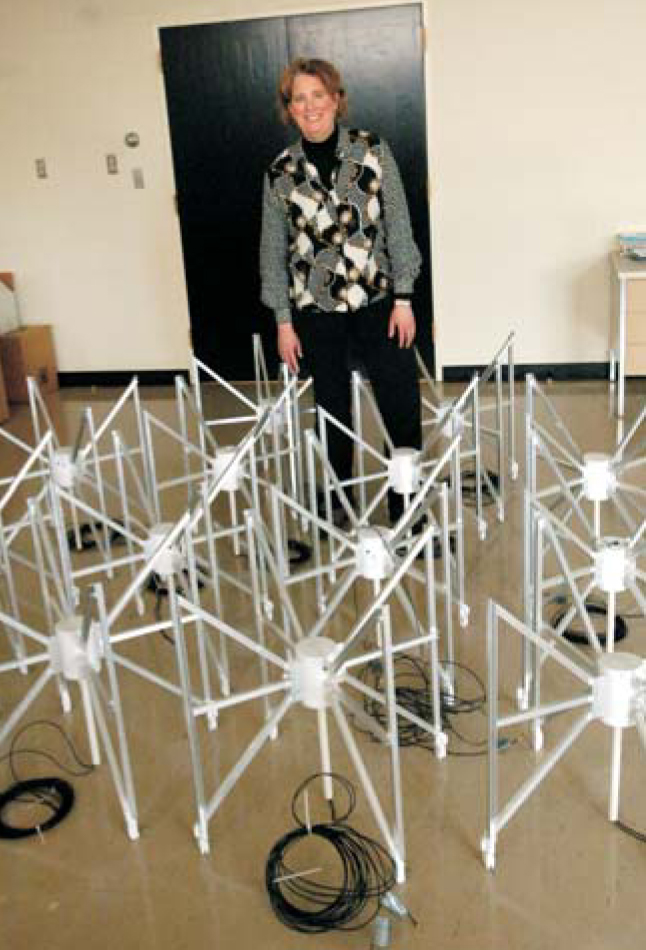
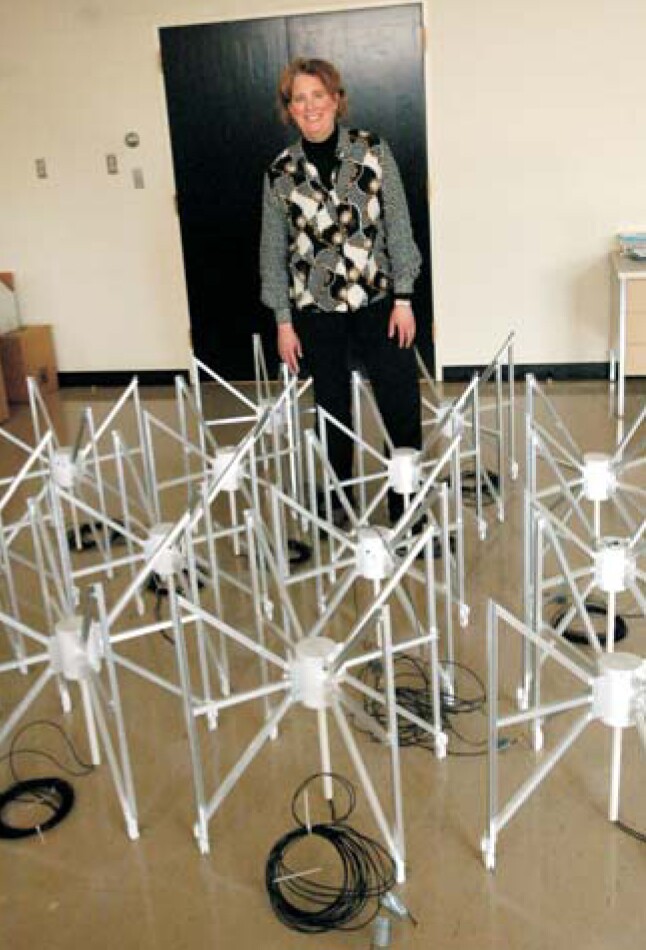
A radio telescope array that would probe the early universe from the far side of the Moon is one of 19 missions NASA has selected for further study. A prototype is shown with the project’s leader, MIT’s Jacqueline Hewitt.
DONNA COVENEY
More about the authors
Toni Feder, tfeder@aip.org