Canada’s researchers fret over shifts in funding landscape
DOI: 10.1063/PT.3.1634

When Canada’s university researchers learned in April that their main sources of funding for small- and medium-scale laboratory equipment and for operating laboratory facilities were being axed, an already simmering unease due to changes in the research system over the past several years erupted into outrage.
The elimination of the Research Tools and Instruments (RTI) and Major Resources Support (MRS) grant programs, each roughly Can$30 million a year, follow a broader shakeup in research funding, which can be summed up as moving toward a star system—from the graduate level on up—and increasing the emphasis on innovation and applied research. (The exchange rate at press time was about Can$1 to US$0.97; amounts in this story are in Canadian dollars.)
The blows to the RTI and MRS programs and other changes in research funding are “not a question of money. It’s really a question of priorities,” says John Bechhoefer, a biophysicist at Simon Fraser University near Vancouver, British Columbia.
The budget of the Natural Sciences and Engineering Research Council (NSERC), the Canadian counterpart of the US NSF and home to the RTI and MRS programs, stayed flat at roughly $1 billion for 2012–13, although $15 million was redirected to support industry–academic partnerships. The Canada Foundation for Innovation (CFI), which provides matching money for university-led proposals for equipment typically costing upwards of $150 000, got $500 million for an unexpected third five-year term. Major facilities are doing well: TRIUMF, the particle and nuclear physics laboratory in Vancouver, had its funding renewed in 2010 for five years; on 17 May the underground neutrino laboratory in Sudbury, Ontario, held a grand opening to celebrate its expansion to SNOLAB, and it and the Canadian Light Source in Saskatoon, Saskatchewan, have operating funds from the CFI and other sources for the next five years.
More money, less research
Indeed, over the past 10 years or so, Canada has increased its overall investment in research and built up an environment that has attracted faculty from around the world. For example, under the Canada Research Chairs program the government pays salaries and provides research funding for some 2000 university posts that were created to retain and attract top-notch scientists.
But James Forrest, a polymer physicist and associate dean of research at the University of Waterloo in Ontario, notes an emerging disconnect: “There has never been more money, and there has never been less ability to do basic research.” The RTI program, he says, “funded good ideas. You didn’t have to know where it would lead. For other money, you have to say in your proposal why it meets the strategic needs of your university, your province, and the country.”
Irreversible effects
“I fear that in five years’ time my internationally competitive research program will not be able to function the way it has,” says Kari Dalnoki-Veress, a physicist who studies soft condensed matter at McMaster University in Hamilton, Ontario. How, he asks, will he update or replace broken equipment without the RTI program? “Without it, even top people cannot replenish equipment.”
“There has to be a strategy within universities on how to manage funding,” says Isabelle Blain, NSERC vice president for research grants and scholarships. For example, she says, rather than faculty applying “piecemeal” to buy instruments, a university could bundle the needs of different research groups to create a package proposal on the scale that the CFI considers. “Integrate that glove box, that centrifuge, that gizmo to be part of a larger proposal,” says Blain. But researchers say the CFI cannot replace the RTI for several reasons: the scale of the grants, the CFI requirements for matching funds, multi-institution and multidisciplinary projects, and slower turnaround time.
Some 47 prominent Canadian researchers wrote to NSERC on 3 May to “express deep concern” that terminating the RTI and MRS programs “will have drastic and irreversible effects on fundamental science and engineering across Canada and internationally” and that “the negative impact on training of the future generation of scientists cannot be overstated.” University administrators are pressuring NSERC to come up with alternatives. “There will be one more competition in the RTI program, so we have a year to figure out who will pick this up,” says Steven Liss, vice principal for research at Queens University in Kingston, Ontario. On 23 May, Ted Hsu, a physicist and member of Parliament who is the Liberal Party’s watchdog for science and technology, held a town-hall meeting on Facebook about the effects that funding trends and the latest federal budget will have on basic research.
“You can just feel how furious so many researchers are. Something has to give,” says Hsu. “We cannot change trends in the short term, because the current [Conservative] government is in the majority. But in the short term there needs to be a replacement for the Research Tools and Instruments program.” The focus on industrial connections and commercialization has intensified since the Conservative government gained minority power in 2006 and more so since it became the majority last year.
“Photo-opportunity science”
The MRS program has been funding operations for nearly 40 facilities across Canada. In the most recent competition, the Canadian Institute for Neutron Scattering was “gutted,” says Dominic Ryan of McGill University in Montreal, Quebec. The institute’s MRS funding was decreased this year from $1.5 million to just a third of that. The irony, Ryan says, is that the federal government has committed to produce the medical isotope molybdenum-99 through 2016 at the National Research Universal reactor at Chalk River, Ontario, which costs about $100 million per year to run. “Neutrons will be produced. All we have to do is open the doors.” But, he says, “there is no other pot we can tap into [to fund neutron scattering research].”
The Polar Environment Atmospheric Research Laboratory (PEARL), a station in the Arctic that monitors aerosols, greenhouse gases, atmospheric optical depth, pollutants, and other observables, is another victim to shifting research priorities. “Canada is supposed to be looking after that big piece of the Arctic. We supplied a lot of data to international databases,” says the station’s principal investigator, James Drummond of Dalhousie University in Halifax, Nova Scotia. “The pool of funding from which we drew has been terminated,” he says. “We have withdrawn the permanent operator we had, and are trying to keep running” short campaigns. After initial publicity about its closure, new hope for the station came with the announcement of a program—funded at 70% of the earlier one—for climate and atmospheric research within NSERC.
Such cases are “part of wanting to put money into big showcase things, yet not wanting to fund ongoing operating, which is not splashy. I call it photo-opportunity science,” says Gordon McBean, who trained as a physicist, has worked in government, and is now a professor of geography and political science at the University of Western Ontario.
Grant evaluations
Another source of frustration for many researchers in Canada is the 2008 shake-up of NSERC’s Discovery Grant Program. The grants pay for students and keep research labs running. Changes in how proposals are evaluated “have made it possible for high-performing researchers to quickly increase their grant levels based on superior scientific merit,” according to the NSERC website. “I think in the past there was a perception of almost guaranteed funding,” says NSERC’s Blain. Now researchers “see they have to stay competitive. The bar has risen. It’s looking at how good Canadian science and engineering are compared to the world.”
Success rates in winning Discovery grants have fallen due to the revamped criteria and the program’s funding not keeping up with the increasing number of investigators. From 2002 to 2012, the success rate dropped from 84% to 62%, while the total number of researchers supported by the program grew from roughly 7000 to 10 000. There is a perception that people at smaller institutions suffer more; results of a survey conducted by the Canadian Association of Physicists (CAP) on the matter were not yet available at press time.
Anecdotally, every department has faculty members whose Discovery grants have been slashed or zeroed out. Duncan O’Dell, a physicist at McMaster University, says his grant dropped from $29 000 to $20 000 a year. He can continue to support his four graduate students because he won prize money from his province. But, O’Dell says, “in two years I will have only one student.”
In the Canadian system, Discovery grants are the staple for researchers in science and engineering; medical research and the social sciences have separate funding agencies. Says Bechhoefer, “In the US, I could apply to several programs with NSF, [the Department of Energy, and the Naval Research Laboratory]. In Canada, just one federal agency funds basic research.” A researcher can hold only one Discovery grant, and may only apply once a year. “The point is that these function more like basic operating grants, so it’s debatable whether it’s a good idea to make them more competitive,” he says. Discovery grants go farther than the same money would in the US because overhead is not subtracted.
Some researchers can take advantage of new programs that tie research to industry. “But for a lot of people that is not a good option,” says the University of Guelph’s John Dutcher, who chairs a committee that liaises between CAP and NSERC. “Universities are struggling with what to do with these people. They are good scientists. But if they are not successful, they will teach more, and in many cases, that’s a shame. It’s a vicious cycle.” Discovery grants are the “bedrock of Canadian university research,” says industrial physicist Paul Vincett, a former group chair of physics at NSERC and former CAP president. “The rest of the world used to be envious [of NSERC funding], and one reason was its stability. Now, if you stumble at all, that can put you in a downward spiral.”
A star system
At the same time that money is getting harder for many researchers to get, several new programs single out some to receive large awards. “The emphasis on such a small number of stars, or trying to concentrate more resources on fewer people, is new to Canada,” says McMaster physicist Catherine Kallin. Canada Excellence Research Chairs (CERCs) are a good example, she says. The positions come with $10 million over seven years. Last year that program hired 19 people from abroad. All 19 were men, which raised eyebrows.
Dalnoki-Veress, who on top of his Discovery grant holds an “accelerator” grant—money given to people whose proposals are deemed especially good—says he cannot complain about his own funding. “But I do not understand why we have such rich programs at the cost of base funding for researchers. I would rather see the Bantings and Vaniers [new, high-paying postdoctoral and graduate student scholarships] and the CERCs cut. There is an awful lot you can do with $10 million.”
“Canada is ranked number one in terms of the impact per publication,” says Béla Joós of the University of Ottawa and editor of the CAP publication Physics in Canada. “The old system worked. It’s not that things were mediocre.” Joós calls the changes at NSERC “ideological, driven by our political masters.” Faculty are concerned, he continues, “that we now have several types of professors: workhorses, the stars, and those who just do teaching.” Moreover, he says, “concentrating funds on the most successful does not create a nurturing climate. We need a system that gives young professors prospects of reasonable funding so that they can grow into stars.”
Market forces
“We lead the G7 in our support of postsecondary research,” says Gary Goodyear, minister of state for science and technology in the Industry Canada ministry. “Where we are not number one is in moving knowledge through factories and into the markets of the world.” In an effort to change that, the government “has been pumping money into applied programs,” says Simon Fraser University’s Bechhoefer. “If you can come up with a company that wants to work with you, you can get money tomorrow.” Even though some of his work is applied, Bechhoefer says such money is not an option for him since “there is no Canadian manufacturer of atomic force microscopes. So even when I do stuff that could have fallen under these programs, I would not qualify.”
“Cuts are being made [to basic research] in favor of focused, targeted programs, particularly ones that support industry,” says Drummond. “It is the channeling of research towards short-term economic gain that is most troubling.” The emphasis on industry and innovation extends to other agencies, such as the National Research Council, a collection of government laboratories. “We are changing the balance from pushing ideas to industry to being pulled by industry,” says Dan Wayner, the council’s vice president of emerging technologies. Many of the new programs that encourage applied research involve academics working on industry-driven problems, says Hsu. “Instead, the government should focus more on taking discoveries and commercializing them.”
Goodyear maintains that researchers “should be happy” and that their concerns are “not justified.” He notes that across the government, funding for science and technology is higher than ever, and “for the first time in history, we have applied more money to the applied science part of the spectrum without any negative impact on the basic end. It is our goal to support the entire innovation–invention ecosystem.” The problem, says Goodyear, is that “there are so many programs that even researchers don’t know where to go. We will be looking at consolidating. We want to maintain funding levels and accessibility but not have so many programs.”
Canada is shifting from a “peanut butter approach,” in which resources are spread fairly evenly among researchers, to investing to achieve specific outcomes, says Pekka Sinervo, senior vice president of the Canadian Institute for Advanced Research, which funds international networks of researchers to study specific topics. “We have to pay attention when we tinker with the system,” he says. “The jury is still out on whether we are going in the right direction.”

The Polar Environment Atmospheric Research Laboratory will close down unless new operating funds are found.
VOLODYA SAVASTIOUK


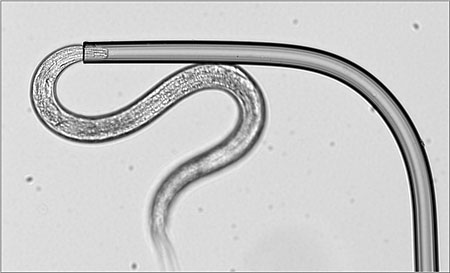
Measurements of the mechanical strength of the Caenorhabditis elegans worm are done at McMaster University with equipment purchased with money from the soon-to-be-shuttered Research Tools and Instruments program. “It’s this sort of curiosity-driven work that is under threat,” says Kari Dalnoki-Veress.
MATILDA BACKHOLM/MCMASTER UNIVERSITY


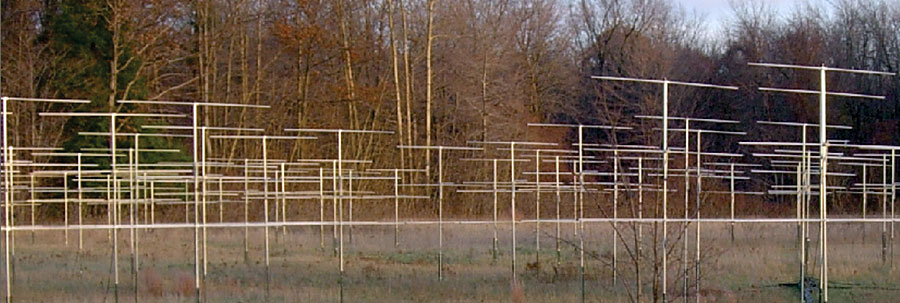
A radar network that profiles the wind for weather forecasting is likely to be mothballed because Canada’s Major Resources Support program and other potential sources to cover the $60 000 in power costs have dried up. The $6 million Ontario–Quebec VHF windprofiler radar network consists of 10 stations like this one near Walsingham, Ontario, each with around 150 vertically pointing antennas. The 3- to 4-meter-tall antennas receive reflections from air turbulence up to altitudes of 15 km, from which scientists obtain snapshots of wind speed versus height.
WAYNE HOCKING

More about the authors
Toni Feder, tfeder@aip.org