The clean-energy challenge
DOI: 10.1063/PT.3.5210
David Kramer has in the past two years written several items discussing components of the clean-energy challenge. One from the April 2022 issue is on charging electric vehicles, or EVs (page 22 ), and another from the September 2021 issue is on energy storage (page 20 ).
While the stories are informative, both are missing context. For example, the story on EVs doesn’t discuss how they are only as clean and efficient as the process by which the required electricity is produced. The storage story fails to acknowledge that grid-scale storage capacity adequate to power cities or countries is not and will not be available in the foreseeable future. Even more importantly, dependence on storage is not acceptable, even if attainable, because no one knows the duration of future wind and solar droughts.
I urge Physics Today to do more to rationalize the discussion of renewable energy.

ISTOCK.COM/F9PHOTOS
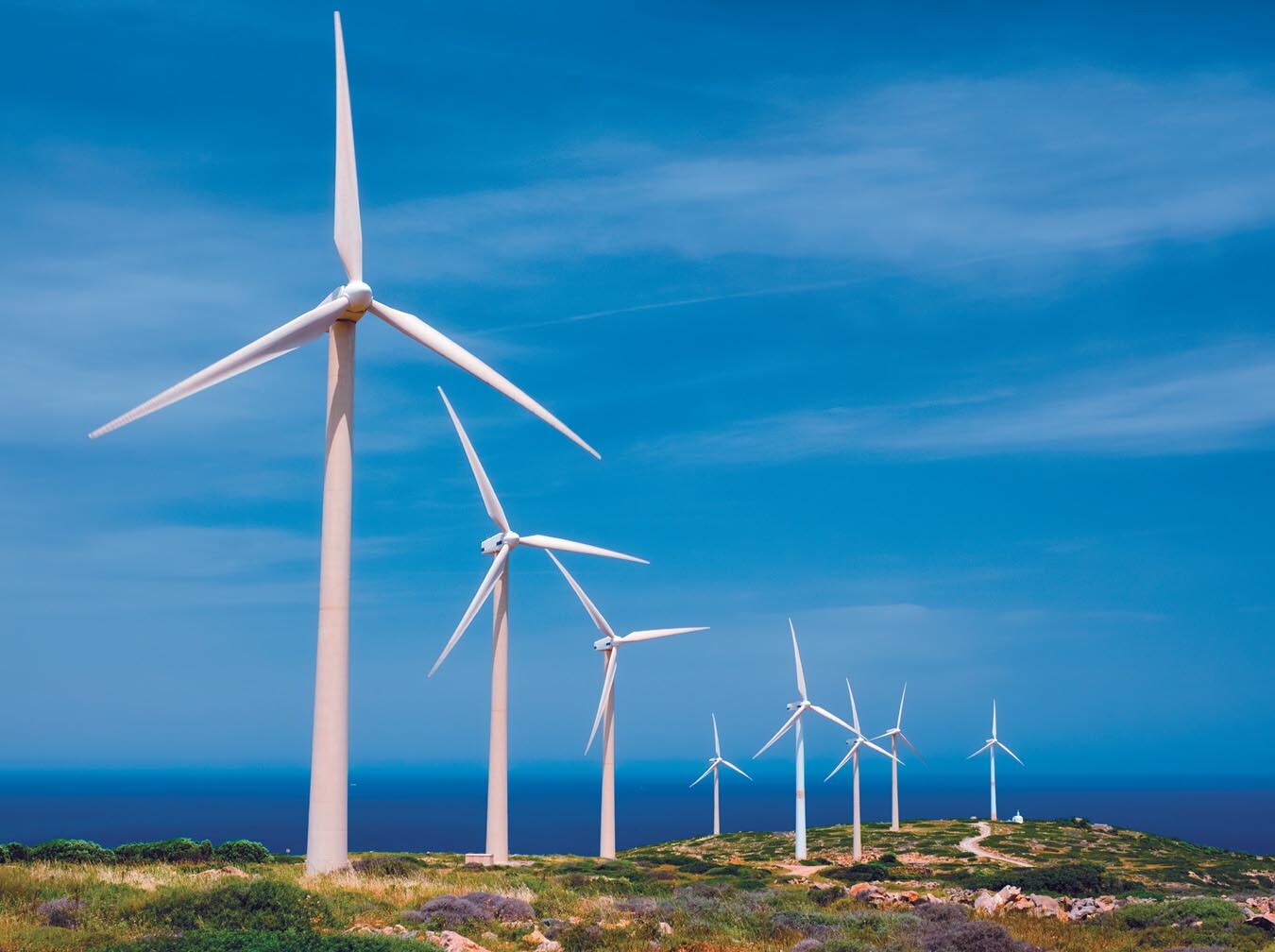
That renewable energy is intermittent is not contentious. That renewable energy sources must be complemented by storage or backup is not contentious. That grid-scale storage is unavailable at urban scale may be more contentious but is nonetheless true. Relying on backup implies that whenever renewables are producing power, their backup (which is paid for) sits idle. Thus, renewables don’t increase capacity; they duplicate dispatchable (always available) sources. That duplication is responsible for California’s “duck curve,” discussed by Kramer.
As California and Germany have demonstrated, renewables can’t replace grid-scale dispatchables, of which there are just two, hydrocarbons and nuclear. It appears that fusion will enter the market in the same time frame as molten-salt fission reactors, but it is unlikely to be cost competitive. Fission has an attractive safety record, and molten-salt reactors are both safer still and cheaper than existing reactors. A plausible future is fusion for the rich and fission for the rest. An especially good discussion of the inadequacy of both energy storage and renewables generally is available at https://jackdevanney.substack.com/p/nuclear-and-windsolar .
There are only four fundamental forces in nature, and their strengths differ dramatically. Those differences are manifest in the energy density and footprint of competing energy technologies. For example, the relative strength of nuclear forces allows hydrocarbon furnaces to be “surgically” replaced by nuclear reactors, leaving turbines and other infrastructure in place. Conversely, the extreme weakness of gravity makes storage based on raising and dropping weights unpromising.
Grid-scale renewable energy is a distraction, one that is delaying productive action on an important problem. Physics Today can play an important role here.
More about the authors
Arthur R. Williams, (artwconsult@gmail.com) Princeton, Massachusetts.