The urgent need for research governance of solar geoengineering

The idea that some of the worst impacts of climate change could be curtailed by human interventions to cool the planet has, over the past few years, moved from the margins of climate discourse into a more visible and contested space. Solar geoengineering—a set of theoretical, large-scale interventions to rapidly cool the planet, primarily by increasing the amount of sunlight reflected into space—has drawn greater attention from media, funders, and policymakers. Also known as solar radiation management, it is not a new idea: It has existed in theory for decades, with early references dating from the 1960s. The concept rose to greater prominence after a 2006 paper from Nobel laureate Paul Crutzen calling for research and consideration of solar geoengineering, 1 but it subsequently remained on the fringes of climate research for several years.
Mounting climate impacts, the insufficiency of mitigation policy, and the reality of volatile politics are now shifting solar geoengineering from a long-standing taboo to a subject of broader inquiry. Research efforts are still limited, focused mainly on modeling, but are growing to include small-scale outdoor experiments. Attempts to do experiments that are visible to the public have been met with strong pushback and, in some cases, cancellation, even as similar efforts advance in less visible settings. At the same time, more funding is rapidly entering the field, and press coverage, including misinformation, is climbing. In the context of growing hype and public distrust, responsible research is crucial to developing a clearer understanding of the potential risks, benefits, and uncertainties of solar geoengineering. But the development of such research will require thoughtful implementation of governance and oversight.
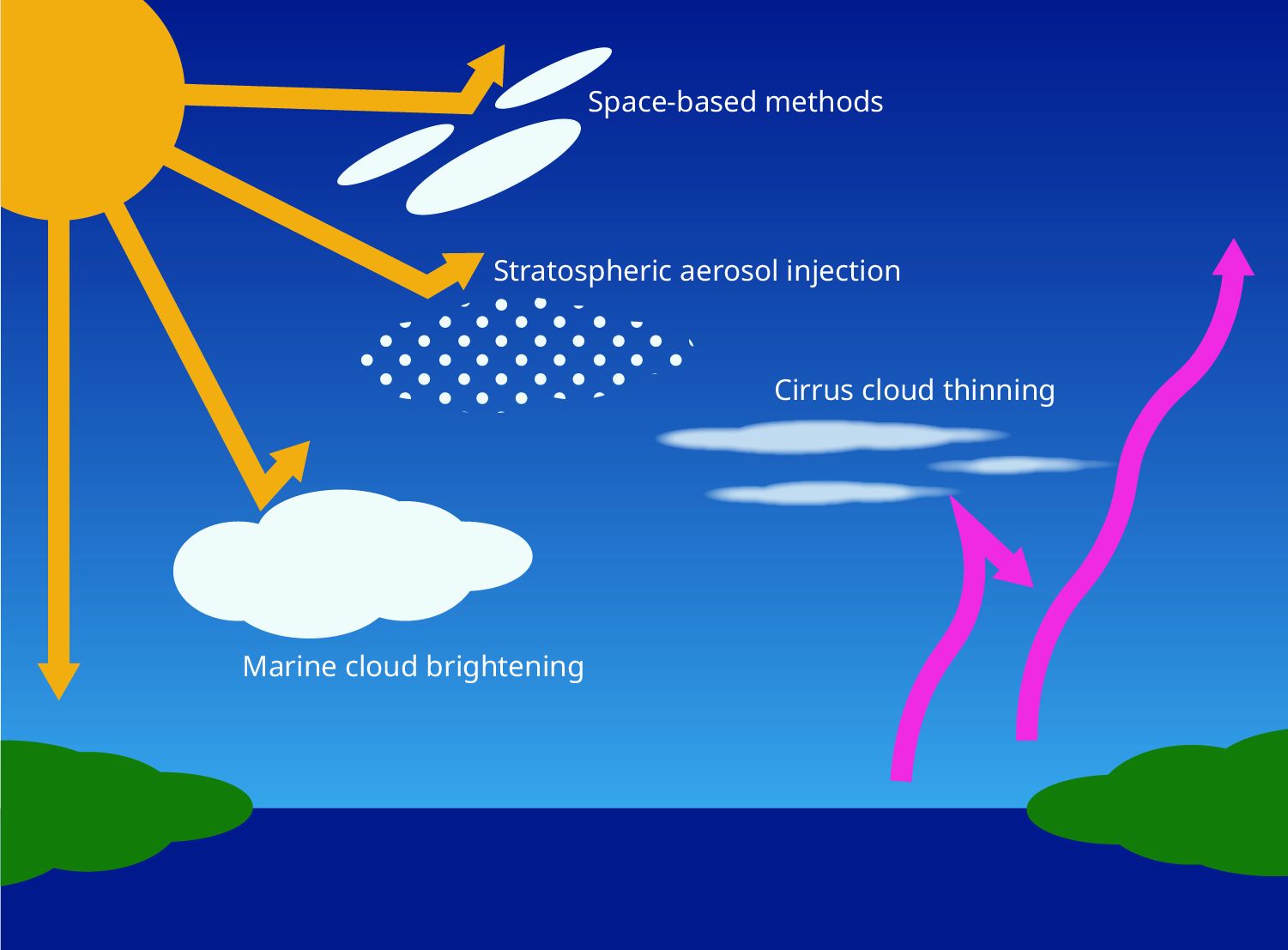
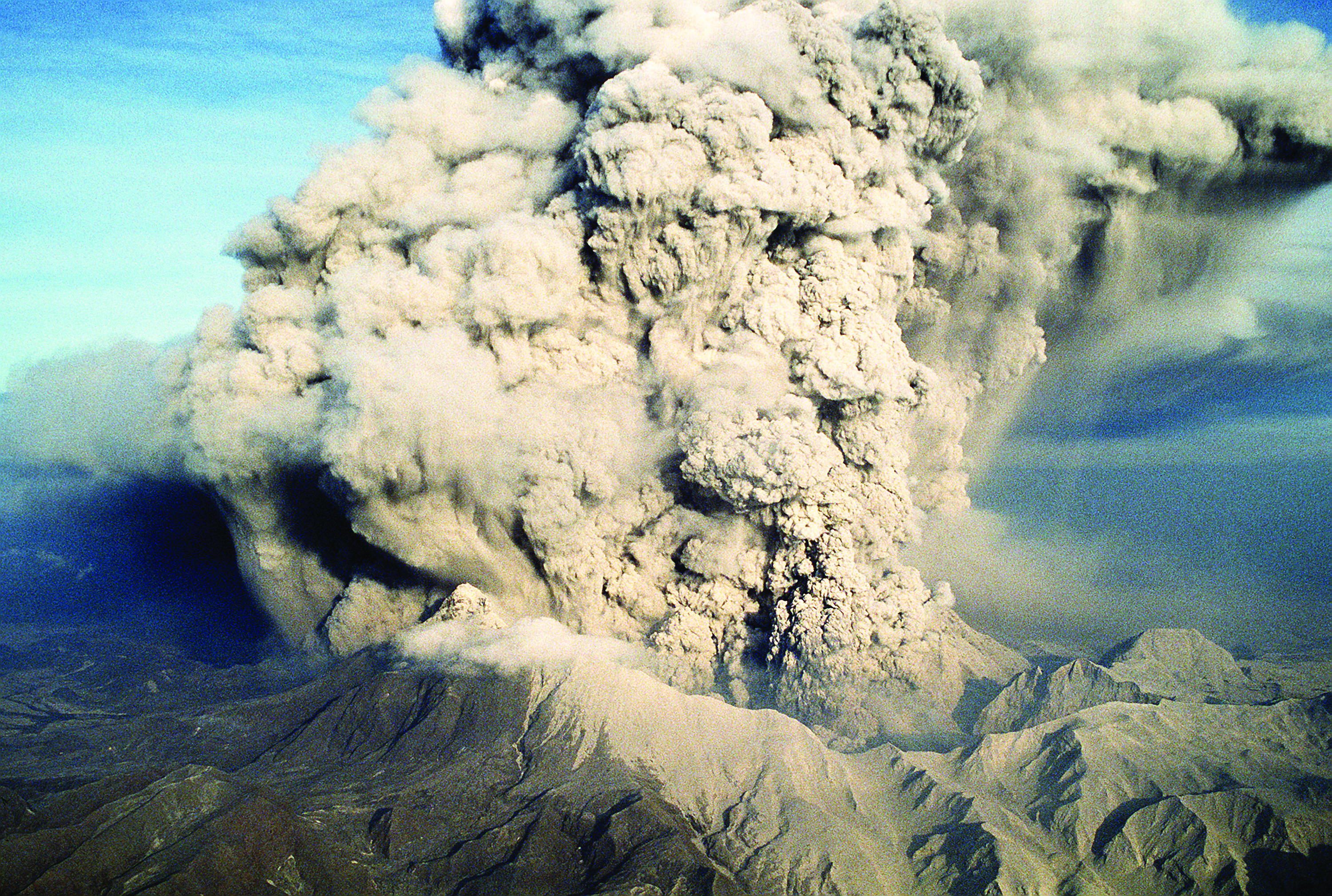
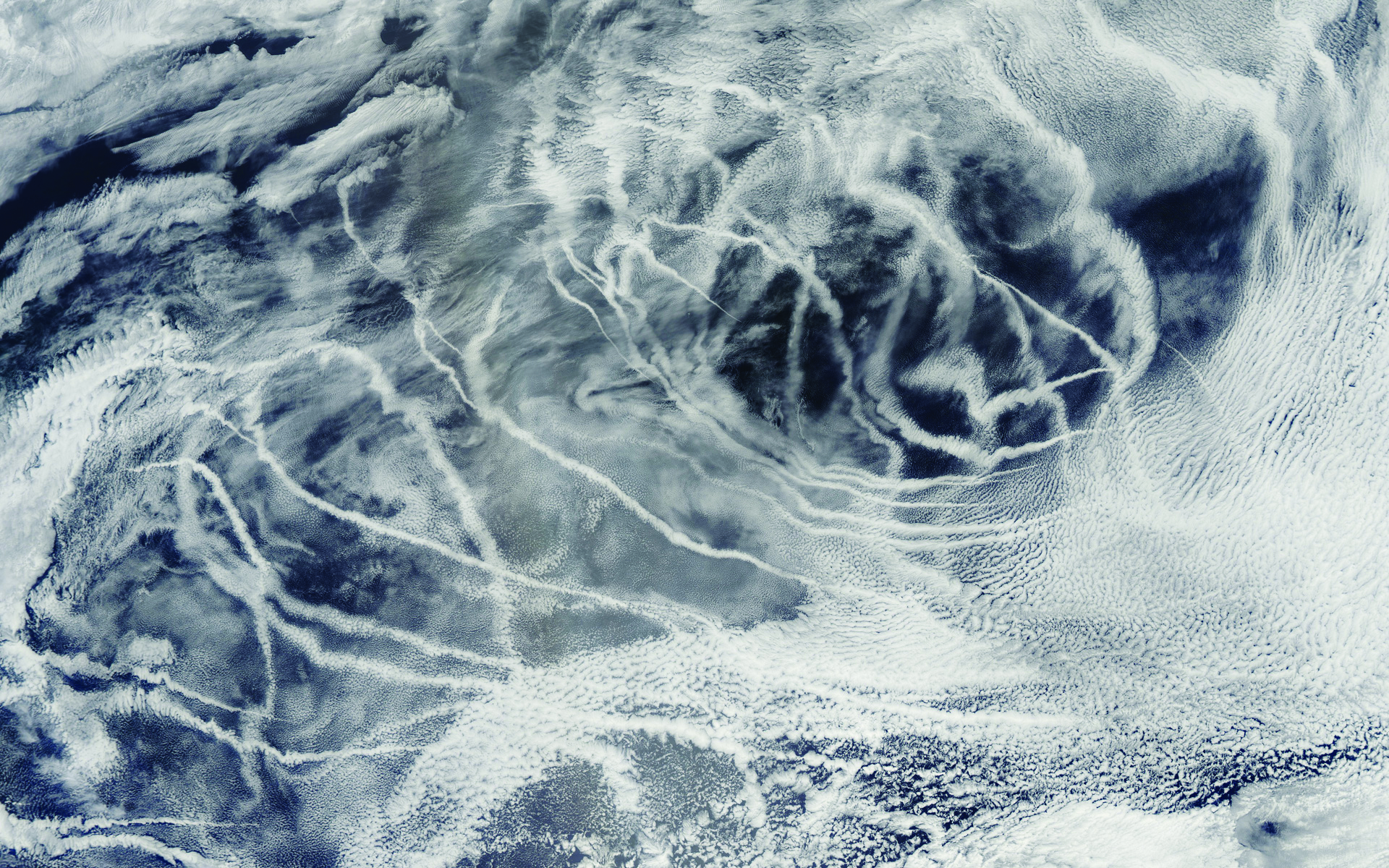
Stratospheric aerosol injection, the most prominent solar geoengineering approach, involves scattering reflective particles into the upper atmosphere, as shown in figure 1 . It mimics the cooling effect of large volcanic eruptions, such as the 1991 Mount Pinatubo eruption in the Philippines, shown in figure 2 , that temporarily lowered global temperatures. 2 Stratospheric aerosol injection has the potential to be implemented relatively quickly and cheaply. Marine cloud brightening, the second most researched strategy, aims to increase the albedo of low-lying marine clouds by spraying aerosolized sea salt into the air. The method mimics ship tracks, the aerosol pollution emitted from ships that sometimes leads to brighter clouds, as shown in figure 3 .
Figure 1.

Several strategies for the modification of solar radiation have been explored over the past several decades. The most prominent is stratospheric aerosol injection, in which aerosols are placed in the stratosphere to increase albedo and reflect a small fraction of sunlight. Marine cloud brightening, another widely researched approach, is the spraying of aerosolized sea salt into the air to increase the albedo of low-lying marine clouds. Approaches in the earlier stages of development include space-based reflection methods and cirrus cloud thinning, which aims to thin high-altitude clouds so more outgoing thermal radiation could escape.
(Illustration by Freddie Pagani, adapted from NOAA/Chelsea Thompson, Chemical Sciences Laboratory.)

Cirrus cloud thinning and space-based methods that use mirrors or sunshades are two other approaches, illustrated in figure 1 , that are in earlier phases of research. (There are also geoengineering strategies that are not focused on solar modification, such as glacier stabilization and ocean iron fertilization, which I am not addressing here.)
Scientists have a reasonably good understanding of solar geoengineering’s potential impacts on global temperature. But they still are uncertain about how both stratospheric aerosol injection and marine cloud brightening will affect physical systems (such as weather systems, biodiversity, and agriculture) and social systems (such as human displacement and geopolitics) across different regions.
That uncertainty is a core reason for the controversy around solar geoengineering: Changing how sunlight interacts with the atmosphere could, for example, shift rainfall patterns, affect regional monsoons, stress ecosystems, or create unequal climate outcomes, where some areas see relief while others face new risks. Potential impacts may be beneficial or harmful, and they need to be understood in the context of changing climate impacts on physical and social systems. The research and policy communities are also grappling with important questions of how to ensure that robust mitigation, adaptation, and carbon dioxide removal are not deterred in pursuit of solar geoengineering research.
In short, solar geoengineering is rife with complexity: It may have the potential to limit harm and suffering, but it also has the potential to exacerbate harm and injustice. How decisions are made, by whom, and toward what outcomes are by far the most challenging questions the field faces, and it must start to address those questions now, in the early stages of research.
Outdoor experiments: A flash point
The vast majority of solar geoengineering research to date has been conducted through computer modeling. Modeling allows researchers to develop an understanding of how solar geoengineering might influence global and regional climate systems, including temperature and precipitation, under different scenarios and assumptions. Models have provided valuable information thus far, such as an understanding of the variability in efficacy from different deployment strategies and initial analyses of interactions with other systems such as air quality and energy generation. More work that is important remains to be done in the modeling space, especially to better understand potential impacts in different regions.
Modeling has limitations, however, and being overly prescriptive with imperfect information carries significant risks. Models simplify complex systems, and relying too heavily on them without accounting for uncertainty, variability, and real-world dynamics can lead to misleading conclusions or false confidence in how solar geoengineering could unfold.
Figure 2.

The 1991 Mount Pinatubo eruption flooded the stratosphere with aerosols that reflected sunlight and slightly cooled the planet. Volcanically driven cooling of the atmosphere served as inspiration for the solar geoengineering approach of stratospheric aerosol injection.
(Photo by V. Gempis, from the Records of the Office of the Secretary of Defense/National Archives photo no. 6472281.)

In recent years, researchers have proposed more outdoor experiments that are small scale and do not pose significant environmental or human risks. They include equipment testing and limited particle release, such as an experiment that sends out roughly 1 kilogram of aerosols, far less than the emissions of a plane flight. The work has been proposed or initiated with the goal of improving understanding of processes that modeling and lab-scale experiments can’t capture. Those processes include climate and atmospheric dynamics, stratospheric aerosol chemistry, and aerosol distribution mechanisms. Small-scale outdoor experiments can provide data to help refine climate models and modeling studies and, importantly, also contribute to a deeper understanding of what might not work.
Many types of research are safely implemented at scales similar to or larger than what is being proposed in solar geoengineering, including in climate change research. One example is large-scale forestry. The US Forest Service has a wide network of experimental forests used to understand ecological changes and vegetation over long periods of time. The Swedish University of Agricultural Sciences just launched an outdoor experiment to simulate future climate conditions in forests. In ocean-based research, experiments have been performed to explore ocean alkalinity enhancement, a carbon dioxide removal approach. For those experiments, researchers injected thousands of liters of lime-enriched seawater into the Apalachicola estuary in Florida.
No matter the field, emerging-technology research that moves from closed environments to open ones carries more environmental and political risks. That reality, layered with the controversial nature of solar geoengineering, creates a challenging context for outdoor experiments. But such experiments offer a tangible entry point into what is otherwise a theoretical field. As such, they’ve become flash points—they raise not only scientific questions but also the bigger societal and governance questions that any move toward larger-scale deployment would inevitably provoke. 3
Finally, the controversy around outdoor experiments is amplified by the rapid spread of misinformation, disinformation, and conspiracy theories. Those narratives distort public understanding and shift attention away from relevant, valid questions, such as who is making decisions, under what authority, and with whose input. In a moment when public trust in science is already fragile, those dynamics make open, good-faith research harder to pursue.
Experiments interrupted
Two examples of proposed outdoor experiments, both canceled in 2024, offer a window into the unique social and political contexts that the field exists in and the governance that it requires.
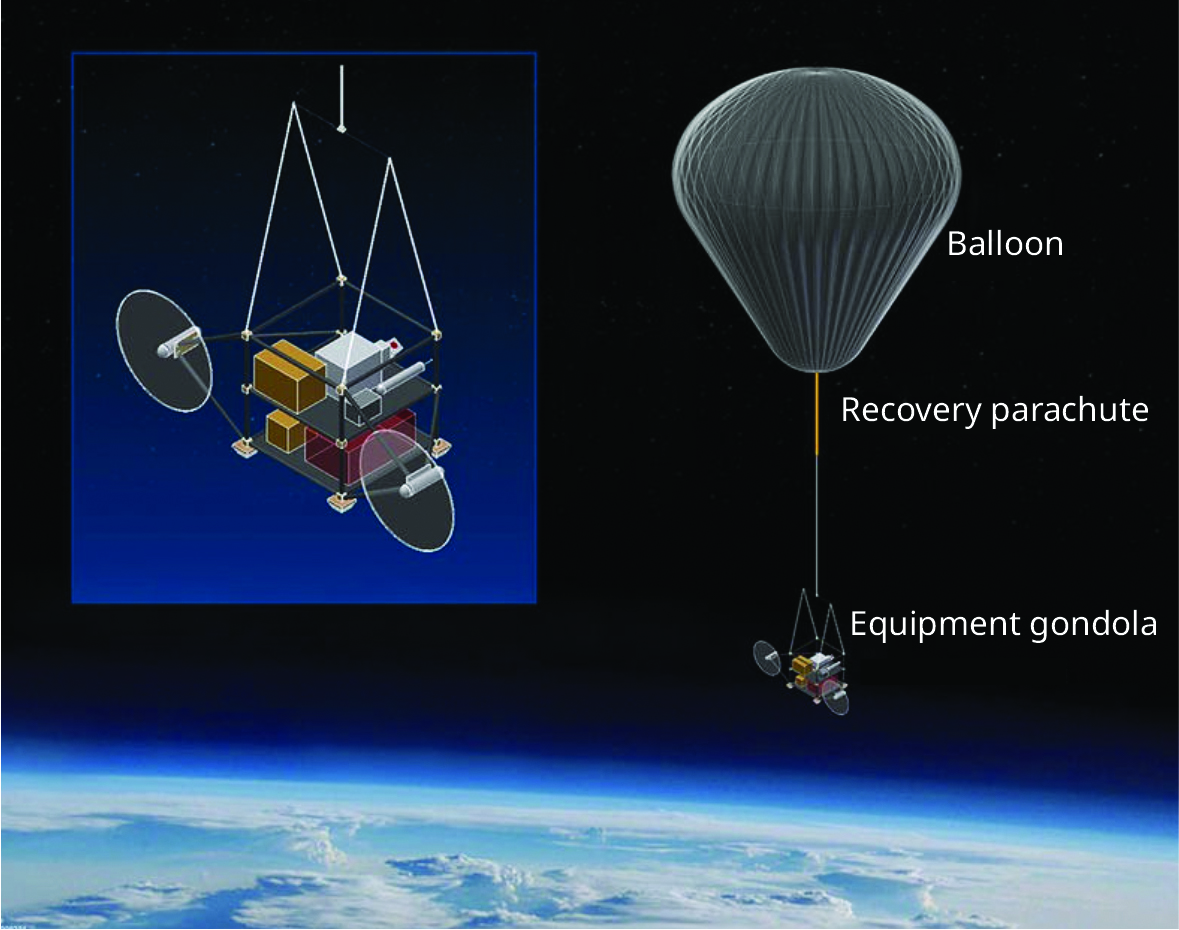
The Stratospheric Controlled Perturbation Experiment, or SCoPEx, was a small-scale outdoor experiment first proposed by researchers at Harvard University in 2014 to better understand aerosol dynamics in the stratosphere. 4 It was to use an engineered balloon platform, illustrated in figure 4 , to release a few kilograms of calcium carbonate and possibly other materials—less than what is released by a typical plane flight—into the stratosphere and subsequently observe changes in air chemistry. The experimental results would have been used to improve stratospheric models.
Figure 3.

Aerosol emissions from ships can seed cloud formation and create ship tracks—a similar effect to marine cloud brightening aimed at increasing the reflection of solar radiation.
(Image courtesy of NASA Goddard Photo and Video photostream, NASA/GSFC/Jeff Schmaltz/MODIS Land Rapid Response Team.)

Notably, the research team identified it as a solar geoengineering experiment. Because that designation was unprecedented in the research community, Harvard established a formal independent advisory committee in 2019 to provide guidance on legal compliance, safety, transparency, scientific review, and public engagement. (Note: I was a member of this committee.) The governance framework was notable for being proactive and multidisciplinary, but it was introduced relatively late in the project’s development.
In 2021, researchers proposed a test in a Sami community in Sweden to see whether the engineering platform, not the experiment itself, worked properly. But the researchers called off the test because of strong opposition from Indigenous Sami leadership and recommendations from the advisory committee. Although the researchers considered proceeding with the experiment in a US location, it was ultimately canceled in March 2024. The committee found that an ad hoc approach to governance of outdoor experimentation is immensely challenging, and solar geoengineering requires a more coordinated, consistent approach across civil society, research institutions, and both public and private funders. Such an effort would provide clear guidance for researchers and accountability to communities. 5
In contrast, an experiment in Alameda, California, led by the University of Washington and supported by the nonprofit organization SilverLining, had a very different approach to governance. The experiment involved spraying sea-salt particles (less than 100 tons annually) from the deck of the USS Hornet to study aerosol size and dispersion and to assess the efficacy of their engineered sea-salt sprayers over water. 6
The institutions that organized the Alameda experiment did not create a formal governance or engagement process before conducting the experiment. Rather, they ensured legal compliance in advance and subsequently launched a public engagement campaign after the experiment started and was announced in the media. At that point, it became clear that local officials and residents were unaware of its full scope until after the fact. The Alameda City Council paused and subsequently stopped the experiment. Although independent studies found no harm to public health or the environment, the lack of transparency and consultation led to political and civic backlash. The governance in this case was largely reactive and relied on only existing regulation; no anticipatory governance or oversight was planned.
The two cases highlight contrasting approaches to governance in early outdoor solar-geoengineering research. SCoPEx exemplified a formal, committee-led model that aimed to embed responsibility and transparency into the research process, yet the actors involved still struggled to determine when and how to engage local communities near the platform test. The cancellation of the Alameda project demonstrates the risks of proceeding without transparency or robust local public engagement before implementation. Together, the examples underscore the importance of early, inclusive, and transparent governance structures—and the repercussions of mistakes—when conducting solar geoengineering research.
Continuing outdoor research
Currently, some researchers and funders are engaging in outdoor work and trying to heed those lessons, while others are blatantly ignoring them. Most prominently, the UK government recently announced research funding for 22 solar geoengineering research projects, including five controlled, small-scale outdoor experiments. 7 That work is being funded through the Advanced Research and Invention Agency (ARIA), a relatively new, independent government agency that was launched in 2023. ARIA assembled an independent oversight committee to guide the governance of its research, especially outdoor experiments. (Note: I currently sit on this committee.) The committee supports transparent oversight and is helping shape norms for responsible research. Importantly, though, ARIA has oversight over only the research that it funds.
Figure 4.

SCoPEx, the Stratospheric Controlled Perturbation Experiment, was proposed by Harvard University researchers in 2014 but was canceled 10 years later despite transparent efforts to engage with the public about the limited environmental impacts it would have.
(Figure courtesy of the Keutsch Group at Harvard.)

In contrast, some emerging private companies are starting to do outdoor work with no oversight or governance whatsoever. For instance, Stardust Solutions, a startup that recently announced it had raised $60 million from venture capitalists and billionaires, is developing a proprietary aerosol particle with the intention to patent and license the technology commercially and sell the product to governments. 8
Though Stardust’s limited public messaging emphasizes integrity and professionalism, it has drawn scrutiny for its complete lack of transparency and public engagement. For example, it has not shared public information about its outdoor activity, but the company makes strong claims about the potential effectiveness of the aerosols. To date, it has offered no peer-reviewed research, no third-party oversight, and no signs of engaging the communities that could be affected by its work. Its website announces that peer-reviewed publication of its findings are coming at the beginning of 2026, but it has not always delivered on previous promises of transparency. Meanwhile, it has started lobbying the US government.
When solar geoengineering research occurs in secrecy, risks extend beyond a simple lack of oversight. Opaque research efforts could exacerbate geopolitical tensions and fuel mistrust between countries or suspicion about unmonitored experimentation. Secretive research funded by private entities or countries that can afford it could limit equitable access to potential benefits and disproportionately advantage those powerful nations or actors. Furthermore, uncontrolled experimentation conducted without public accountability heightens the risk of unintended environmental and societal consequences, which have the potential to cause harm that governance frameworks are explicitly designed to prevent.
Because ARIA is a public institution, it is accountable to elected officials and an oversight committee, and it is subject to public debate. At the same time, because it is public, ARIA has drawn criticism from prominent scientists for engaging in solar geoengineering at all and supporting outdoor experiments. 9 The program has also received Environmental Information Regulations requests (similar to US Freedom of Information Act requests). 7 Stardust’s work, however, has garnered little public attention until recently.
What those examples illuminate is that public questioning and controversy is inherent to solar geoengineering. Because of that, some scientists are considering whether being less transparent in their work is the better path forward. 10 If there are not mechanisms in place for research to succeed openly, it will be developed in quieter corners in the private sector or by militaries with no public oversight or opportunities for democratic decision-making and could lead to worse outcomes for society. 11
Many people already assume powerful actors are making decisions in secret. For example, multiple US states have been subject to calls from some of the public and lawmakers to ban nonexistent geoengineering such as chemtrails 12 —the subject of a debunked conspiracy theory that contrails from airplanes are chemicals being spread to control the weather. Amid growing anger at political corruption and the undue influence of billionaires on public institutions, hidden forms of research will almost inevitably face even stronger backlash when they come to light.
What is clear is that science does not operate in a vacuum. It exists as and within political institutions, and it must also be understood through a political lens. The field needs to take governance seriously if it wants to enable the research that is necessary to answer critical questions.
What now?
The solar geoengineering field is at a pivotal juncture for reflection on what is required to protect society’s ability to pursue research, but it needs to do so in ways that elicit trust and do not exacerbate harm. Doing so is important not just for science but for the people that science is built to serve. Critics of solar geoengineering frequently express legitimate concerns about unintended environmental impacts, potential distraction from essential emissions mitigation, and ethical considerations. 2 Those concerns are well founded and underscore the necessity of transparent and accountable governance.
Robust governance frameworks that are built into research plans early and have clear environmental safeguards, real and equitable participation from vulnerable communities, and stringent accountability measures could directly address many of the concerns. Rather than dismissing or sidelining them, effective governance incorporates such concerns as a mechanism to ensure research remains aligned with societal needs and ethical standards.
Importantly, the need for governance is not specific to solar geoengineering. A useful lesson can be drawn from AI development, in which technology has leapt ahead of governance, which continues to lag behind. There is incredible excitement, investment, and a flurry of sweeping claims about how AI technologies will transform the world. But such hype is leapfrogging ahead of determining what the benefits to society will ultimately be. Though AI has clear potential value, it also comes with apparent and widespread risks. Despite that, AI has rapidly proliferated without the guidance of a shared global governance framework. There is no consensus on oversight and little to no transparency around who is building those systems and for what purposes.
With AI, the prioritization of technological use and profit before regulatory environments can catch up has led to the rapid spread of extremist content, racially biased surveillance, psychological damage that has not yet been fully understood, and forms of harm that are not yet known. Ultimately, the lack of governance to manage those risks and the eventual public response of shaping, slowing, or even stopping its use may be harmful to the development of AI to serve societal needs. In contrast, there is still a narrow window of opportunity to address the governance gap in solar geoengineering.
Building good governance
Of course, the question of what research governance in solar geoengineering should look like is not a new one. Norms in emerging technology development can help enable and shape science while also ensuring that technologies are being built to serve society. Principles for solar geoengineering governance that guide how research should proceed were introduced as early as 2009, with the Oxford Principles, 13 and as recently as 2024, with the American Geophysical Union’s ethical framework for climate intervention. 14 Though those two sets of principles are nuanced and have important differences, they both have similar overarching themes: transparency, public engagement, scientific merit, justice, and informed decision-making.
The critical question now is, What does governance look like operationally? Currently, no existing governance institution or international body, such as a United Nations agency, can or is willing to serve as a governing body for solar geoengineering research. How can the research and governance communities create a system with clear guidance—one that researchers can understand and follow, that holds them accountable, and builds public trust? What’s needed is a coordinated oversight structure that not only provides direction but also enforces standards, ensures transparency, and evolves alongside the science itself.
Engagement poses a particular challenge. Though it’s often treated like a single checkbox, engagement does not mean just one thing. It can serve a range of purposes, such as co-creation in research design, input into important decisions such as experiment location, and facilitation of free, prior, and informed consent. Those distinct types of engagement could be parallel processes that are all needed for one experiment.
The solar geoengineering field needs to move beyond the use of vague rhetoric and the treatment of engagement as a simple binary—as if the choice is simply to engage or not. That means thinking concretely about who to engage with, how, and to what end and understanding that the answers to those questions may look different at every stage in the research process. Engagement during early agenda setting looks different from engagement around a specific field experiment. But unless the field clearly defines what types of engagement are possible across scales of research, when it should happen, and how input will be taken seriously, engagement risks becoming a hollow promise.
No single organization can work across the spectrum of research governance needs. Good governance will require a collaborative approach to building a system that can help researchers succeed, build accountability, and serve the public good. Although no coordinated approach has taken shape in the field, a myriad of organizations are starting to build various facets of research governance to serve different goals.
In academia, social scientists are exploring public perception, equity, and policy design. A key example is the GENIE (Geoengineering and Negative Emissions Pathways in Europe) project, a multi-institutional effort funded by the European Research Council. 15 The project’s researchers are sharing knowledge on public and stakeholder perceptions of solar geoengineering around the globe, in countries across different regions.
Civil society is also engaged in multiple aspects of developing governance infrastructure. One example is my organization, the Alliance for Just Deliberation on Solar Geoengineering . We are working to build inclusive, science-informed frameworks for decision-making through capacity-building workshops, policy writings, and collaboration with policymakers and civil society in climate-vulnerable regions.
In recent years, intergovernmental entities and national scientific academies have also taken first steps into the discussion. In its 2023 One Atmosphere report, the UN Environment Programme calls for international governance frameworks to guide solar radiation management research and potential deployment. 16 The report emphasizes the importance of transparency, inclusivity, and global coordination, and it recommends that any future decisions on solar radiation management be made collectively and cautiously, grounded in robust science, and in alignment with climate justice and sustainability goals. In 2021, the US National Academies of Sciences, Engineering, and Medicine released a report on the research and governance of solar geoengineering, 2 and in November 2025, the Royal Society in the UK published a policy briefing on the science and governance of the field. 17 Both reports made similar observations.
Looking forward
Solar geoengineering is evolving rapidly, and research efforts are advancing quickly. For research to proceed in a way that addresses public concern and is beneficial to communities, a careful and coordinated approach to its governance is necessary. Without it, there is a risk that private actors or powerful governments will define the terms of how the field is built in a way that sidelines public accountability and deepens global inequities.
Responsible research requires more than technical safeguards. It demands clear rules, meaningful engagement, and systems that are transparent, are inclusive, and evolve along with the science. Solar geoengineering is not an idea that will disappear. Without mechanisms for such research to succeed, geoengineering may develop in ways that are instead built for individual, company, or government profit or power rather than for society’s benefit. It is not the first time that society has needed to create new research governance mechanisms for emerging technologies, and it won’t be the last. It is incumbent on scientists, policymakers, and civil society to create a framework that balances trust and scientific progress to serve the public good.
References
1. P. J. Crutzen, “Albedo enhancement by stratospheric sulfur injections: A contribution to resolve a policy dilemma? ,” Clim. Change 77, 211 (2006).
2. National Academies of Sciences, Engineering, and Medicine, Reflecting Sunlight: Recommendations for Solar Geoengineering Research and Research Governance , National Academies Press (2021).
3. S. Talati, P. C. Frumhoff, “Strengthening Public Input on Solar Geoengineering Research ,” issue brief, Union of Concerned Scientists (June 2020).
4. J. Tollefson, “Divisive Sun-dimming study at Harvard cancelled: What’s next? ,” Nature, 27 March 2024.
5. S. Jinnah et al., “Do small outdoor geoengineering experiments require governance? ,” Science 385, 600 (2024).
6. C. Flavelle, “Warming is getting worse. So they just tested a way to deflect the Sun ,” New York Times, 2 April 2024, updated 30 September 2024.
7. Advanced Research and Invention Agency, Exploring Climate Cooling program.
8. R. Skibba, “A mysterious startup is developing a new form of solar geoengineering ,” Wired, 22 March 2025.
9. R. Pierrehumbert, M. Mann, “The UK’s gamble on solar geoengineering is like using aspirin for cancer ,” Guardian, 12 March 2025.
10. D. Gelles, “This scientist has a risky plan to cool Earth. There’s growing interest ,” New York Times, 1 August 2024, updated 30 September 2024.
11. S. Talati, H. J. Buck, B. Kravitz, “How to address solar geoengineering’s transparency problem ,” Proc. Natl. Acad. Sci. USA 122, e2419587122 (2025).
12. V. DiFonzo, “Alluding to ‘chemtrail’ conspiracy theory, Mastriano floats ban on climate mitigation techniques ,” Pennsylvania Capital-Star, 10 June 2025.
13. S. Rayner et al., “Memorandum on draft principles for the conduct of geoengineering research ,” submitted to the UK House of Commons Science and Technology Committee enquiry into the regulation of geoengineering (2009); S. Rayner et al., “The Oxford Principles ,” Clim. Change 121, 499 (2013).
14. American Geophysical Union, Ethical Framework Principles for Climate Intervention Research (2024).
15. GENIE, “Solar Radiation Management–Knowledge Hub .”
16. United Nations Environment Programme, One Atmosphere: An Independent Expert Review on Solar Radiation Modification Research and Deployment (2023).
17. Royal Society, Solar Radiation Modification: Policy Briefing (2025).
More about the authors
Shuchi Talati is the founder and executive director of the Alliance for Just Deliberation on Solar Geoengineering. She has worked on climate change across academia, government, and the nonprofit sector. She has a PhD in engineering and public policy from Carnegie Mellon University in Pittsburgh, Pennsylvania.