Renewable Energy: Progress and Prospects
DOI: 10.1063/1.1480784
The Roman physician Galen (circa 130–200 AD) wrote that Archimedes had repelled a Roman fleet in 212 BC by focusing sunlight from soldiers’ shields to set the ships on fire. Although most likely myth, this story illustrates the long history of our interest in harnessing renewable energy. The industrial revolution itself was launched with water wheels, windmills, and biomass fuels.
Modern efforts to harness renewable energy sources increased sharply after the 1973–74 oil embargo, setting in motion significant technical and market advances. These efforts have, for example, reduced the cost of wind-generated electricity by an order of magnitude—down to 4 or 5 cents per kilowatt-hour in areas with good wind resources and favorable financing. In 2000, the global generating capacity from wind turbines increased by 4500 MW, most of which was installed in Europe, to a global total of 18 500 MW. In the US, about 1700 MW of wind-turbine capacity was installed last year, raising the country’s total to 4300 MW. Photovoltaic electricity costs have also been reduced by an order of magnitude, down to 20–30 cents per kilowatt-hour, making photovoltaics the technology of choice in smaller applications isolated from the electric distribution grid. Global sales of photovoltaic generation capacity totaled 396 MW in 2001, up 38% from the year before.
Overall, renewable energy provided about 6.6 quads (one quad is 1015 Btu or about 1018 joules) of primary energy to the US in 2000, out of total US consumption of 98.5 quads. Compare that to 23 quads from coal, 23 from natural gas, 38 from oil, and 8 quads from nuclear reactors. (“Primary energy” is the calorific energy of all fuels, plus fuel equivalents of other energy sources.) Of the renewable energy, about 3.3 quads were from biomass, 2.8 from hydroelectric generation, 0.32 from geothermal sources, 0.07 from solar energy (mostly for heating water), and 0.05 quads from wind turbines. 1
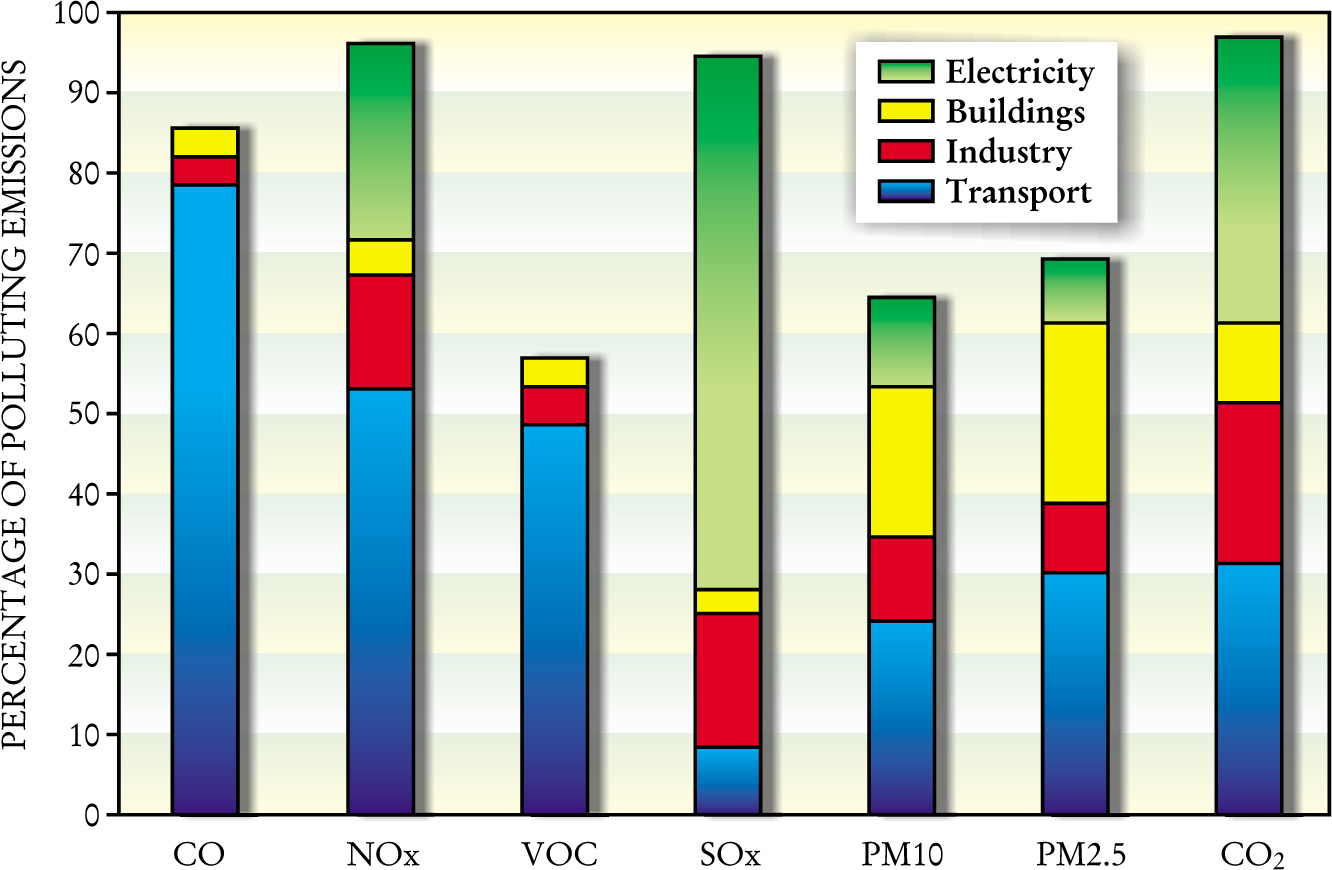
Why is there such strong interest in renewable energy technologies (RETs)? For one thing, conventional energy systems are the principal source of air pollution and greenhouse gases (see figure 1). Furthermore, they require the US to import 10 million barrels of oil per day, some of it from politically volatile regions of the world. RETs can similarly provide electricity, transportation fuels, heat and light for buildings, and process heat for industry, but with much less environmental impact.

Fraction of atmospheric emissions of pollutants and carbon dioxide in the US in 1998 from sources directly related to energy supply and use, grouped by sectors of the economy. The emissions are: oxides of carbon, nitrogen, and sulfur; volatile organic compounds; and particulates (labeled by typical size in micrometers) from anthropogenic sources other than agriculture, forestry, or unpaved roads.
(Adapted from Environmental Protection Agency pub. no. EPA-454/R-00-002 [2000] and Energy Information Administration pub. no. DOE/EIA-0573(99) [2000].)

The inherent cleanliness of renewable energy technologies minimizes decommissioning costs and long-term health and safety concerns. Renewable transport fuels can reduce US oil imports. The wide dispersal of RETs and their minimal use of hazardous materials make them relatively unlikely targets for terrorist attack, although pipelines and storage facilities for renewable fuels would remain somewhat vulnerable. RETs also promise significant economic benefits, particularly for hard-pressed rural areas where one could site wind turbines or produce biomass feedstocks. With continuing R&D, combined with carefully targeted demonstration and deployment activities, RETs may well become major contributors to US and global energy supplies over the next several decades.
This article discusses primarily solar photovoltaic, wind, and biomass systems. References 2–5 offer useful discussions of other important RETs, including solar-thermal electric systems and solar heating systems, passive solar architecture, geothermal energy, and hydroelectric power.
Solar photovoltaic technology
The heart of a photovoltaic device is a junction whose electric field separates electron–hole pairs created by absorbed solar photons, thereby generating a current through an external circuit. 6–8 Photovoltaic technologies include crystalline silicon, thin films, high-efficiency cells, and more advanced concepts such as dye-sensitized cells. Considerable work has also been done on photoelectro-chemical cells that can produce hydrogen directly, without separate electrolysis. 9
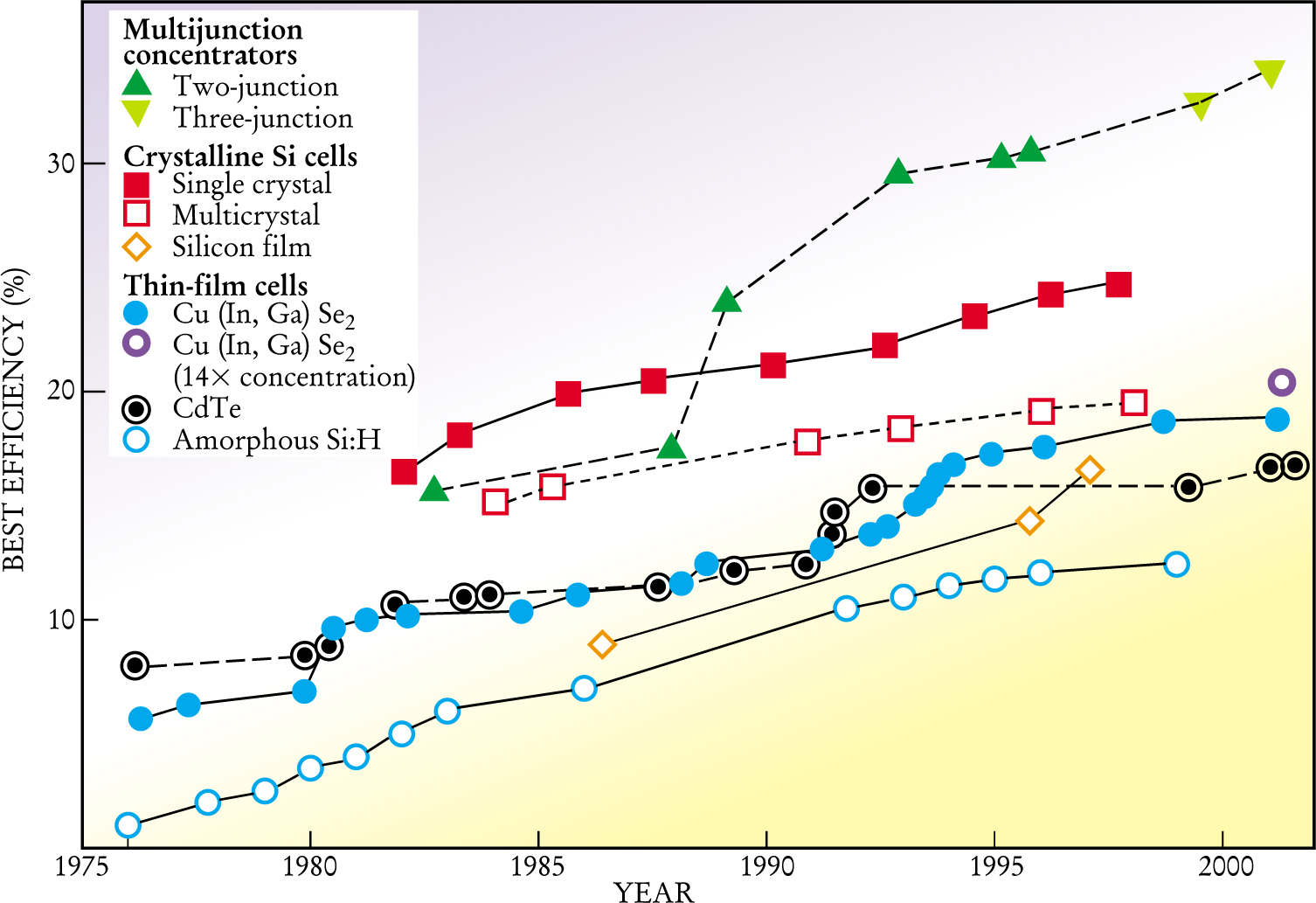
Among the factors limiting photovoltaic efficiency are: the mismatch between the solar photon spectrum and the bandgap of the materials; optical losses due to reflection off the cell surface or shadowing by the conductor grid that collects the electric current; recombination of electron–hole pairs; and the resistance of the metal–semiconductor contact. Substantial progress has been made in addressing these constraints. Efficiencies of laboratory cells have been increasing steadily, as indicated in figure 2. These laboratory efficiencies, significantly higher than those of commercial modules presently available, indicate the large potential for further cost reduction.

Improving efficiencies of laboratory photovoltaic cells of various kinds in recent decades. Present record holders include Spectrolab (3-junction concentrators), University of New South Wales (single and multicrystal Si), National Renewable Energy Laboratory (CIS and CdTe), Astropower (Si film), and United Solar (amorphous Si).
(Adapted from ref. 6.)

Devices made of single-crystal or polycrystalline silicon (c-Si), from ingots, ribbons, or film, accounted for 86% of commercially produced photovoltaic power modules in 2000. Commercial cells of single-crystal or multicrystalline silicon typically have efficiencies of 12–15%. For comparison, the best laboratory cell to date (excluding those that use optical components to concentrate sunlight) has achieved an efficiency of 24.7%. Efficiencies of this high order owe much to advances in surface texturing to reduce reflection, buried contacts to reduce shadowing, and improved processing of materials to remove or neutralize impurities and defects.
The push to higher production rates requires better understanding of the effects of defects and impurities. This is especially important for polycrystalline silicon and silicon film. They have greater problems in this regard, but they receive less attention because the microelectronics industry is more interested in single-crystal silicon.
Although c-Si dominates the photovoltaic industry at present, it faces significant challenges in the quest for ever-lower costs. The industry has, until now, depended mostly on scrap silicon from the semiconductor industry to provide low-cost materials. But continued growth in the production of c-Si photovoltaic devices is expected to absorb the available supply within a few years. Improved silicon production techniques will be important for providing low-cost materials. Improved production processes are also needed; current c-Si techniques involve the costly handling and processing of individual wafers.
Another approach is the development of microcrys-talline silicon films on inexpensive substrates. Thin-film c-Si will require new techniques to increase grain size and lower defect densities while simultaneously increasing silicon deposition rates and production throughput. Because of their large absorption lengths, silicon-film cells will also require enhanced light trapping.
Thin films
Thin-film photovoltaic materials include hydrogenated amorphous silicon, cadmium telluride (CdTe/CdS), and variants of copper indium diselenide and related alloys. These thin films help address cost and materials constraints by minimizing the use of expensive active materials, and by involving production techniques designed for high throughput. Typical thin-film photovoltaic devices use a layer of active materials, roughly a micrometer thick, on a low-cost substrate such as glass or sheet steel. Most of the active materials have a direct bandgap, so that their optical absorption can be very high over such a thin cell, and one needs less surface treatment to improve light trapping than crystalline silicon requires. Costs can be further reduced by placing the thin film on a substrate that actually forms part of a building’s roof, walls, or windows. That approach is called building-integrated photovoltaics.
Amorphous-silicon thin films (on glass, metal, or silicon substrates) account for about 13% of commercial photovoltaic power-module production today, (not including the thin films used indoors for consumer products such as calculators). Amorphous silicon is typically produced by a plasma discharge that deposits material on glass or sheet steel, with hydrogen added to take up dangling bonds and improve carrier lifetimes. Light-induced degradation of cell efficiency remains an important issue that limits efficiencies of commercial modules to 6–9%, which is perhaps half of their practical potential. 6
In the laboratory, thin-film photovoltaic cells of Cu[In1−x Ga x ][Se1−y S y ]2/CdS and related alloys have achieved 18.8% efficiencies. (The slash indicates an interface). With optical concentrators that increase the solar radiation intensity by a factor of 40, such cells have achieved 21.5%. Copper indium diselenide materials are particularly interesting because of their high efficiency, long-term stability, and potential for low-cost production. Commercial production is just beginning. Ongoing challenges include the quest to make cells simpler, the development of lightweight flexible substrates, manufacturing scale-up, and the elimination of the CdS windows to improve environmental acceptance.
CdTe thin-film cells have achieved 16.4% efficiencies in the laboratory and as much as 10% in commercial modules. Commercial production of CdTe cells totaled about 1.2 MW in 2000. They have been produced by electro-deposition, vacuum deposition, screen printing, sintering, and spraying. This variety of methods suggests their promising potential for low-cost production. The need for substrates of expensive borosilicate or sodium glasses remains a problem, as does stability in humid environments and the use of toxic cadmium, although the amounts and the risk of its getting into the environment are very small.
High-efficiency cells of semiconductors such as InGaAsN/GaAs have bandgaps suited to high-efficiency photovoltaic conversion. Furthermore, because the bandgaps can easily be adjusted, they lend themselves well to multiple-junction designs in which the bandgaps of successively layered junctions are step-matched to the solar photon energies. This scheme increases efficiency, but it also increases the cost and complexity of the cell. For space satellites, the 3-junction Ge/GaAs/GaInP cell has become the standard, and four-junction cells are under development.
An alternative to covering large areas with expensive photovoltaic materials is to use low-cost lenses or mirrors to concentrate sunlight on high-efficiency cells. But optical concentrators are not very effective at collecting diffuse solar radiation, and they involve the additional costs and complexities of tracking the sun.
Photovoltaic modules consist of cells connected together to provide the desired voltage and current, and coated to protect them from the environment. Coatings to protect the cells from moisture have typically been made of ethylene-vinyl acetate. In years past, the transparency of these coatings degraded significantly over time with exposure to ultraviolet. Research on UV-resistant polymers and UV filters such as cerium in glass have largely addressed this problem. But challenges remain in developing better and lower-cost protective materials.
As the costs of photovoltaic modules continue to decline, it will become increasingly important to control the costs of peripheral components such as support structures. That will further drive the shift to building-integrated photovoltaics and the search for improved processes for layering high-efficiency cells on low-cost, lightweight, flexible substrates to reduce costs of shipping, handling, and installation. 10 We will also need less expensive, higher-performance power electronics to convert the DC photovoltaic output to line AC. 11
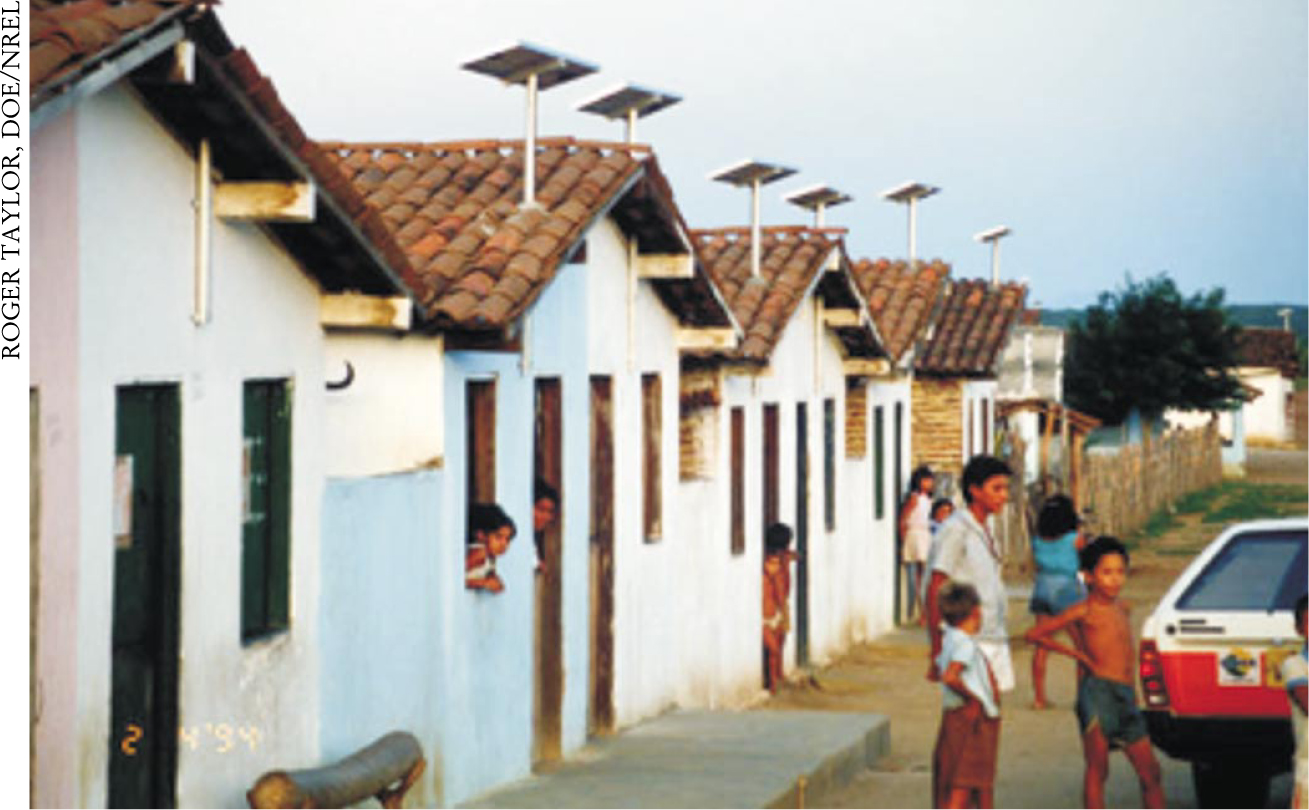
Solar photovoltaic systems are most often used as distributed energy resources, arrayed on the roofs of the buildings in which the electricity will be used. (See figure 3.) That reduces electricity transmission and distribution losses, and it could also help reduce peak loading on the conventional utility grid.

In the Village of Cacimbas in Brazil’s Ceara state, 50-watt photovoltaic systems provide homes with electricity for fluorescent lighting. With support from the US Department of Energy, the Brazilian energy ministry is installing such systems in several states in the Amazon region and the country’s northeast.
ROGER TAYLOR, DOE/NREL

Wind energy
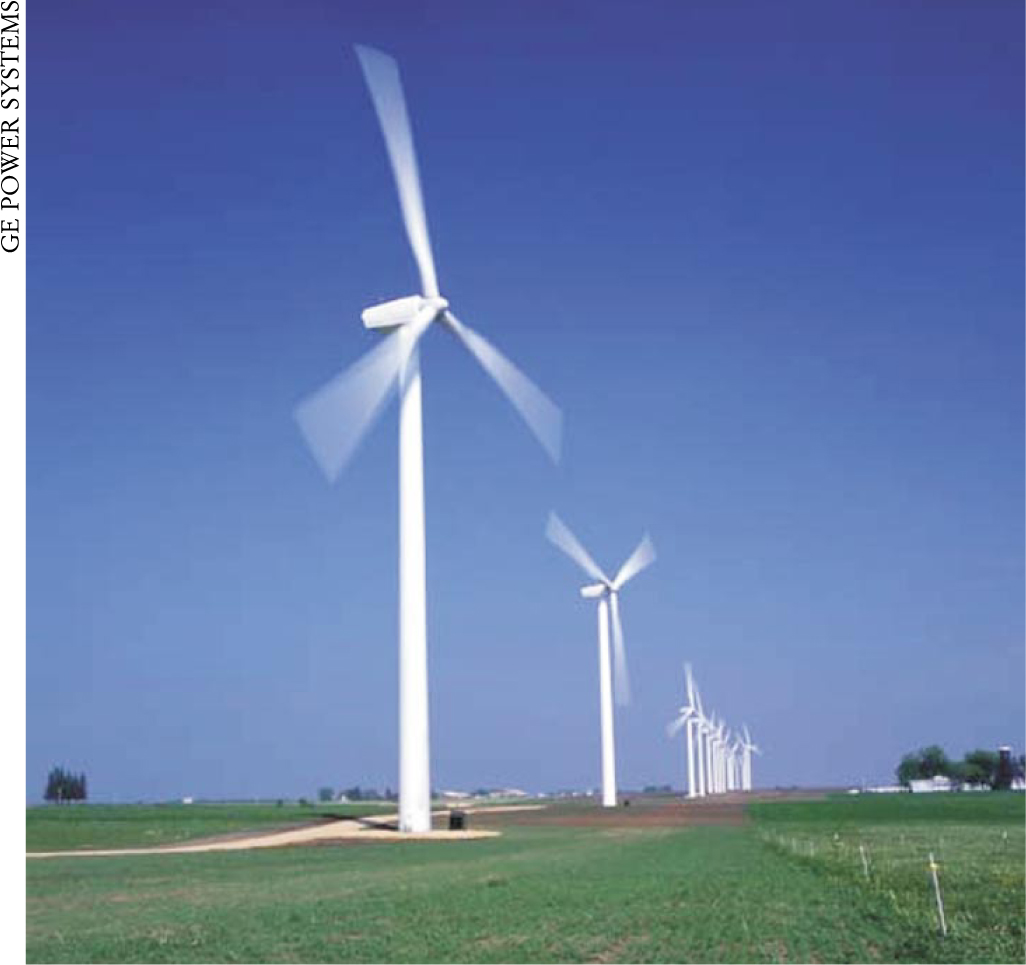
Wind turbines typically consist of two or three blades rotating about a horizontal axis and driving a gearbox and generator. 12–17 Over the past 20 years, the generating capacities of individual units have grown from typically 50 kW to an average of about 900 kW. (See figure 4.) The largest commercial units today have the rotor hub 68 meters above the ground, a rotor diameter of 72 m, and a generating capacity of 2 MW. These large turbines are currently being installed off the Danish coast. Denmark receives about 12% of its total electricity from wind power. Turbines capable of generating 3–5 MW from rotors up to 110 m in diameter are under development. 12

Montfort Wind Farm in Eden County, Wisconsin. These 20 wind turbines, each with a capacity of 1.5 MW, were put in place last year, replacing an earlier generation. Their 100-ft blades are installed on towers 215-ft high.
GE POWER SYSTEM

Wind turbines are subjected to more severe structural stress over longer periods than perhaps any other engineered systems. Wind power varies as the cube of velocity. Large fluctuations in wind speed can occur over minutes to days, and large amounts of turbulence can occur on time scales of seconds. Wind shear generally increases with height above the ground; the wind-power density at 50 m can be twice that at 10 m. The turbine blade has to flex through this variation with every rotation, including perhaps a hiccup as it passes the tower. With typical rotor speeds of a 0.3–1 revolution per second when the wind is blowing, a turbine blade can go through hundreds of millions of flex cycles in a lifetime of 30 years.
Early designs did not fully take account of these challenging loads, and many failed. Design approaches to managing these loads have variously included heavy and stiff designs, and load reduction by means of blade-tip brakes, pitch controls, and blade designs to reduce energy capture at high speeds. Heavy, stiff designs are more expensive because they require large amounts of material. The current emphasis in the US is on less expensive lightweight, flexible turbines. But it is more difficult to maximize energy capture when such light turbine blades are constantly flexing and changing pitch in the wind. To more effectively capture energy across the full operating spectrum, some modern systems are also being built with variable-speed electronic drives.
Modeling aerodynamic loads on turbine blades, transmissions, and towers is challenging, and lightweight, flexible designs—particularly with two-blade rotors—make it even harder. Among the daunting issues confronting modelers are turbulence, boundary-layer effects at the ground, wind shear, tower wind wake, variable angles of attack along the blade, dynamic stall, and aerodynamic interactions with the structure and the flexible blades. A recent comparison of eight different computer models found predictions of power outputs ranged from 60% to 150% of what was actually observed in wind-tunnel tests. 17
Present-day wind turbines have capital costs of less than $1000/kW, and electricity costs as low as 4 cents per kWh in areas with good wind resources and favorable financing. With current tax incentives of about 1.7 cents per kWh, wind turbines can even be competitive with electricity generated by natural-gas systems.
For the next generation of wind turbines for the US, the quest is for competitive cost in areas of moderate wind speed. Successful development would increase cost-competitive wind resources available in the US by a factor of 20, and greatly increase the population within reasonable transmission distance of them. If such technology can be successfully developed, the wind resources across the Great Plains states could potentially generate more electric power than is currently consumed by the entire country.
Large-scale deployment of wind turbines would not necessarily pose significant land-use problems. Windpower plants typically use 5% or less of the land for siting, road access, and transmission and distribution lines. The remaining land can still be used for farming or ranching without significant conflict. If and when wind begins to generate a significant fraction of the nation’s electric power, the variable availability of wind will require careful integration with other supplies, and possibly with energy-storage systems.
Further work is needed for wind power to become a major contributor to national and global supplies. This includes the development of stronger, lighter, and more fatigue-resistant materials for the blades, as well as higherperformance and lower-cost power electronics. Improved long-term weather and wind forecasting will be important. Improved designs, particularly for regions of low wind speed, will also be necessary. And, of course, appropriate policy support will be needed to help the technologies and markets develop.
Biomass
In 2000, renewable biomass—including wood, landfill gas, and ethanol made from corn—accounted for about 3.4% of the US primary energy supply. Biomass outputs included 64 TWh of electricity from 11 GW of generating capacity (1.7% of the country’s total capacity). Two billion gallons of ethanol fuel were produced from corn. That’s about 1.6% of the gasoline used annually in the US. Half a quad of wood was consumed for residential and commercial heating, which is about 4% of the country’s total consumption of energy for heating buildings. 1
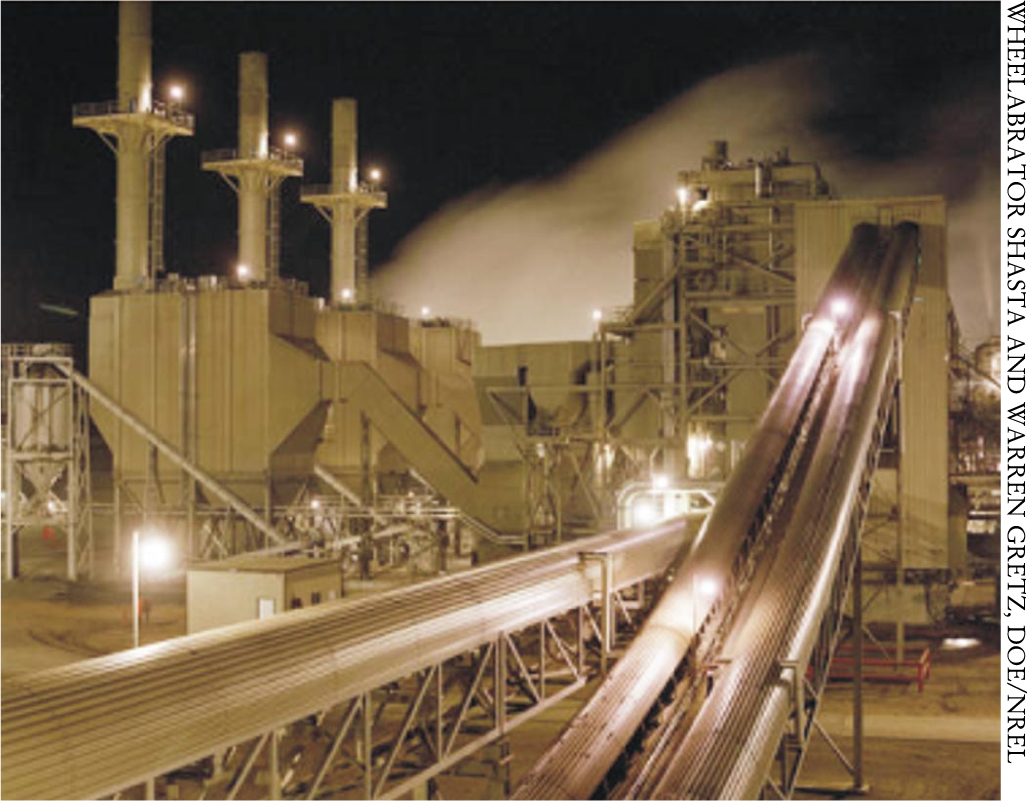
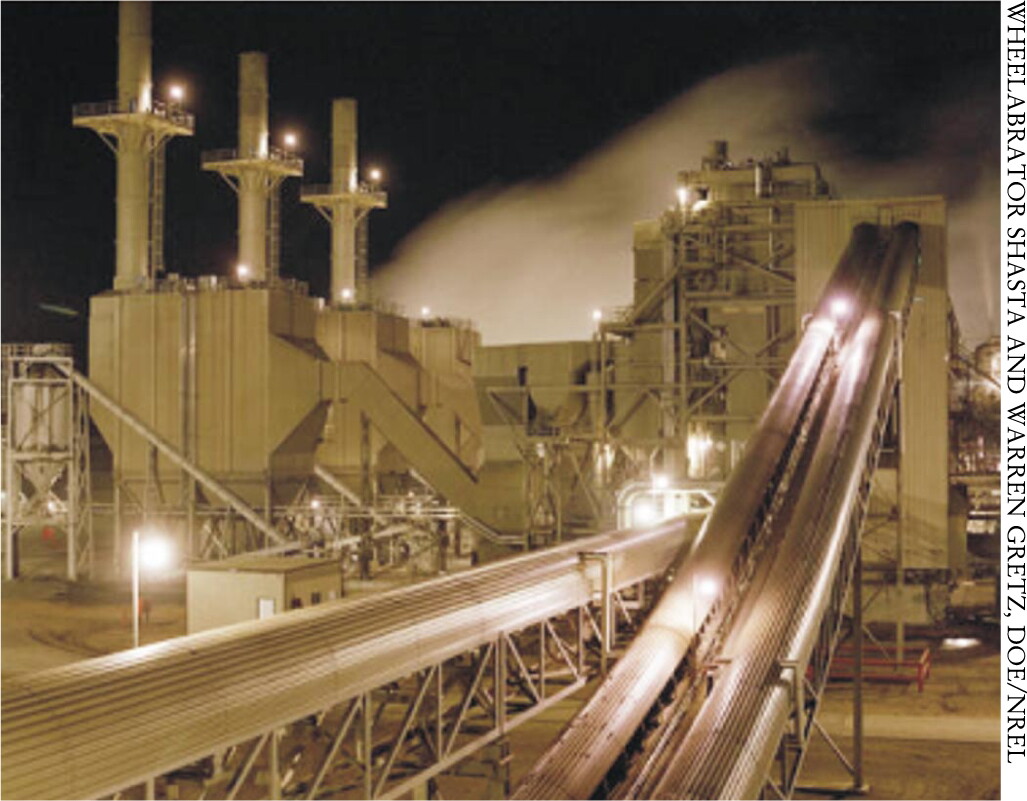
Current biomass energy technologies take several distinct forms: steam-powered generators similar to conventional coal-fired power plants, but on a smaller scale (see figure 5); fermentation and distillation systems to produce ethanol; and a variety of boilers, furnaces, and stoves for industrial processes or space heating. 2–5,8

Biomass power plant of the Wheelabrator Shasta Energy Co in Anderson, California, delivers 50 MW of electric power. It is fueled by wood from forest residues and lumber-mill wastes from the surrounding area.
WHEEL ABRATOR AND WARREN GRETZ, DOE/NREL
Biomass energy systems use plants to collect and store solar energy. The efficiency of this energy conversion from sunlight to biomass, averaged over the seasons, is typically on the order of 0.1%. The cost of collecting the biomass from a large area and then transporting it to a central facility is fairly high, because the energy density of biomasss is low. These costs have thus far limited the use of biomass primarily to places where it has already been collected for some other purpose, such as pulp and paper production, processing of food crops, and municipal waste disposal.
At a cost of $40/ton ($2.60 per million Btu) or less, the potential biomass resource from crop and forestry residues and other wastes has been estimated at roughly 400 million dry tons per year. The growth of dedicated energy crops on idle farmland could greatly expand this supply. Ten years ago, the Energy Information Administration of the US Department of Energy projected that coal prices, then at about $1.80/MBtu, would increase to about $2.60 per MBtu by 2010 (in constant 1999 dollars). In fact, competition from natural gas forced the coal industry to invest heavily in equipment and shed thousands of jobs in order to be competitive. The result has been lower coal costs. The present cost of coal is about $1.20/MBtu, and the projected cost in 2010 is down to $1.05/MBtu. So, simply burning biomass won’t be competitive with coal in the foreseeable future, except where it can be collected at very low cost.
Renewable bioenergy has some important potential benefits. Unlike fossil fuels, its carbon dioxide emissions are largely balanced by the next crop’s uptake of atmospheric CO2. The use of biomass can help remove animal and plant wastes. It reduces the need for oil imports, and it can generate jobs and income in rural areas. In a carbon-constrained world, biomass will ultimately be a primary source of carbon circulating through our economy, producing high-value chemicals and biodegradable products as well as fuels and power. Compared to coal, biomass fuels also have the advantages of low sulfur content and high reactivity—lowering temperatures and shortening times in gasification systems.
Integrated biorefineries
To make bioenergy cost-competitive so that these benefits can be realized, the focus of the biomass program has shifted from facilities focused on single outputs—electricity, fuel, or chemicals—toward integrated biorefineries capable of producing a spectrum of chemicals, fuels, and electric power to maximize value-added in response to market demand. 18 Such a biorefinery would help higher-cost biomass feedstocks compete with coal.
Technology pathways toward such versatile biorefineries can largely be divided into two broad categories: biochemical and thermochemical. Biochemical approaches include enzymatic processes that break cellulose into its component sugars, which can then be fermented to produce ethanol. That will make possible the production of ethanol from waste cellulose materials such as cornstalks. But it’s not easy to break cellulose down. Natural processes can take decades to decompose a fallen tree. Extensive work is being done on the genetic engineering of enzymes to increase their reactivity and reduce their cost. If cost-competitive production of fuels from celluloses can be achieved, it will reduce the longer-term risk of pitting the production of fuel for the rich against the production of food for the poor.
Ethanol can be blended with gasoline to raise the octane level and reduce emissions of carbon monoxide and ozone precursors. A typical blend is 10% ethanol and 90% gasoline. Ethanol can also be used in place of methyl tertiary-butyl ether, a widely used oxygenating chemical that has contaminated groundwater supplies in several states. Biochemical technologies can also generate various fermentation-based monomers from which biopolymers are made. With assistance from the US Departments of Commerce and Energy, researchers at Cargill Dow have developed a biobased plastic for which they are building a production facility in Nebraska.
Thermochemical pathways to biorefineries typically begin with gasification of the biomass. The hot gas is then cleaned and used as the combustion fuel in an advanced gasturbine generator. The first demonstration of an integrated gasification combined-cycle gas turbine was a 7-MW electric system in Varnamo, Sweden, which has had about five years of testing. A larger gasifier, with a capacity of 60 MW (thermal), has been constructed and is undergoing testing in Burlington, Vermont. In the future, this approach could include intermediate steps—between gasifier and turbine—that perform catalysis to produce high-value chemicals or fuels such as methanol, synthetic diesel liquids, or hydrogen. There is also considerable interest in using fuel cells for power production from biomass, particularly for small-scale systems such as a farmer might use.
The opportunities for integrated biorefineries are great, but so are the technical and market challenges. Substantial work is still needed on harvesting and transport equipment, on genetic engineering of biocatalysts, and on thermochemical systems.
Awareness and support for these activities has been growing, as evidenced by President Clinton’s Executive Order 13134 in 1999 and the Biomass Research and Development Act of 2000 (Public Law 106–224), and by the support of the Bush administration and its National Energy Policy in 2001.
Market development
At the time of the oil price shocks of the 1970s, it was believed that market development for renewables would evolve smoothly from niches to major energy markets. But as a result of the sharp declines in energy prices in the 1980s and late 1990s, the transition to major markets has proven difficult. At current and projected US natural-gas prices, combined-cycle systems fired by natural gas provide electricity at lower costs than most renewable systems could, and their emissions (except for CO2) are also relatively low. Deregulation and restructuring of the electricity sector have, in some respects, increased the difficulties of renewables. The markets may perceive renewable systems as being financially risky, because their capital costs are high. On the other hand, solar and wind systems are immune to the risk of fuel cost increases. Renewable energy technologies are often perceived as technically risky, as is any nascent technology unfamiliar to its potential users.
Given the competition from low-cost fossil fuels, renewable energy technologies face difficulties in achieving market and production scales large enough to drive costs down. Furthermore, companies often find it hard to attract financing for continued R&D, demonstration, and commercialization when they might not have a net return for 10 years or more. In contrast to pharmaceuticals and computer technologies, the product (electricity) is a very low-margin commodity for which high returns are unlikely. Efficient mechanisms for encouraging market growth for embryonic renewable-technology industries are important for establishing a desirable rapid cycle of scaling up production to drive down costs and thereby broaden the market base to allow production to scale up still further.
With continued R&D and early deployment, many renewable-energy technologies are expected to continue their steep cost reductions. Several could become competitive with coal over the next decade or two—either directly or in distributed-utility applications. Wind turbines, in particular, could even become broadly competitive with gas-fired combined-cycle systems in the next 10 years in places where there are winds of medium or high quality.
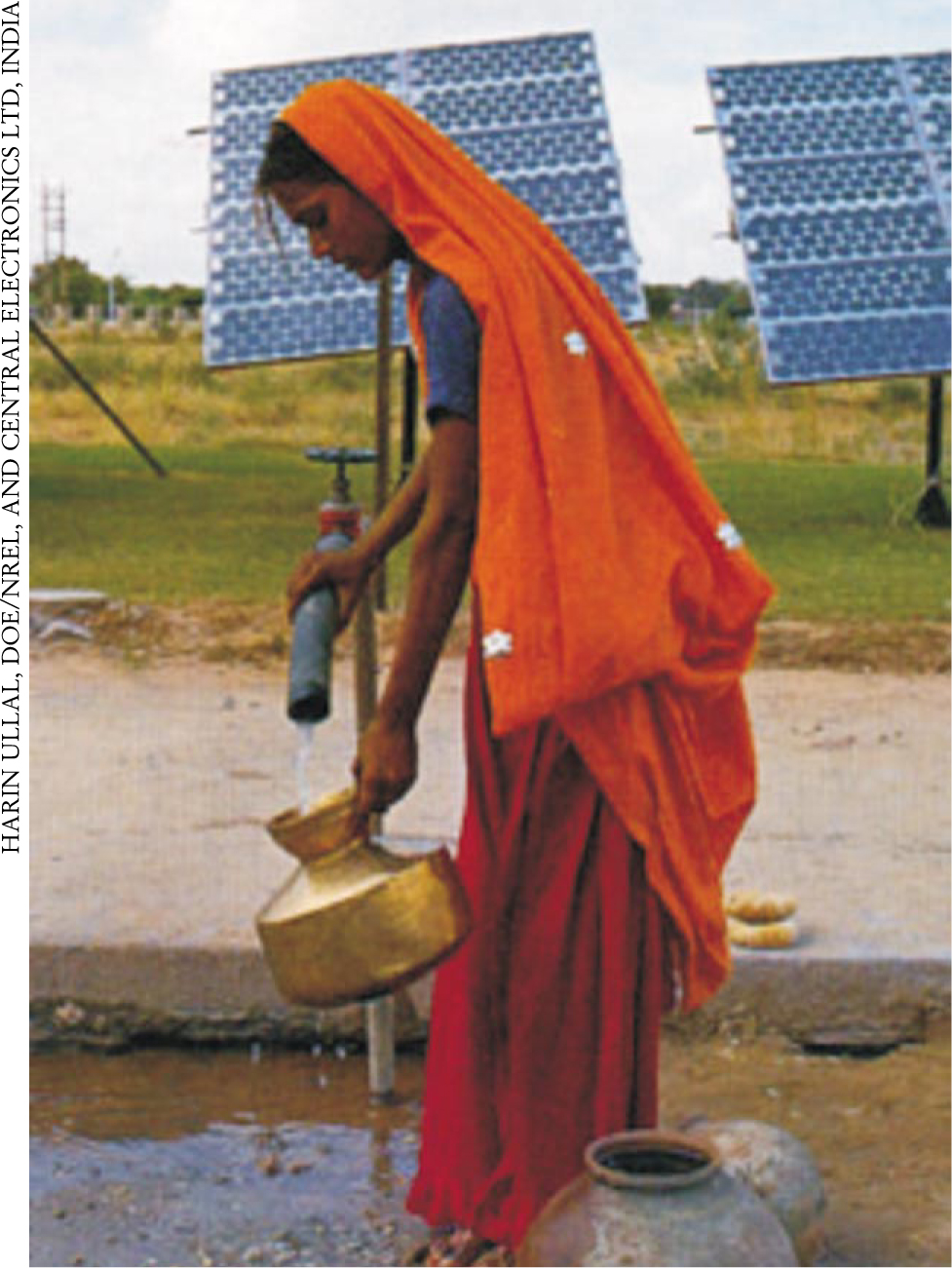
Most growth in the global demand for energy in the decades ahead will be in developing countries. The modularity and small scales of many renewable-energy technologies are well suited for these markets. Photovoltaic technology is already widely competitive for household lighting and other domestic uses in rural areas of developing countries, where some 2 billion people have little access to conventional electric utility power (see figure 6). In fact, roughly 75% of the photovoltaic modules currently produced in the US are exported. Wind-energy systems, sometimes hybridized with solar or fossil-fuel technologies, are likely to serve village-scale applications in many areas. Modern small-scale biomass power systems offer farmers new income-generating opportunities while providing an electricity base for rural industrialization.

In rural India, many water pumps are already powered by photovoltaics. The solar panels are visible behind the woman collecting potable water.
HARRIN ULLAL, DOE/NREL, AND CENTRAL ELECTRONICS LTD, INDIA

Pursuing these potentially large markets in developing countries poses serious logistic challenges, especially for small US companies. These areas generally lack much of the necessary market infrastructure of banks, distribution companies, and maintenance support. Moreover, US companies can be at a disadvantage in these markets if they are undercut by competition from aggressive foreign private–public export undertakings.
Renewable energy technologies have advanced dramatically during the past 25 years. They can become major energy sources in this country and worldwide over the next several decades. They could have significant global impact on economic, environmental, and security problems. This is an exciting field of research and development to which physicists can continue to make vital contributions.
This article reflects the views of the author and does not necessarily reflect the position of the US Department of Energy.
References
1. Energy Information Administration, Annual Energy Review 2000, rep. no. DOE/EIA-0384 (2000), US Dept of Energy, Washington, DC (August 2001).
2. T. Johansson, H. Kelly, A. Reddy, R. Williams, Renewable Energy: Sources for Fuels and Electricity, Island Press, Washington, DC (1993).
3. Office of Technology Assessment, US Congress, Renewing Our Energy Future, rep. no. OTA-ETI-614, US Government Printing Office, Washington, DC (September 1995), available online at http://www.wws.princeton.edu/∼ota .
4. President’s Committee of Advisors on Science and Technology, Federal Energy Research and Development for the Challenges of the Twenty-First Century, Office of Science and Technology Policy, Executive Office of the President, Washington, DC, (November 1997), available online at http://www.ostp.gov/PCast/pcastdocs93_2000.html .
5. President’s Committee of Advisors on Science and Technology, Powerful Partnerships: The Federal Role in International Cooperation on Energy Innovation, Office of Science and Technology Policy, Executive Office of the President, Washington. DC (June 1999), available online at http://www.ostp.gov/PCAST/pcastdocs93_2000.html .
6. L. Kazmerski, Solar-Electric Power: A 2001 Device Overview, National Center for Photovoltaics, National Renewable Energy Laboratory, Golden, Colorado (2001).
7. V. Kapur, R. McConnell, D. Carlson, G. Ceasar, A. Rohatgi, Photovoltaics for the 21st Century, Electrochemical Society, Pennington, N.J. (1999).
8. D. Yogi Goswami, K. Boer, eds., Advances in Solar Energy, American Solar Energy Society, Boulder Colorado, vol. 13 (1999) and vol. 14 (2000).
9. M. Gratzel, Nature 414, 338 (2001).
10. A. Payne, R. Duke, R. H. Williams, Energy Policy 29, 787 (2001).
11. J. van Wyk, F. Lee, D. Boroyevich, in Proc. IEEE, Special Issue on Power Electronics Technology, 89, 799–983 (June 2001).
12. M. Schou, Renewable Energy Focus, March 2001, p. 50.
13. D. Berg, ed., Special Issue: Wind Energy, J. Sol. Energy Eng. 123, 265–389 (2001).
14. S. Schreck, M. Robinson, M. Hand, D. Simms, J. Sol. Energy Eng. 123, 272 (2001).
15. D. Spera, ed., Wind Turbine Technology: Fundamental Concepts of Wind Turbine Engineering, ASME Press, New York (1995).
16. R. Thresher, D. Dodge, Wind Energy 1, 70 (1998).
17. J. Leishman, inProc. 21st ASME Wind Energy Symposium and the 40th AIAA Aerospace Sciences Meeting, Reno, Nevada, Jan. 2002, American Institute of Aeronautics and Astronautics, Reston, Va., to be published.
18. National Research Council Committee on Biobased Industrial Products, Biobased Industrial Products: Priorities for Research and Commercialization, National Academy Press, Washington, DC (1999).
More about the authors
Sam Baldwin is the chief technology officer of the Department of Energy’s Office of Energy Efficiency and Renewable Energy, in Washington, DC.
Samuel F. Baldwin, 1 US Department of Energy, Washington, DC,US .