Hydrogen: The Fuel of the Future?
DOI: 10.1063/1.1480785
Globally, direct combustion of fuels for transportation and heating accounts for more than half of greenhouse gas emissions, a significant fraction of air pollutant emissions, and about two-thirds of primary energy use. Even with continuing incremental progress in energy technologies, most energy forecasts project that primary energy use and emissions of greenhouse gases and air pollutants from the use of fuels will grow over the next century because of increasing demand, especially in developing countries. Energy-supply security is a serious concern, particularly for transportation fuels.
A variety of alternative fuels have been proposed that could help address future environmental and energy-supply challenges. These fuels include reformulated gasoline or diesel, methanol, ethanol, synthetic liquids such as dimethyl ether made from natural gas or coal, compressed natural gas, and hydrogen.
Of these, hydrogen offers the greatest potential environmental and energy-supply benefits. Like electricity, hydrogen is a versatile energy carrier that can be made from a variety of widely available primary (that is, naturally occurring) energy sources including natural gas, coal, biomass (agricultural or forestry residues or energy crops), wastes, sunlight, wind, and nuclear power. Hydrogen can be burned or chemically reacted with high conversion efficiency and essentially zero emissions at the point of use. If hydrogen is made from renewable or nuclear sources—or from “decarbonized” fossil sources that, during processing, have carbon dioxide captured and securely stored—it would be possible to produce and use fuels on a global scale with near zero emissions of air pollutants (nitrogen oxides, carbon monoxide, sulfur oxides, volatile hydrocarbons, and particulates) or greenhouse gases. A future energy system based on electricity and hydrogen—a so-called hydrogen economy—has long been proposed as an ideal long-term solution to energy-related environmental and supply problems (see
Balancing hydrogen’s attractions are the technical, economic, and infrastructure challenges posed by implementing hydrogen as a new fuel. Commercial technologies for hydrogen production, storage, and transmission exist in the chemical industries, but optimizing them for widespread hydrogen distribution to consumers involves engineering and cost obstacles. Hydrogen end-use technologies such as fuel cells are making rapid progress (see the article by November 1994, page 54 ). They are still very expensive compared to existing power sources, although costs are projected to drop with mass production. Developing lightweight, compact, low-cost hydrogen storage for vehicles remains an issue. Unlike gasoline and natural gas, hydrogen is not widely distributed today to consumers, and building a hydrogen infrastructure is often seen as a daunting problem.
Putting hydrogen to work
Like hydrocarbon fuels, hydrogen can be burned to release energy. Hydrogen internal combustion engines resemble those using more familiar fuels like gasoline, natural gas, or diesel fuel. The particular characteristics of hydrogen, described in
Hydrogen’s high flame speed and low ignition energy enhance mixing and complete combustion in the cylinder, but can result in backfiring if the fuel and air are mixed externally (as in a carburetor) before introduction into the cylinder. A better approach is direct injection of fuel into the cylinder just prior to spark ignition. With direct injection, hydrogen engines can be run at higher compression ratios than gasoline engines, increasing engine efficiency. Overall, well-designed hydrogen engines are estimated to have 20–25% higher energy efficiency than comparable gasoline engines, while eliminating all pollutant emissions except for low levels of NO x .
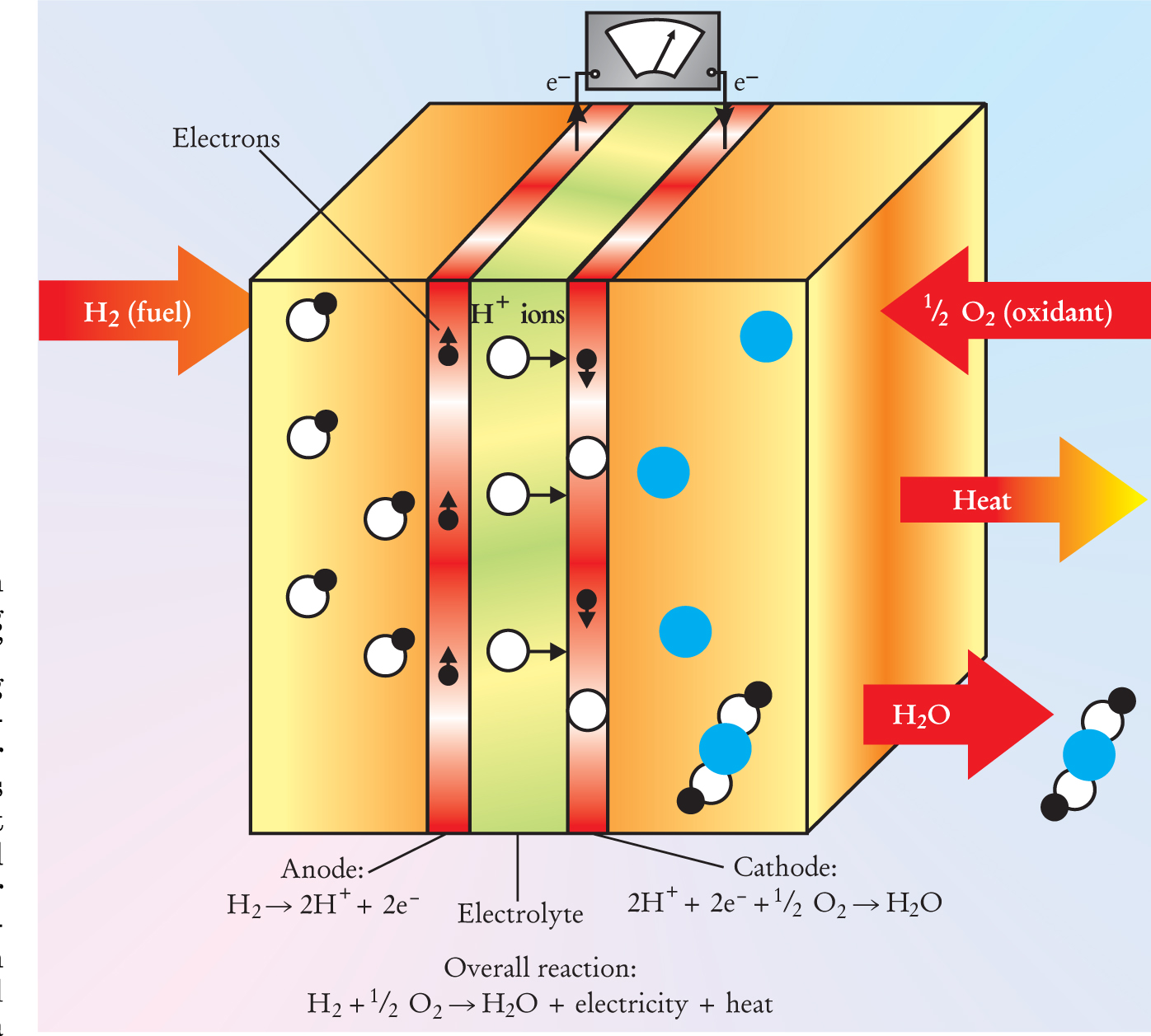
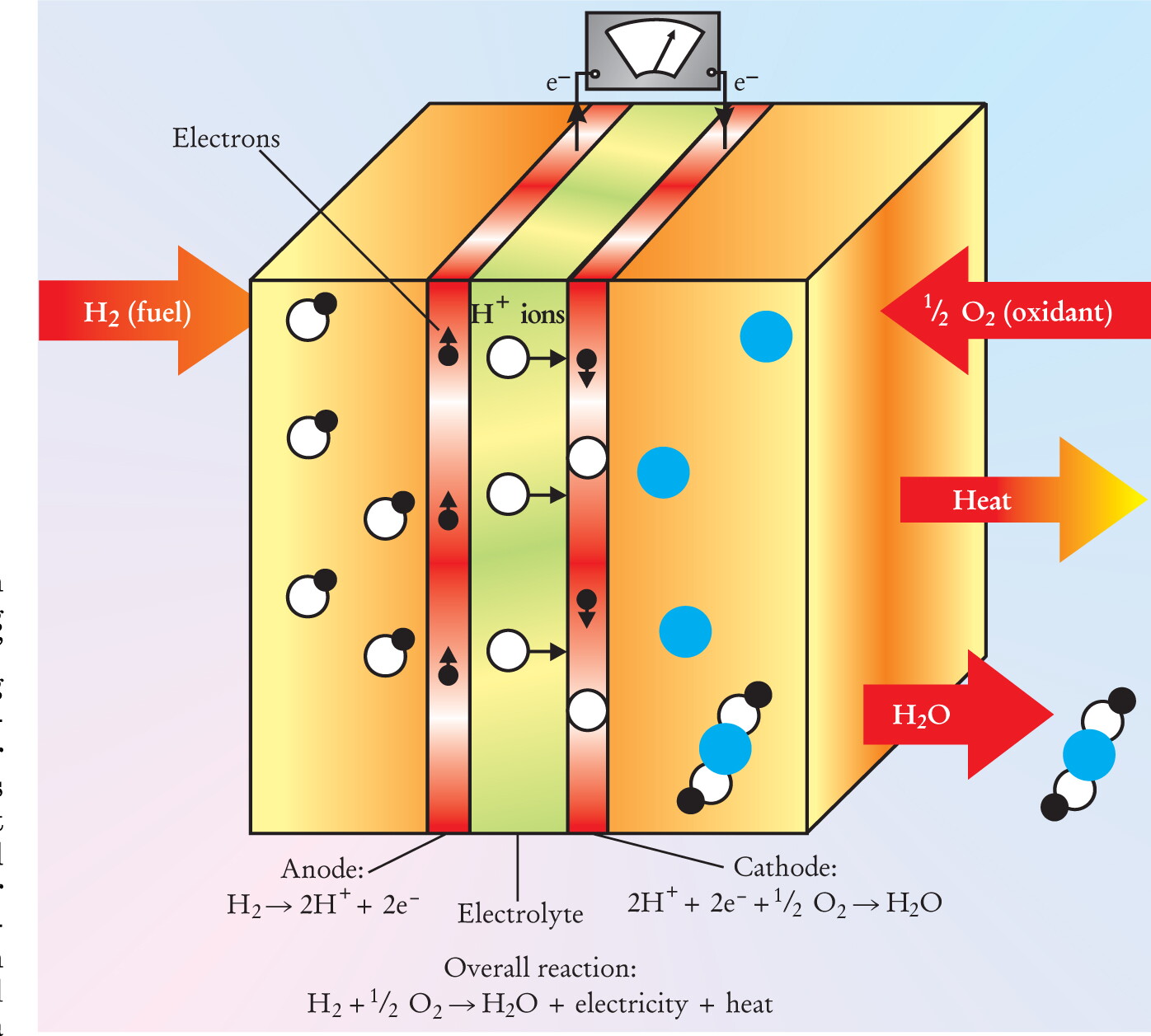
Efficiency would be further improved—and emissions eliminated altogether—with hydrogen fuel cells. A fuel cell, illustrated in figure 1, is an electrochemical device that converts the chemical energy in a fuel (such as hydrogen) and an oxidant (oxygen, pure or in air) directly to electricity, water, and heat. The theoretical electrical conversion efficiency for an ideal hydrogen-oxygen fuel cell is an impressive 83%; in practical fuel cells, up to 60% of the energy in the hydrogen is converted to electricity, with the remainder converted to heat. (For comparison, practical hydrogen internal combustion engines can achieve efficiencies of about 45%.) Many other reactions could theoretically be used in fuel cells, but hydrogen is preferred as a fuel because of its high electrochemical activity: The kinetics of the reactions at the anode proceed far more rapidly with hydrogen than with other fuels.

Hydrogen–oxygen fuel cells generate electricity through the controlled reaction of hydrogen and oxygen to form water. Hydrogen at the anode dissociates into protons and electrons. The anode is separated from the cathode by an electrolyte that can conduct protons but not electrons. To reach the cathode, electrons must travel through an external circuit, doing work. The protons and electrons combine with oxygen at the cathode to produce water and waste heat.
Although the principle of fuel cells has been known since 1838, the first applications didn’t emerge until the space program, in which fuel cells powered the Gemini and Apollo spacecraft. In the 1960s and 1970s, fuel cells were used in space and in military applications such as submarines. More recently, fuel cells have been developed for low-polluting cogeneration of heat and power in buildings. In the past few years, there has been a large worldwide effort to commercialize proton exchange membrane (PEM) fuel cells, the leading candidate for zero-emission vehicles.
The cost of PEM fuel cells is still far higher than the cost of internal combustion engines. For PEMs to compete in power applications and especially in transportation applications, major cost reductions are required, from today’s costs of $1500–10 000 per kilowatt to perhaps $50–100 per kilowatt for automotive applications. The most expensive part of today’s PEM fuel cells is the membrane electrolyte, and ongoing research is aimed at developing lower-cost materials. At present, relatively few fuel cells are produced; the manufacturing cost of PEM fuel cells is projected to decline with mass production.
Experimental hydrogen-powered vehicles date back to the 1930s. Beginning in the early 1990s, R&D on fuel-cell and electric vehicles increased, driven by zero-emissions vehicle regulations (enacted first in California and later in Massachusetts, New York, and Vermont) and government programs, notably the Partnership for a New Generation of Vehicles 1 (see April 1995, page 73 ), encouraging the development of high-efficiency automobiles. In January 2002, US Secretary of Energy Spencer Abraham announced plans for the FreedomCAR program, a successor to the PNGV program. This new long-term research initiative focuses on developing hydrogen and fuel-cell transportation technologies. 2
Progress toward a commercial fuel-cell vehicle is proceeding rapidly. Demonstrations of hydrogen fuel-cell buses are under way in North America and Europe, with a host of fleet demonstration projects planned over the next few years. Most major automobile manufacturers are developing fuel-cell vehicles: Ford Motor Co, DaimlerChrysler, General Motors Corp, Honda, and Toyota have announced their intent to commercialize fuel-cell automobiles in the 2003–5 time frame. Several oil companies, including BP, ExxonMobil Corp, ChevronTexaco Corp, and the Royal Dutch/Shell Group, are participating in demonstrations of hydrogen refueling systems for fuel-cell vehicle technologies.
Fuel cells are also being actively explored for power generation and heating. Because of ongoing deregulation, distributed (rather than centralized) production of power may play an increasing role in future electric utilities. Fuel cells have the potential advantage of high conversion efficiency and near zero emissions even at small sizes. Several companies are developing fuel-cell systems, in a range of sizes suitable for commercial and residential buildings, that run on hydrogen-rich gases derived from natural gas.
Historical perspective on the hydrogen economy
Although it is not considered a commercial fuel today, hydrogen has been used for energy since the 1800s. Hydrogen is a major component (up to 50% by volume) of synthetic gases (“syngas”) manufactured from gasification of coal, wood, or wastes. Syngas was widely used in urban homes in the US for heating and cooking from the mid-1800s until the 1940s, and is still used in parts of Europe, South America, China, and other locations where natural gas is unavailable or costly. Hydrogen-rich syngases have also been used for electricity generation. Hydrogen is an important feedstock for oil refining and indirectly contributes to the energy content of petroleum-derived fuels such as gasoline. Liquid hydrogen is used as a rocket fuel and has been proposed as a fuel for supersonic aircraft. Hydrogen use in energy applications (including oil refining) accounts for about 1% of global primary energy use today.
The concept of a “hydrogen economy,” or large-scale hydrogen energy system, has been explored several times, first in the 1950s and 1960s as a complement to a largely nuclear electric energy system (in which hydrogen was produced electrolytically from off-peak nuclear power), and later as a storage mechanism for intermittent renewable electricity such as photovoltaics and wind power. 12 More recently, the idea of a hydrogen energy system based on production of hydrogen from fossil fuels with separation and sequestration of byproduct carbon dioxide in depleted gas wells or deep saline aquifers has been proposed.
Over the past decade, interest in hydrogen has surged, driven by several factors. Concerns about global climate change have motivated new interest in low-carbon or noncarbon fuels. Hydrogen can be produced from a wide variety of materials, which makes it attractive for enhancing energy supply security, especially in the transportation sector. Recent rapid progress and industrial interest in low-temperature fuel cells for transportation and power applications has also led to a reexamination of hydrogen as a fuel.
Status of hydrogen energy technologies
Developing the technologies for using hydrogen is only half the challenge. For a fully functioning hydrogen economy, efficient means of producing, distributing, and storing hydrogen are just as important.
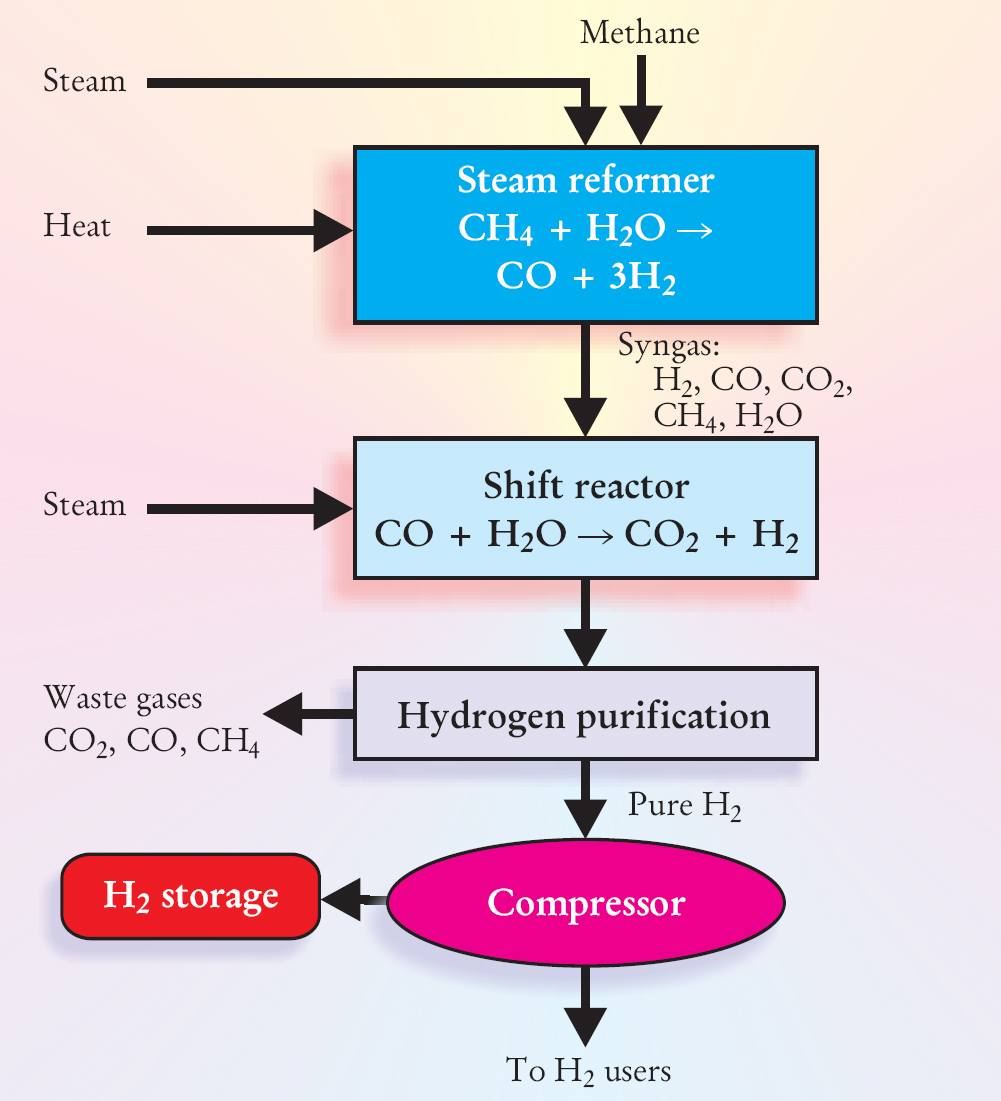
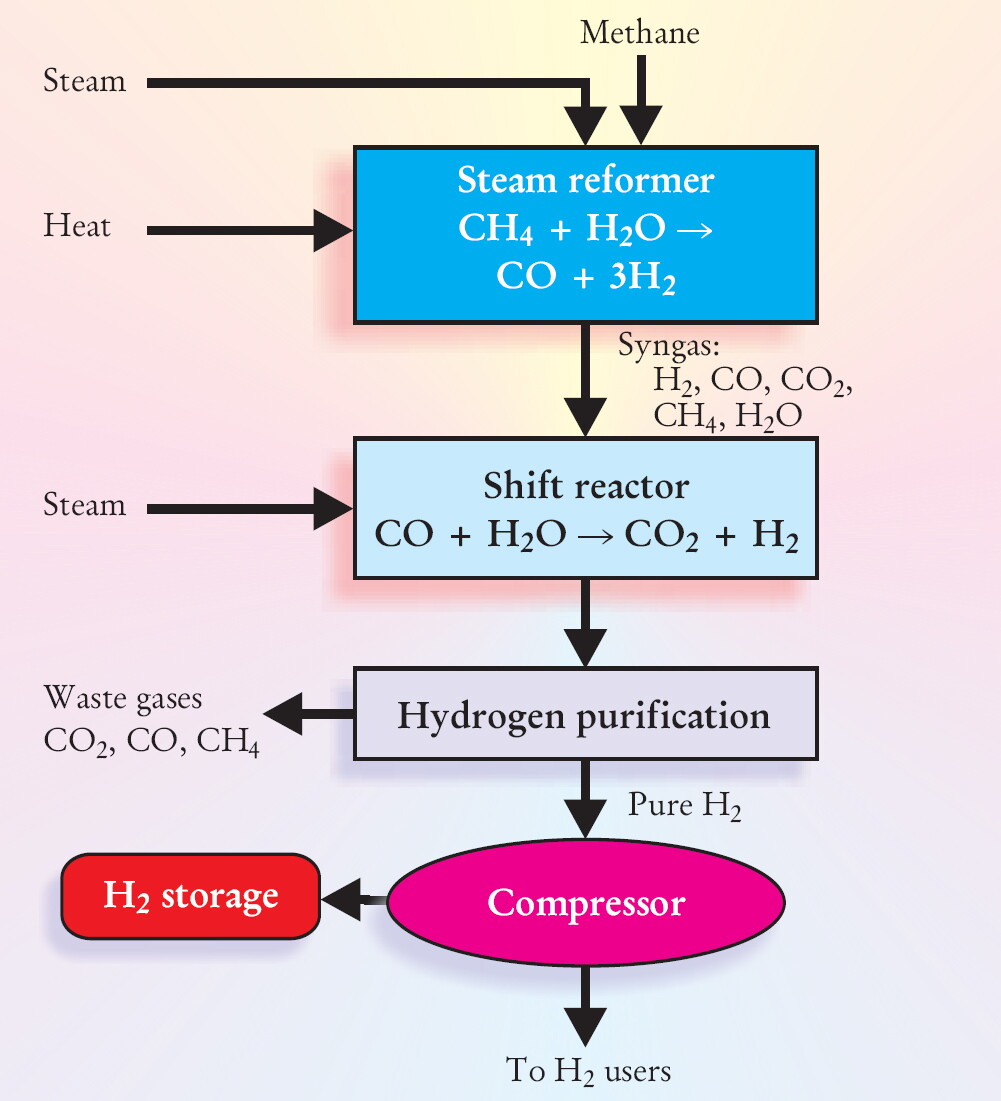
Hydrogen production systems are already commercially available and widely used in the chemical and oil-refining industries. More than 90% of chemical hydrogen today is made thermochemically through a process called reforming, shown in figure 2. Hydrocarbons are reacted with steam or oxygen at high temperatures (800–1700°C) to make a synthetic gas or “syngas,” containing hydrogen, carbon monoxide, carbon dioxide, water vapor, and methane. The syngas is further processed to increase the hydrogen content. Finally, pure hydrogen is separated from the other components in the mixture. One method of separation uses materials that selectively adsorb hydrogen from the mixture under pressure and release pure hydrogen when depressurized. Other hydrogen purification systems are based on chemical absorption of CO2 or selective permeation of hydrogen through membranes.

Thermochemical production of hydrogen through steam reforming of methane (natural gas) is the most common method of producing hydrogen today. The reformer produces hydrogen from the methane and steam inputs. After being further increased and purified, the hydrogen is available for storage or direct use as a fuel.
Most thermochemical hydrogen production systems today are designed for use in large chemical facilities such as oil refineries or methanol plants. A typical hydrogen plant in a refinery produces large quantities of hydrogen that could power hundreds of thousands of fuel-cell cars. An important goal of ongoing R&D is developing smaller-scale thermochemical hydrogen production systems for near-term energy applications (at about 0.1–1% of refinery size). These systems produce hydrogen from natural gas for use in fuel-cell cogeneration in buildings or for standalone hydrogen production at refueling stations. Smaller-scale systems might also make hydrogen onboard cars as needed from a more easily handled liquid fuel like methanol or gasoline.
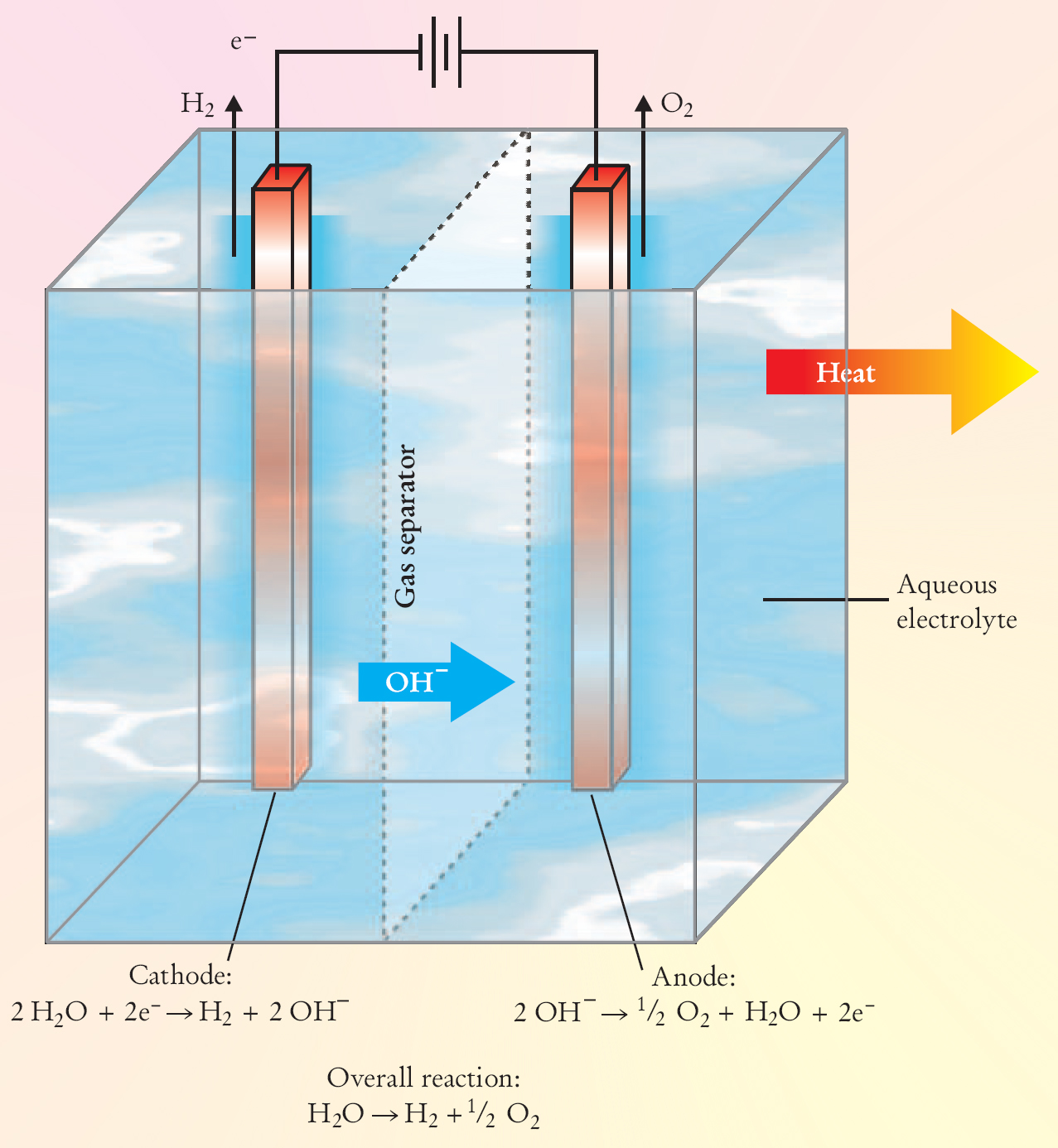
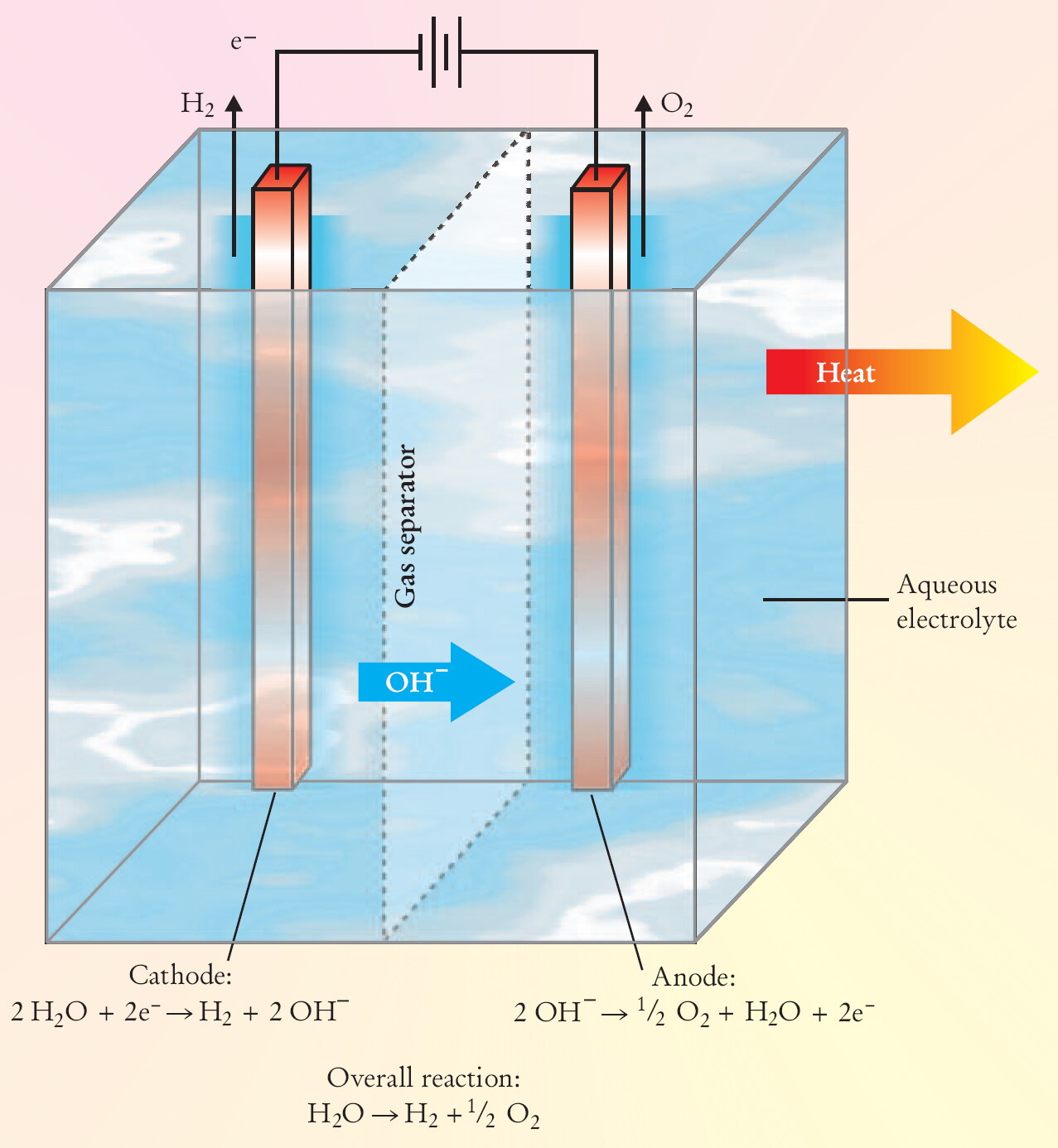
Where low-cost electricity is available, water electrolysis is used to produce hydrogen. Electricity is passed through a conducting aqueous electrolyte, breaking down water into hydrogen and oxygen (figure 3). With low-temperature (below 100°C) electrolysis, about 80% of the electrical input energy is available as hydrogen. In high-temperature or steam electrolysis, some of the work of splitting water is done by raising the temperature, and less electrical input is needed. In the limit of very high temperatures (2000–4000°C), water can be dissociated or split directly, but this approach is impractical with present materials.

Water electrolysis, which uses electricity to separate water into hydrogen and oxygen, is an option for producing hydrogen when low-cost electricity is available.
Fundamental research is being conducted on a variety of other hydrogen-production methods. 3 Recently, researchers at the National Renewable Energy Laboratory in Golden, Colorado, reported using sunlight to produce hydrogen in a photoelectrochemical cell with an efficiency over 12%. 4 In such a device, absorbed photons from sunlight produce electron–hole pairs in a semiconductor in contact with an aqueous electrolyte. The electrons from water molecules near the semiconductor recombine with holes, leading to charge-transfer reactions and the production of hydrogen and oxygen at electrodes. Another area of basic research is hydrogen production by biological systems such as algae or bacteria. These techniques are still far from commercialization.
A modest infrastructure for distributing hydrogen already exists in the US, at about 1% of the scale of current gasoline distribution. While most hydrogen is produced where it is needed, about 5%, termed “merchant hydrogen,” is transported to distant users via liquid hydrogen truck, railcar, or barge (up to 1500 kilometers), compressed gas truck (up to tens of kilometers), or gas pipeline (up to several hundred kilometers). The total amount of merchant hydrogen transported in the US today could support a fleet of perhaps 2–3 million fuel-cell cars.
If hydrogen were widely used as an energy carrier, a hydrogen pipeline network similar to today’s natural-gas pipeline system could be built. With modifications of seals, meters, and end-use equipment, existing natural gas pipeline systems might be converted to transmit hydrogen, if pipeline materials were found to be compatible. In a fully developed hydrogen economy, long-distance transport of hydrogen might not be necessary. Like electricity, hydrogen could be made from regionally available primary resources.
For industrial applications, hydrogen is stored as a compressed gas, as a cryogenic liquid, or in a hydrogen compound such as a metal hydride, from which the hydrogen is easily removed by applying heat. These storage methods are all being considered for automotive systems.
A viable onboard automotive hydrogen storage system must be compact, lightweight, low-cost, rugged, easily and rapidly refillable, and, of course, safe. Moreover, it must be capable of storing enough hydrogen to provide a reasonable traveling range and must have good “dormancy” (ability to retain hydrogen for a long time without leakage). Onboard storage systems for hydrogen are bulkier and heavier than those for liquid fuels or compressed natural gas. Still, it appears that hydrogen could be stored at acceptable weight and volume for vehicle applications, because hydrogen can be used with high efficiency in fuel cells, so that relatively little fuel energy is needed onboard to travel a long distance.
A study by Ford 5 compared the weights and volumes of various hydrogen storage methods for an efficient, lightweight four- to five-passenger fuel-cell car with a 500-km range. For a lightweight, carbon-fiber–wrapped compressed-gas cylinder storing 12% hydrogen by weight at 34 MPa, the fuel storage system weighed 32.5 kg, with volume of 186 L. With liquid hydrogen, the total volume was reduced to 116 L and the weight to 28.5 kg. With metal hydride storage, the volume was only 100 L, but the weight was much higher: 325 kg. For comparison, a lightweight, streamlined vehicle with similar size, range, and performance with a gasoline internal combustion engine would require about 25 L of gasoline, with the fuel storage system weighing a total of 25 kg, including the tank. A battery system with comparable range would be several times as bulky and heavy as a compressed hydrogen gas system.
Compressed hydrogen gas is currently the preferred option for onboard hydrogen storage. Refueling systems are less complex than those for liquid hydrogen or hydrides, and the cylinder weight is acceptable in an efficient fuel-cell car, although packaging the cylinders in a small car is a challenge. Moreover, the energy required for hydrogen compression, while significant, is much less than for liquefaction.
A breakthrough storage technology, capable of compactly storing 5–10% hydrogen by weight, that would allow the distribution and storage of hydrogen at near-ambient temperature and pressure could facilitate the introduction of hydrogen as an energy carrier. Among the innovative hydrogen storage methods being explored, carbon nanostructures are perhaps the most intriguing (see
Characteristics of hydrogen as a fuel
Cmpared with other common fuels, such as gasoline and methane (natural gas), hydrogen has several unusual properties that significantly influence its use as a fuel.
13
The accompanying
Hydrogen is a low-density diatomic gas at ambient conditions. Consequently, it must be compressed to high pressure (typically several hundred atmospheres) or liquefied (at about 20 K) for storage in a reasonable volume. Even then, hydrogen storage systems are bulkier and heavier than those for other fuels. At a given pressure, hydrogen gas contains about one-third the energy as the same volume of methane. Liquid hydrogen has about one-third the volumetric energy density of gasoline. Hydrogen’s low volumetric energy density is thus an important challenge to storing hydrogen compactly on vehicles.
Physical Properties of Hydrogen, Methane, and Gasoline
| Hydrogen | Methane | Gasoline | |
|---|---|---|---|
| Molecular weight (g/mol) | 2.016 | 16.04 | ∼110 |
| Mass density (kg/N Am3) at P = 1 atm = 0.101 MPa, T = 0°C | 0.09 | 0.72 | 720–780 (liquid) |
| Mass density of liquid H2 at 20 K (kg/N Am3) | 70.9 | - | - |
| Boiling point (K) | 20.2 | 111.6 | 310–478 |
| Higher heating value (MJ/kg) | 142.0 | 55.5 | 47.3 |
| Lower heating value (MJ/kg) | 120.0 | 50.0 | 44.0 |
| Flammability limits (% volume) | 4.0–75.0 | 5.3–15.0 | 1.0–7.6 |
| Detonability limits (% volume) | 18.3–59.0 | 6.3–13.5 | 1.1–3.3 |
| Diffusion velocity in air (m/s) | 2.0 | 0.51 | 0.17 |
| Buoyant velocity in air (m/s) | 1.2–9.0 | 0.8–6.0 | Nonbuoyant |
| Ignition energy (mJ) | |||
| At stoichiometric mixture | 0.02 | 0.29 | 0.24 |
| At lower flammability limit | 10 | 20 | n.a. |
| Flame velocity in air (cm/s) | 265–325 | 37–45 | 37–43 |
| Toxicity | Nontoxic | Nontoxic | Toxic above 50 ppm |
Hydrogen interacts with materials differently than do other fuels. It is a small molecule that can diffuse readily, and is more likely to leak than other fuels, although it disperses more quickly from a leak. Because hydrogen can diffuse into metals and cause embrittlement of certain types of steel, hydrogen systems require special steels or other materials that are not subject to embrittlement.
The heating value of a fuel is defined as the heat that is transferred from the fuel during complete combustion in air. The higher heating value assumes that water is produced in the reaction; the lower heating value assumes that steam is. Although it has the lowest molecular weight, hydrogen has the highest heating value per kilogram of any fuel, which makes it attractive as rocket fuel. As shown in the
Compared to other fuels, hydrogen has a wider range of flammability and detonability limits (concentrations in air that will support a fire or explosion, respectively). In practice, the lower flammability limit is the most important, for example if the hydrogen concentration were to build up in an enclosed space through a leak. If hydrogen does catch fire, the flame spreads faster than for burning methane or gasoline.
The ignition energy—the energy required in a spark or thermal source to ignite a flammable mixture of fuel in air—is low for all three fuels, comparable to or lower than physical sources such as electrostatic sparks (typically 10 mJ). The ignition energy for hydrogen is about an order of magnitude lower than for methane or gasoline at stoichiometric conditions. But at the lower flammability limit, the ignition energy is about the same for methane and hydrogen.
Hydrogen can be used with little or no pollution for energy applications. When hydrogen is burned in air, the main combustion product is water with traces of nitrogen oxides. When hydrogen is combined electrochemically with oxygen in a fuel cell to produce electricity, the only emission is water vapor. In addition, hydrogen is nontoxic.
Environmental considerations
With hydrogen, the full fuel-cycle or “well-to-wheels” emissions of pollutants and greenhouse gases can be reduced considerably compared to conventional energy systems. Full fuel-cycle emissions include all the emissions involved in producing, transmitting, and using a fuel. For example, even though tailpipe emissions are zero when hydrogen made from natural gas is used in a fuel cell, emissions of CO2 and air pollutants such as NO x occur at the hydrogen-production plant and emissions are associated with producing electricity to run hydrogen pipeline compressors (the nature of these emissions would depend on the source of electricity). The more efficient the vehicle, the lower the fuel-cycle emissions per kilometer.
In contrast to fossil energy resources such as oil, natural gas, and coal, which are unevenly distributed geographically, primary sources for hydrogen production are available virtually everywhere in the world. Over the next few decades, hydrogen from fossil sources may offer the lowest costs in many locations, with small contributions from electrolysis powered by low-cost electricity (such as off-peak hydropower).
If hydrogen is produced thermochemically from fossil fuels, it would be possible to separate and capture CO2 and pipe it to secure sequestration sites, such as depleted hydrocarbon reservoirs or deep saline aquifers. 6 (See the example on page 51 in the article by Brian Clark and Robert Kleinberg.) Assessments are under way to estimate the total underground storage capacity that could securely hold captured CO2. Preliminary estimates suggest that underground deep saline aquifers might be able hold thousands of gigatonnes of carbon, amounting to more than 100 years of anthropogenic carbon production. (Current worldwide anthropogenic emissions are about 6 Gt/y and are projected to rise to 20 Gt/y by 2100 under a business-as-usual energy scenario.)
In the long term, or where locally preferred, renewable resources might be brought into use (see the article by Samuel Baldwin on page 62). Hydrogen derived from biomass produced on about two-thirds of currently idled US cropland could be sufficient to supply transportation fuel to all the cars in the US, if the vehicles used fuel cells. 7 Municipal solid waste could be gasified to produce transportation fuel for perhaps 25–50% of the cars in US metropolitan areas. 8 Solar and wind power are potentially huge resources for electrolytic hydrogen production, which could meet projected global demands for fuels, although the delivered cost is projected to be about two to three times that for hydrogen from natural gas. 7
If hydrogen is made from fossil fuels with CO2 capture, fuel-cycle emissions can be greatly reduced. With renewable energy sources, fuel-cycle emissions can be virtually eliminated.
Hydrogen safety
When hydrogen is proposed as a future fuel, many people may raise concerns based on the Hindenburg, the space shuttle Challenger, or even the hydrogen bomb. Clearly, consumers will not accept hydrogen or any other new fuel unless it is as safe as our current fuels.
Because hydrogen is more likely to leak than other gaseous fuels, leak prevention, which can be accomplished through proper equipment design and maintenance, and reliable leak detection are key safety issues. If hydrogen leaks in a closed space, a large volume of flammable mixtures can occur, increasing the likelihood of encountering an ignition source. The high flame velocity in hydrogen–air mixtures carries the risk of a fire escalating to an explosion in a confined space. For this reason, hydrogen refueling and storage are best done outdoors whenever feasible, or in well-ventilated indoor areas. During vehicle refueling and maintenance, it will be important to avoid producing flammable mixtures, by excluding air from storage tanks, refueling lines, and the like.
Hydrogen burns with a nearly invisible flame and radiates little heat, making fire detection difficult in daytime. However, infrared detectors or special heat sensitive paints on hydrogen equipment allow rapid detection.
Safe handling of large quantities of hydrogen is routine in the chemical industries. Proposed use of hydrogen in vehicles has raised the question of whether this experience can be translated into robust, safe hydrogen vehicles and refueling systems for the consumer, a topic that has received significant attention recently.
Safety engineers at Air Products and Chemicals Inc, a large producer of chemical hydrogen, have delineated procedures for safe operation in hydrogen vehicle refueling. 9 According to a 1994 hydrogen vehicle safety study by researchers at Sandia National Laboratories, 10 “There is abundant evidence that hydrogen can be handled safely, if its unique properties—sometimes better, sometimes worse and sometimes just different from other fuels—are respected.” A 1997 report on hydrogen safety by Ford concluded that the safety of a hydrogen fuel-cell vehicle would potentially be better than that of a gasoline or propane vehicle, with proper engineering. 5
To assure that safe practices for handling hydrogen fuel are used and standardized, international industry and government groups have made considerable effort in recent years to develop codes and standards for hydrogen and fuel-cell systems. Development of cheap, reliable hydrogen sensors is an ongoing area of research.
Hydrogen storage in carbon nanostructures
Present methods of hydrogen storage involve large energy penalties and costs for compression or liquefaction and storage at high pressure (7–50 MPa) or low temperature (20 K). The implications of developing a new storage technology that could store 5–10% hydrogen by weight at ambient pressure and temperature may be far reaching. Various innovative storage methods for hydrogen are being researched. One of the most intriguing approaches is the use of carbon-based materials.
Carbon is an attractive medium for hydrogen storage: It is readily available, has a low weight, and has potentially low cost. Hydrogen storage is being investigated in various types of carbon materials, including single-walled carbon nanotubes (SWNTs), graphite nanofibers, alkali-doped graphite, fullerenes, and activated carbon. 14 Recent experimental results with SWNTs have shown hydrogen storage of about 4% by weight at ambient temperature; pressures needed to achieve this weight fraction vary from 0.4 to 101 atmospheres (0.04–10.5 MPa), depending on the study Lowering temperatures can result in higher hydrogen storage. At 80 K and 7.18 MPa, SWNTs showed 8.25% hydrogen storage by weight. Doping with alkali metals has been reported to dramatically boost the hydrogen storage capability: With potassium-doped graphite, storage of up to 14% hydrogen by weight was reported at ambient temperature and pressure, and 20% at temperatures of 473–673 K with lithium-doped nanotubes.
To date, experiments with storing hydrogen in carbon-based nanostructures have been conducted on microgram quantities of materials, and most have not been replicated. Moreover, the mechanisms for hydrogen insertion into and release from nanotubes are not well understood experimentally or theoretically. A recent review of theoretical studies 15 suggests that the uptake of hydrogen by carbon nanotubes is a complex process involving both physical adsorption and chemical interactions. The storage fractions predicted by a physisorption model are less than those seen experimentally. Chemisorption calculations that treat chemical bond formation and breakage quantum mechanically indicate a theoretical maximum storage of 14% hydrogen by weight in SWNTs. The effect of lithium doping was modeled, but by itself could not account for experimental results that showed increased hydrogen storage.
The potential for storing hydrogen in carbon materials is an active area of basic materials research. Demonstrations on vehicles are still many years away.
Economics of hydrogen fuel
Substantial capital and energy costs are involved in hydrogen production, storage, and transmission. Various authors have estimated that it would cost several hundred to several thousand dollars per car to build a hydrogen infrastructure (including production, delivery, and refueling), depending on the type of production and delivery system and the level of demand. 11 This expense is comparable to the capital cost of implementing systems for other synthetic fuels such as methanol at a large scale, when the costs of new production capacity are considered.
The delivered cost of hydrogen transportation fuel is projected to be several times higher than that of gasoline, with production, transmission, and refueling each contributing about a third of the cost. (With liquid fuels, transmission and refueling account for lower fractions of the delivered fuel cost.) However, hydrogen can be used more efficiently than gasoline, so that the fuel cost per kilometer is comparable. If fuel-cell vehicles reach projected costs in mass production, the total life-cycle cost of transportation, which includes vehicle capital costs, operation and maintenance expenses, and fuel, could become similar to that for today’s gasoline vehicles.
Economics alone are unlikely to lead to a switch from current fuels to hydrogen, unless the secondary effects of energy sources, such as global climate change, urban air quality, and supply security, are given more importance in the future. If a hydrogen economy is implemented, it will be in response to strong political will. Policies could take the form of carbon taxes, pollutant emission regulations, or other incentives for clean vehicles. The ability to address multiple concerns enhances the possibilities for hydrogen.
Toward a hydrogen energy system
Many of the technical building blocks for a future hydrogen energy system already exist. Hydrogen-enabling technologies such as fuel cells and hydrogen storage techniques are undergoing rapid development. Still, the costs and logistics of changing the energy system mean that building a large-scale hydrogen energy system would take many decades.
Because hydrogen can be made from many different sources, a future hydrogen energy system could evolve in many ways. As with electricity, no single supply option is preferred in all cases. The best hydrogen supply in a particular place depends on the size, type, and geographic density of demand, on local energy prices, and on the availability and cost of primary resources.
In industrialized countries, hydrogen fuel use might get started by piggybacking on the existing energy infrastructure. Initially, hydrogen could be made where it was needed from more widely available energy carriers, avoiding the need to build an extensive hydrogen pipeline distribution system. In the US, for example, where low-cost natural gas is widely distributed, hydrogen could initially be made from natural gas in small reformers located near the hydrogen demand, for example, at refueling stations. Alternatively, hydrogen could be delivered by truck or pipeline from a large plant serving both chemical and fuel needs, as with merchant hydrogen today. As greater, more concentrated demand builds, central “city-scale” hydrogen production with local pipeline distribution would become more economically attractive. Eventually, hydrogen might be produced centrally and distributed in local gas pipelines, as natural gas is today. A variety of sources of hydrogen might be brought in at this time, including decarbonized fossil fuels with CO2 sequestration or renewable energy sources.
In developing countries, where relatively little energy infrastructure currently exists, centralized hydrogen production for vehicles might be phased in earlier. Regions with special concerns, such as islands that depend entirely on costly imported oil, might choose a hydrogen economy based on locally available resources. Iceland is pursuing this path, having announced its intention to switch to hydrogen fuel, produced via electrolysis using off-peak power, by 2030.
Continued basic and applied R&D on hydrogen-enabling technologies such as fuel cells and innovative hydrogen storage methods is key, and will undoubtedly shape the development of a future hydrogen economy. For example, a breakthrough in hydrogen storage technology could completely change the evolutionary pathway sketched above, which assumes only small advances over existing technology. Although hydrogen production technologies do exist, further optimization is desirable for use in energy systems with zero carbon emissions. Side issues associated with various primary energy sources will be important. For example, a better understanding of carbon sequestration in terms of its effectiveness, cost, and potential capacity is needed to assess the role of fossil hydrogen in a low carbon-emitting future.
References
1. National Research Council, Review of the Research Program of the Partnership for a New Generation of Vehicles: Seventh Report, National Academy Press, Washington, DC (2001). Also available online at http://www.ta.doc.gov/pngv .
2. See http://www.cartech.doe.gov/freedomcar/freedomcarfacts.html .
3. Proc. 2001 US DOE Hydrogen Program Review, US Department of Energy, Washington, DC, available at http://www.eren.doe.gov/hydrogen/docs/30535toc.html (2001).
4. O. Khaaselev, J. A. Turner, Science 280, 425 (1998).
5. Ford Motor Co, Direct-Hydrogen-Fueled Proton-ExchangeMem brane Fuel Cell System for Transportation Applications: Hydrogen Vehicle Safety Report, rep. no. DOE/CE/50389-502, Directed Technologies Inc, Arlington, Va. (May 1997).
6. R. H. Williams, in Eco-restructuring: Implications for Sustainable Development, W. Ayres, ed., United Nations U. Press, Tokyo (1998), p. 180;
H. Herzog, E. Drake, E. Adams, CO2 Capture, Reuse, and Storage Technologies for Mitigating Global Climate Change, final report for USDOE contract no. DE-AF22-96PC01257, MIT Energy Laboratory, Cambridge, Mass. (January 1997), available at http://sequestration.mit.edu/pdf/WhitePaper.pdf ;
R. Socolow, ed., Fuels Decarbonization and Carbon Sequestration, rep. no. 302, Center for Energy and Environmental Studies, Princeton University, Princeton, N.J. (September 1997).7. J. Ogden, J. Nitsch, in Renewable Energy: Sources for Fuels and Electricity, T. Johannsson, H. Kelly, A. K. N. Reddy, R. H. Williams, eds., Island Press, Washington, DC (1993), chap. 22.
8. E. D. Larson, E. Worrell, J. S. Chen, Resour., Conservation, Recycling 17, 273 (1996).
9. R. E. Linney, J. G. Hansel, in Hydrogen Energy Progress XI: Proc. 11th World Hydrogen Energy Conference, T. N. Veziroglu et al., eds,. International Association for Hydrogen Energy, Coral Gables, Fla. (1996), p. 2159.
10. J. T. Ringland et al., Safety Issues for Hydrogen Powered Vehicles, rep. no. SAND94-8226, UC-407, Sandia National Laboratories, Albuquerque, N. Mex. (March 1994).
11. J. Ogden, M. Steinbugler, T. Kreutz, J. Power Sources 79, 143 (1999);
C. E. Thomas, I. F. Kuhn, B. D. James, F. D. Lomax, G. N. Baum, Int. J. Hydrogen Energy 23, 507 (1998).12. J. Ogden, Annu. Rev. Energy Environ. 24, 227 (1999);
C.-J. Winter, J. Nitsch, Hydrogen as an Energy Carrier: Technologies, Systems, Economy, Springer-Verlag, New York (1988).13. J. Hord, Int. J. Hydrogen Energy 3, 157 (1976).
14. R. G. Ding, G. Q. Lu, Z. F. Yan, M. A. Wilson, J. Nanoscience Technol. 1, 7 (2001);
M. S. Dresselhaus, K. A. Williams, P. C. Eklund, MRS Bull. 24(11), 45 (1999).15. V. Meregalli, M. Parrinello, Appl. Phys. A: Mater. Sci. Process 72, 143 (2001).
More about the authors
Joan M. Ogden, (ogden@princeton.edu) Princeton Environmental Institute at Princeton University in New Jersey, US .