Edward Teller’s Scientific Life
DOI: 10.1063/1.1801867
Edward Teller (1908–2003) was one of the great physicists of the 20th century. His career began just after the key ideas of the quantum revolution of the 1920s had opened vast areas of physics and chemistry to detailed understanding. Thus, his early work in theoretical physics focused on applying the new quantum theory to the understanding of diverse phenomena. Topics included chemical physics, diamagnetism, and nuclear physics. Later, he made key contributions to statistical mechanics and to the physics of surfaces, solids, and plasmas. In many cases, the ideas in his papers are still rich with important ramifications.
Teller’s career can be divided into two distinct but overlapping phases. (See the chronology on page 50.) The first, covering most of the period from 1928 to 1952, was devoted to basic science and university life. In the second phase, which began with the discovery of fission in 1939, his chief focus became the application of physics to defense and the founding and development of the Livermore laboratory. The lab, founded in 1952, is now called the Lawrence Livermore National Laboratory. This article, although necessarily cursory, is an attempt to give a flavor of Teller’s scientific achievements. The companion article by Harold Brown and Michael May, on page 51, addresses the second phase of his career.
Our appreciation for Teller’s approach to physics is based on our biweekly conversations with him over many years. One of us (Weiss) joined the physics department at Livermore in 1968 and began collaborating with Teller at that time. Libby’s collaboration and talks with Teller began in 1989, three years after Libby came to Livermore. In our conversations with Teller, the topic of the day might be a recent discovery or new idea, or perhaps an older subject revisited.
As many others can confirm, these discussions were partly Socratic dialogue and partly a perpetual oral exam. Though formidable at first, the interaction quickly became quite pleasurable. With uncanny clarity, Teller was almost always able to explain the essence of what was going on. We typically came away with a deeper understanding—even if one of us was the supposed expert on the subject at hand.
In an age of narrow specialization and emphasis on mathematical formalism, it was a rare pleasure to be asked to try to figure out, on the spot, “Where are the electrons?” or “What do the wavefunctions actually look like?” and “Would a semiclassical approximation capture the essence of the problem?”
As was true of the other legendary Hungarian theorists born just after 1900 (nicknamed the Martians for their astonishing brilliance and Magyar accents), Teller’s thinking was distinguished by an unusual, innovative blend of abstract inquiry and application. Initially directed by his family toward a career in chemical engineering, he never lost his interest in applied questions. That interest animated his early focus on the application of quantum mechanics to the microscopic understanding of molecular behavior. Later, his desire to see practical consequences of basic science influenced his interest in defense matters and his leadership of the Liver-more branch (the department of applied science, sometimes called Teller Tech) of the College of Engineering at the University of California, Davis.
Often using dialogue as a path to scientific discovery, Teller would ask a crucial question and then find a collaborator to work with him on the solution. That approach explains his large number of papers with one or more co-authors. His interests were broad, though he was perhaps guilty of not following up after the initial discovery was made. To the end of his life, his spirit of inquiry led him to seek out young people to teach him about current developments in physics.
Heisenberg’s student
Teller began his scientific work in 1928 under the direction of Werner Heisenberg at the University of Leipzig. Following the initial work of Walter Heitler, Fritz London, John Van Vleck, E. Bright Wilson, and others who applied the new quantum mechanics to molecules, Teller’s 1930 thesis addressed the excited states of the hydrogen molecular ion, the simplest of all molecules. 1 Teller always told, with relish, a story of that period. He was living in Heisenberg’s house and doing the needed numerical calculations on a noisy mechanical calculator at all hours. Heisenberg declared the work complete at the point when he tired of the machine’s racket.
That work was the first of a series of significant papers in the 1930s in which Teller applied quantum mechanics to understanding molecular physics. In that series, Teller and numerous collaborators developed the formalism and analyzed the spectral and structural consequences of electronic–vibrational couplings in molecules. The list of his collaborators on molecular physics includes Lev Landau, Gerhard Herzberg, George Placzek, James Franck, Herta Sponer, Bruno Renner, Robert Mulliken, Karl Herzfeld, Laszlo Tisza, George Donnan, Bryan Topley, B. M. Axilrod, E. Bartholme, Karl Weigert, Alfred Sklar, Francis Rice, Gertrude Nordheim, Richard Lord, and Hermann Jahn.
The 1937 proposal of the Jahn–Teller theorem
2
was the culmination of that period. The theorem states that nominally symmetrical molecules spontaneously deform so as to break the electronic-term degeneracy and produce a unique ground state. Because the theorem covers a fascinating array of low-energy electron–nuclear coupling phenomena, it continues to be widely applied both to molecular and solid-state systems. Although we cannot give a thorough assessment here of the long-term importance of the Jahn–Teller paper, we cite a latter-day example of the theory’s influence—the discovery of high-temperature superconductivity. Georg Bednorz and Alex Müller say they were motivated to study various perovskites because those materials exhibit very strong Jahn–Teller distortions and thus offer the promise of strong electron couplings.
3
(See
Another illustration of the continuing significance of Teller’s papers in the late 1930s concerns his generalization 4 of the well-known 1929 result of Eugene Wigner and John Von Neumann on quantum mechanical level repulsion in the case of a single Hamiltonian tuning parameter. Teller’s generalization to level intersections controlled by two or more real degrees of freedom resulted in a fascinating array of topological possibilities characterized by a linear dependence on the tuning variables. Twenty five years later, an analysis by Herzberg and Christopher Longuet-Higgins 4 of the consequences of that result for the global behavior of the wavefunctions gave the first molecular-physics example of Michael Berry’s topological phase.
After leaving Leipzig for the University of Gottingen in 1930, Teller continued his close relationship with Heisenberg. On one of Teller’s return visits to Leipzig, Heisenberg raised the conundrum posed by Landau’s 1930 computation of the diamagnetic susceptibility of a free-electron gas. Landau’s result was in flat contradiction to a classical argument, by Niels Bohr and J. H. Van Leeuwen, that there should be no diamagnetism at all! That is because, in a classical computation of the partition function, the influence of an external vector potential can be absorbed into the momentum sum. Teller wrote a paper explaining why Landau was nonetheless right, in terms of the population and current of what one would now call the skipping orbit.5 Semiclassically, one can visualize the skipping orbit as a cyclotron orbit near the boundary of the material that, unable to complete its period, undergoes repeated reflection, thus tracing out a rosette around the boundary.
Emigration
After the Nazis came to power in January 1933, conditions for Jews at German universities rapidly deteriorated and Teller left the country, going first to Bohr’s institute in Copenhagen and then to University College London on a grant from the Rockefeller Foundation. He came to the US in 1935, taking a professorship at George Washington University. In 1941, he moved to Columbia University, where he stayed until he joined the Manhattan Project in 1942.
Teller met Landau first in Leipzig and then later in Copenhagen, where he also met George Gamow. These two Russian theorists were essential influences on Teller’s thinking during the 1930s. Teller loved to bounce ideas off Landau, and credited him with stimulating the ideas that became the Jahn–Teller theorem. Together, Landau and Teller presented a quantum mechanical description of sound dispersion and attenuation that was based on the dephasing of sound modes due to their coupling to internal degrees of freedom of molecules in the medium. 6 That work made it possible to predict the dependence of the acoustic damping rate on molecular composition and temperature.
Gamow, a 1933 refugee from Stalin’s Russia, was already at George Washington when Teller arrived. Thus began a fruitful collaboration that included the discovery of the Gamow–Teller transition rules for beta decay 7 and several astrophysical papers on red giants and early analyses of thermonuclear reaction rates.
It’s hard to give a brief assessment of the consequences of the Gamow–Teller nucleon-spin-flip alternative to the Fermi selection rule for nuclear transitions. A proper history would have to thread through the developing phenomenology of nuclear beta decay and emerge in the 1950s with the discovery of parity violation by Chen Ning Yang and Tsung-Dao Lee and the subsequent development of the V – A (vector minus axial vector) theory of the fundamental weak interaction. The Gamow–Teller paper itself shows and exploits an incisive mastery of the known nuclear decay phenomena of that era. (See
Teller’s work in nuclear physics also included his 1937 papers with a very young Julian Schwinger, which laid out the phase-shift analysis for low-energy neutron interference scattering off hydrogen molecules. 8 A decade later, Teller and Maurice Goldhaber proposed a bold explanation of giant photonuclear resonances in nuclei. 9 Motivated by experiments on gamma-induced nuclear reactions that showed evidence of resonances at energies that varied inversely as the sixth root of the nuclear mass, they proposed that, quite universally, the protons and neutrons in a nucleus could act like interpenetrating fluids capable of dipole vibration. That discovery was a key step in defining large collective nuclear oscillations. Wigner, Charles Critchfield, and John Wheeler also collaborated with Teller on nuclear physics.
Challenges and insights
Over the decades, Teller’s career was often marked by his attraction to theoretical or computational challenges, or puzzling experimental results. Frequently, as in the papers with Jahn and Gamow, his analysis led to resolutions that carried the seeds for new ways of thinking. Another example is the “Metropolis method,” a computational technique originally for statistical mechanics by Teller and his wife Mici, Marshall and Arianna Rosenbluth, and Nicholas Metropolis in the early days of electronic computers. 10
Teller’s work with Gregory Breit in 1940 on the two-photon decay of the 2S state of the hydrogen atom was an incisive response to an experimental challenge. 11 So was the Brunauer-Emmett-Teller equation of state for species absorbed on surfaces. Another important experimental question in those days was whether or not the newly discovered muon was the meson hypothesized by Hideki Yukawa as the carrier of the nuclear force. In 1947, by carefully considering how a strongly interacting meson would stop and decay in matter, Teller, with Fermi and Victor Weisskopf, definitively showed that the muon could not be the Yukawa meson. 12 Later that same year, Cecil Powell and coworkers discovered the pion—the real Yukawa meson.
Teller liked to invent simple examples and general rules that got to the heart of an important question in quantum physics or statistical mechanics. Examples include the Pöschl–Teller anharmonic quantum system and a generalization by Teller and Julius Ashkin of the Ising phase-transition model. 13 The Ashkin–Teller model sought to satisfy two requirements simultaneously: Could one make a simplified model that captures the essential features of the freezing transition with bonds of different strengths and yet still retain the Ising feature of a duality transformation that guarantees a mapping between low-and high-temperature phases? The answer was yes. The Ashkin–Teller model now takes its place as one of a sequence of exactly soluble two-dimensional models in statistical mechanics.
On another question in solid-state physics, Teller and coworkers Robert Sachs and Russell Lyddane posited a general rule that has broad applications for ferroelectricity and other fields. They showed that (
Teller frequently returned to the Thomas–Fermi picture of the atom. He was interested both in its power and its limitations. In an insightful paper written for Wigner’s 60th-birthday festschrift, he showed the impossibility of molecular binding in the Thomas-Fermi-Dirac approximation. Later, when Elliot Lieb and collaborators beautifully analyzed the properties of matter under the Thomas-Fermi-Dirac and Thomas-Fermi-Weizsäcker approximations to full quantum mechanics, Teller’s result played an important role. 15
In some cases, Teller’s insights are connected to still open questions. In the late 1950s, his interest in dilute plasmas was piqued by two developments: the recent discovery of the Van Allen belts and the introduction of the mirror-machine concept for magnetic-confinement fusion. So Teller and Theodore Northrop addressed the problem of the stability of the motion of a point charge in a dipole magnetic field. Having discovered a new approximate adi-abatic invariant for electrons in Earth’s imperfect dipole field, Teller and Northrop conjectured that the problem might have an exact solution that would explain the stability of the Van Allen belts. Subsequently, however, Alex Dragt and John Finn showed numerically that, even in a perfect dipole field, the problem is not integrable—that is, it cannot have an exact solution. That leaves open the role, if any, of the Teller–Northrop invariant in the stability of the Van Allen belts. 16
Box 1. The Jahn–Teller Effect
In general, corrections to the Born–Oppenheimer approximation in molecular calculations arise from so-called vibronic couplings, which link the electronic states to the nuclear motion. Those couplings are essentially linear. If the electronic states are sufficiently well separated, the vibronic corrections can be treated as perturbative.
The Jahn–Teller effect arises at the opposite extreme: when the electronic states are degenerate. In that case, the molecule deforms in a nonperturbative way, causing those states to be split so as to yield a unique ground state.
As an illustrative example, consider the consequences of different copper ionization states in the CuO6 octahedral complex within a unit cell of the perovskite high-
The figure below is reproduced from the Nobel Prize lecture of George Bednorz and Alex Müller,3 who discovered high-temperature superconductivity in the perovskites. If the copper ion at the center of the octahedron is in a Cu 3+ ionization state, with only 8 electrons left in its 3

Box 2. The Gamow–Teller Transition
Enrico Fermi’s 1934 theory of beta decay formulated the weak interaction in analogy to the electromagnetic interaction. Shortly thereafter, Teller and George Gamow argued for the necessity of a second type of weak matrix element—one that allowed for the decaying nucleus (or nucleon) to flip its spin. The idea came from the rapidly developing empirical knowledge of nuclear transitions and decays. If, as Fermi had assumed, the decay matrix element was of first order in the initial and final wavefunctions, the quantum numbers of the incoming and outgoing particles would carry the imprint of the interaction. Furthermore, the standard multipole expansion of the recoiling nucleus’s wavefunction (
The figure at right, from the historic Gamow–Teller paper,7 focuses on the decay schemes of a so-called thorium active deposit, that is, the daughters resulting from thorium decay. The authors noted that several of the natural spin assignments and beta and gamma decay rates in this scheme contradicted Fermi’s hypothesis. For example, because the spin of lead-212 (labeled Th B) is 0, one cannot account for its rate of beta decay (followed by gamma quadrupole-allowed transition) to the ground state of bismuth-212 (Th C) by the Fermi matrix element alone. In the Fermi theory, the decay would require two powers of
In modern relativistic notation, Gamow and Teller added to Fermi’s beta-decay Hamiltonian two terms of the form

By the 1960s, the triumph of the V – A theory of the weak interactions in particle physics had made it clear that—at the most fundamental level, before renormalization—the vector and axial-vector coupling constants are precisely equal in magnitude and that
Matter at high energy density
Teller’s interest in the physics underlying applied subjects was particularly strong in the area of matter at high energy density—that is, energy densities exceeding a kilo-joule per cm3. In 1941, before either Teller or Hans Bethe had official connections with the Manhattan Project, they authored a study of deviations from thermal equilibrium in shocks. Two years earlier, Teller and David Inglis had proposed a theory of the lowering of the atomic continuum energy in dense plasmas. The continuum lowering results from the merger of Rydberg states with the continuum when their Stark splittings due to neighboring ions cause the states to overlap.
During and after the Manhattan Project, Teller initiated some of the earliest work on the equation of state of hot dense matter. 17 In addition to the Metropolis method, that work includes the Feynman-Metropolis-Teller extension of the Thomas–Fermi model of the atom to finite temperature. With Frederick de Hoffman, Teller worked out the analogs of the Rankine–Hugoniot shock equations for relativistic magnetohydrodynamics. At Livermore in the 1960s, having championed large-scale computing and new models for high-temperature equations of state, Teller, working with Stephen Brush and Harry Sahlin, published the first Monte Carlo analysis of the liquid–solid phase transition of a one-component plasma.
On high-energy-density physics, Teller usually worked with collaborators at Livermore or Los Alamos. He felt strongly that the advances in high-energy-density physics being made for applied purposes would lead to key developments in basic science. That view probably grew from three sources: The first was his lifelong conviction that the best basic science develops hand in hand with applications. The second was his personal involvement in both the development of nuclear weapons and the quest to discover peaceful applications of nuclear technologies. The third was his increasing isolation from much of the physics community, which meant that, from the 1950s to the end of the century, he only learned at second hand about the great developments in other areas such as particle and condensed matter physics. Thus Teller became a key motivator of work at Livermore that grew naturally out of the defense effort—for example, inertial fusion, high-power lasers, high-performance computing, and applications of x-rays.
Teacher and mentor
Teller was a great physics teacher and mentor. Colleagues and students still recall his personal warmth. Over his long career, he had many students. Here we mention just a few. With Renner, an early student in Gottingen, he began the work that eventually led to the Jahn–Teller theorem. His paper with Ashkin formed the basis of Ashkin’s thesis at Columbia. Also at Columbia, Teller sponsored Arthur Kantrowitz’s thesis on the generation of hypersonic molecular beams.
At the University of Chicago after the war, his students in particle theory included Yang, Marvin Goldberger, Marshall Rosenbluth, Walter Selove, and Lincoln Wolfenstein. Yang’s thesis was a beautiful generalization of work Teller had done with Emil Konopinski on deuteron–deuteron interactions. The list of Teller’s students over the decades also includes Critchfield, Harold and Mary Argo, Ann Bonney, Stephen Brunauer, Hans-Peter Duerr, and Balazs Rozsnyai.
Although Maria-Goeppert Mayer was not one of Teller’s students, she considered him an important mentor. They collaborated through the 1940s. Their 1949 paper was an early attempt to understand the nucleosynthesis of heavy elements. 18 After 1953, Teller was a professor of physics at the University of California, Berkeley, where his enormously popular basic physics course (Physics 10) had almost 1000 students each semester.
To the end, Teller had remarkable powers of concentration. In 1997, one of us (Libby) went to talk to Teller about a topic of mutual interest: numerical experimentation in mathematics, particularly in number theory. As a preliminary, we were to discuss a compressed proof of Fermat’s “four square” theorem, which I had written up, along with some notes on related topics. This time, however, it wasn’t possible to work at the blackboard because Teller was now blind. So he said, “read your notes, SLOOOWLY.” Part way through my reading, although unable to see, he took over the argument with a smile and completed the proof himself, messy algebra and all.

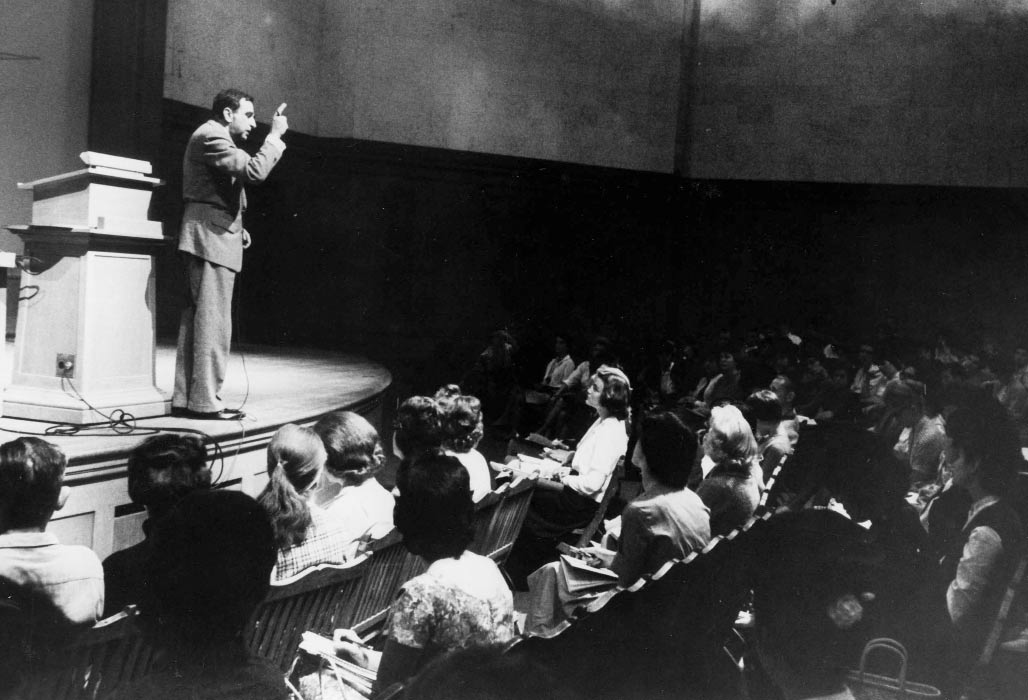
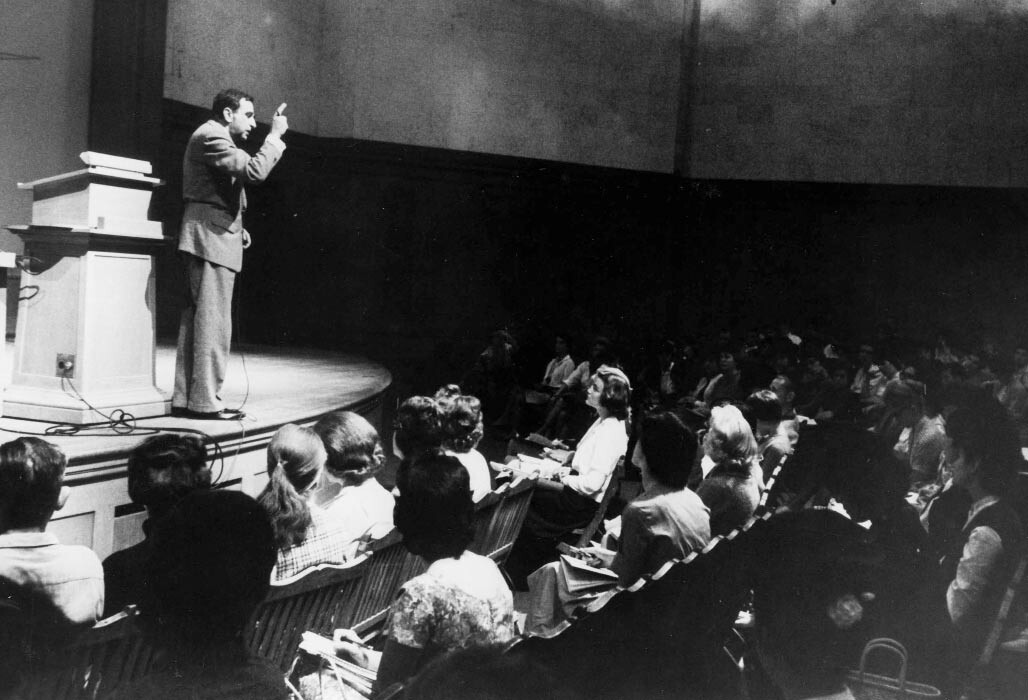
Lecturing to undergraduates in his popular physics survey course at the University of California, Berkeley, in 1958, Edward Teller had no difficulty filling the 800-seat Wheeler Auditorium.
TED STREHINSKI

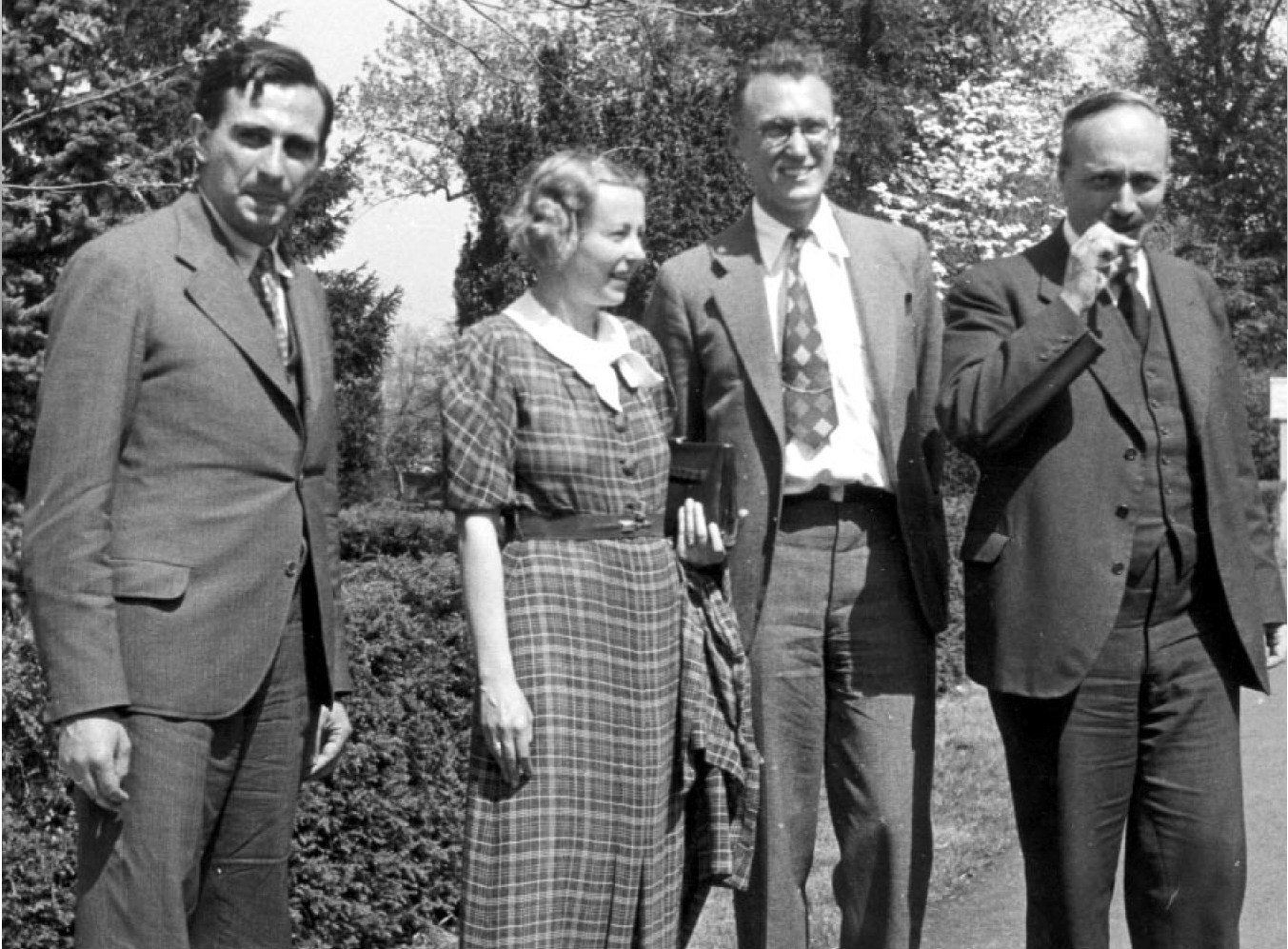
Teller with Maria-Goeppert Mayer, her husband Joseph Mayer, and James Franck, presumably in the late 1940s when Teller and Goeppert-Mayer were working together at the University of Chicago.
(Photo by Francis Simon, courtesy of AIP Emilio Segré Visual Archives.)


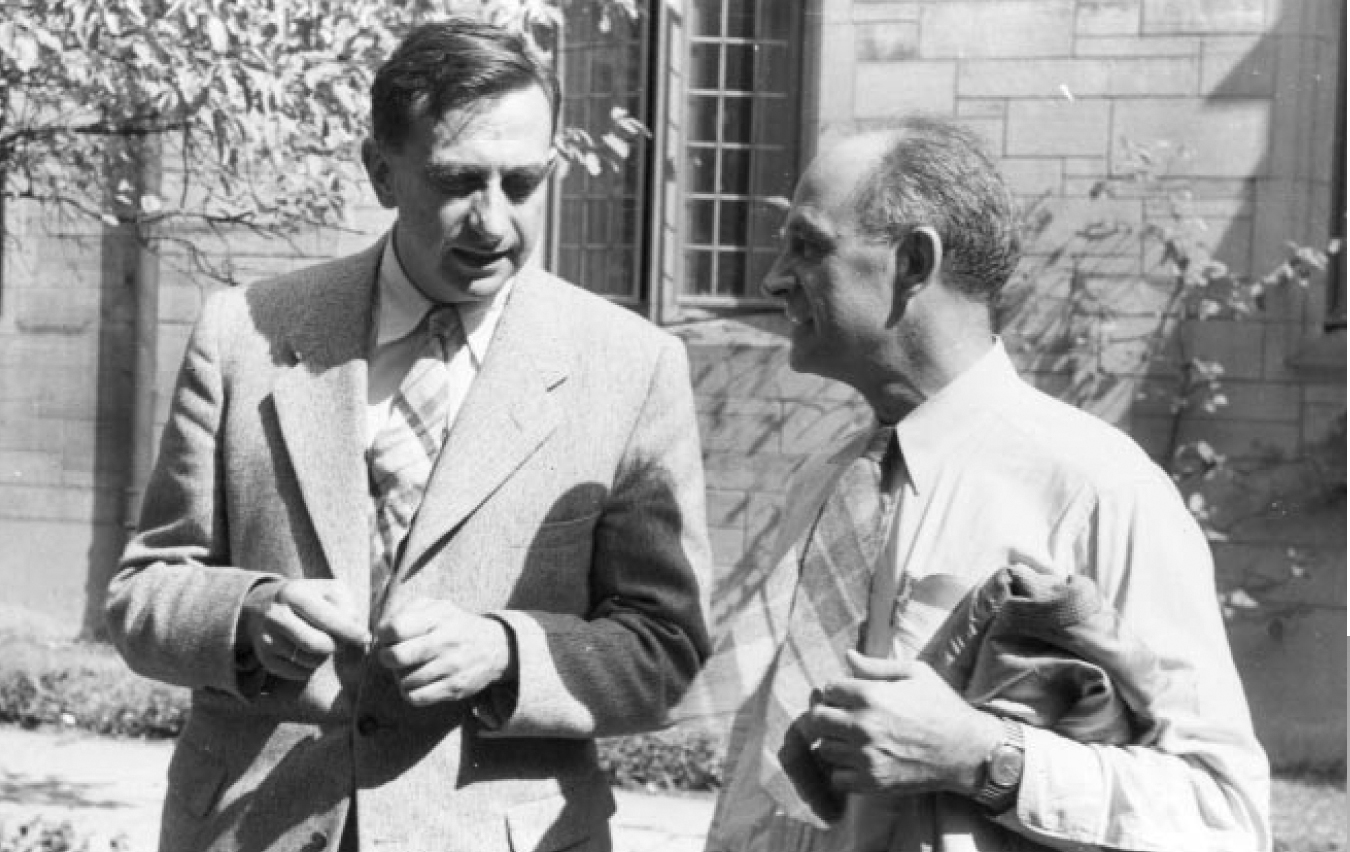
Teller and Enrico Fermi (right) at the University of Chicago in 1951.
(Gift of Gian Carlo Wick, courtesy of AIP Emilio Segré Visual Archives.)
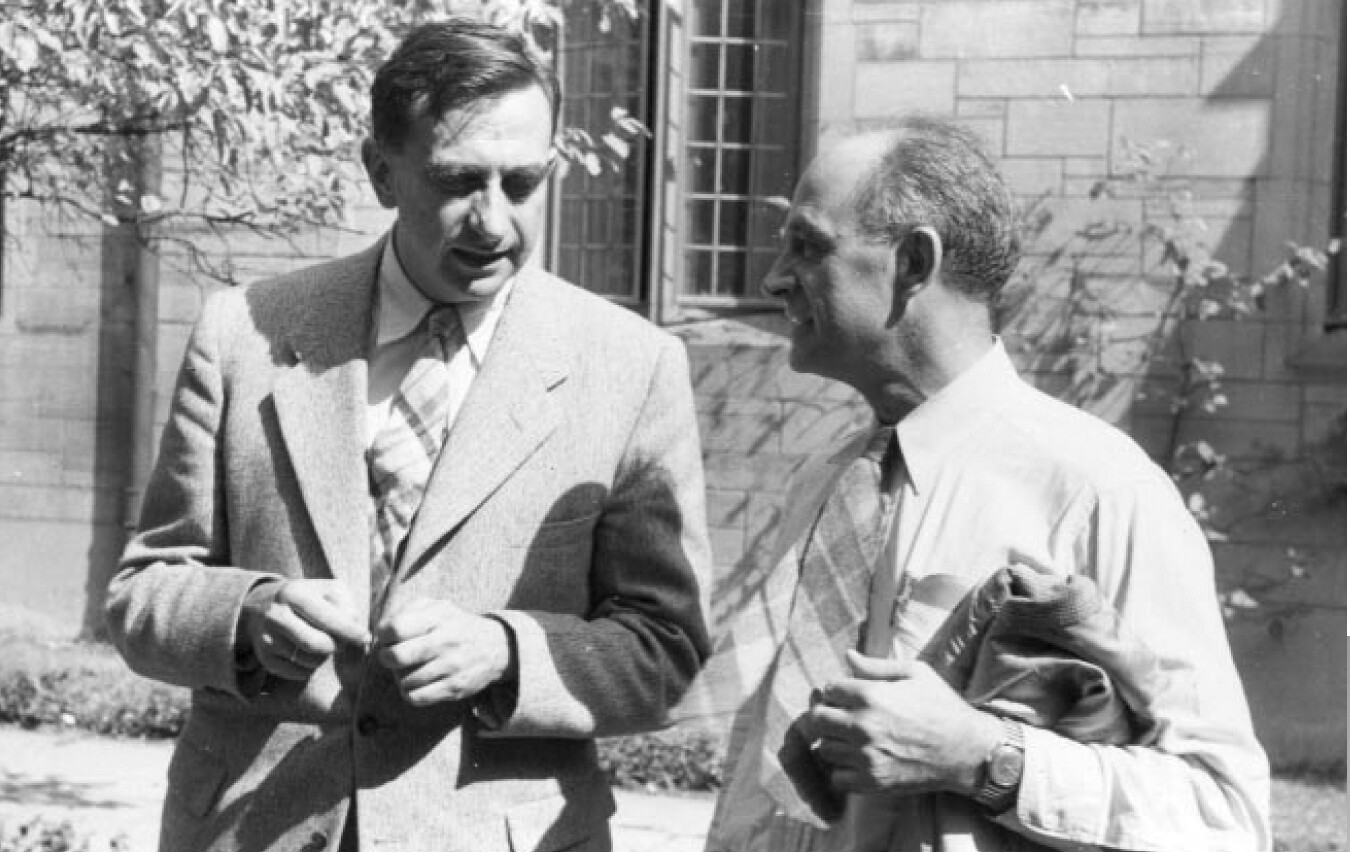

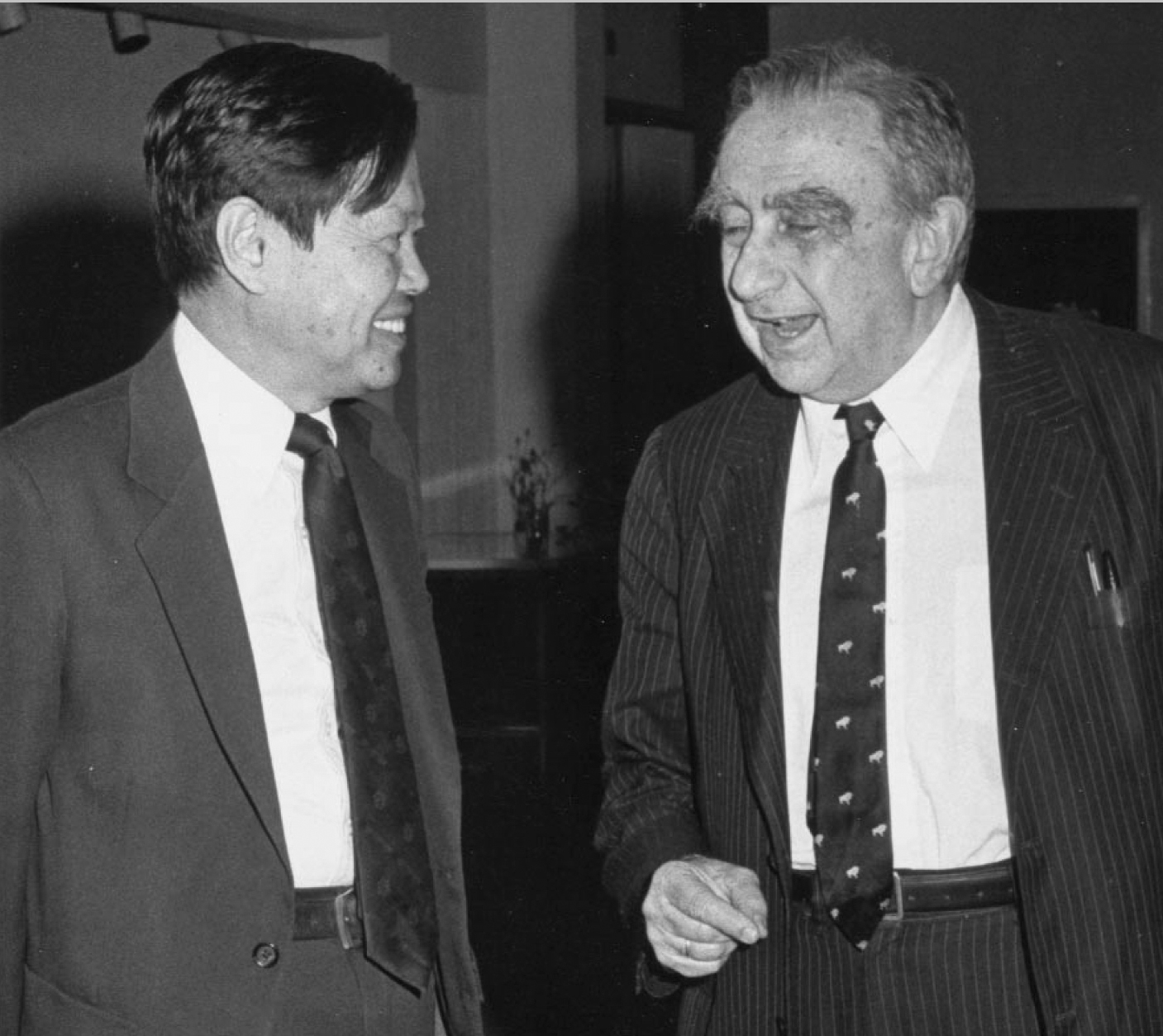
Chen Ning Yang with Teller in 1982.
(Photo courtesy of Brookhaven National Laboratory.)

References
1. E. Teller, Z. Phys. 61, 458 (1930).
2. H. A. Jahn, E. Teller, Proc. R. Soc. A161, 220 (1937);
R. Englman, The Jahn–Teller Effect in Molecules and Crystals, Wiley-Interscience, New York (1972).3. J. G. Bednorz, K. A. Müller, Rev. Mod. Phys. 60, 585 (1988).
4. E. Teller, J. Phys. Chem. 41, 109 (1937);
G. Herzberg, H. C. Longuet-Higgins, Discuss. Faraday Soc. 35, 77 (1963);
A. J. Stone, Proc. R. Soc. London A351, 141 (1976);
C. A. Mead, D. G. Truhlar, J. Chem. Phys. 70, 2284 (1979).5. E. Teller, Z. Phys. 67, 311 (1931);
J. H. Van Vleck, Rev. Mod. Phys. 50, 189 (1978).6. L. D. Landau, E. Teller, Phys. Z. Sowjetunion 10, 34 (1936).
7. G. Gamow, E. Teller, Phys. Rev. 49, 895 (1936).
8. J. Schwinger, E. Teller, Phys. Rev. 51, 775 (1937); 52, 286–295 (1937).
9. M. Goldhaber, E. Teller, Phys. Rev. 74, 1046 (1948).
10. N. Metropolis, A. Rosenbluth, M. Rosenbluth, A. H. Teller, E. Teller, J. Chem. Phys. 21, 1087 (1953);
M. Rosenbluth, in The Monte Carlo Method in the Physical Sciences: Celebrating the 50th Anniversary of the Metropolis Algorithm, J. Gubernatis, ed., AIP Conf. Proc. 690, American Institute of Physics, Melville, NY (2003).11. G. Breit, E. Teller, Astrophys. J. 91, 215 (1940);
S. Brunauer, P. Emmett, E. Teller, Am. Chem. Soc. J. 60, 309 (1938).12. E. Fermi, E. Teller, V. Weisskopf, Phys. Rev. 71, 314 (1947);
E. Fermi, E. Teller, Phys. Rev. 72, 399 (1947).13. J. Ashkin, E. Teller, Phys. Rev. 64, 178 (1943).
14. R. H. Lyddane, R. G. Sachs, E. Teller, Phys. Rev. 59, 673 (1941).
15. E. Teller, Rev. Mod. Phys. 34, 627 (1962);
E. H. Lieb, Rev. Mod. Phys. 53, 603, (1981).16. T. G. Northrop, E. Teller, Phys. Rev 117, 215 (1960);
A. Dragt, J. Finn, J. Geophys. Res.–Space Phys. 81, 2327 (1976).17. D. R. Inglis, E. Teller, Astrophys. J. 90, 439 (1939);
R. P. Feynman, N. Metropolis, E. Teller, Phys. Rev. 75, 1561 (1949);
F. de Hoffman, E. Teller, Phys. Rev. 80, 692 (1950);
S. G. Brush, H. L. Sahlin, E. Teller, J. Chem. Phys. 45, 2102 (1966).18. M. G. Mayer, E. Teller, Phys. Rev. 75, 1226 (1949).
More about the authors
Stephen Libby leads the theory and modeling group of the high-energy-density division in the physics department at Lawrence Livermore National Laboratory in Livermore, California.
Morton Weiss is a physicist in the Livermore physics department’s nuclear- and particle-physics division.
Stephen B. Libby, 1 Lawrence Livermore National Laboratory, Livermore, California, US .
Morton S. Weiss, 2Livermore, US .