A California advocacy group has filed suit against the US Department of Energy’s National Nuclear Security Administration (NNSA) for alleged violations of the Freedom of Information Act (FOIA). The watchdog group, Tri-Valley CAREs (Communities Against a Radioactive Environment), says in a June 10 complaint filed in US District Court for the Northern District of California that the NNSA is up to four years overdue in delivering requested documents.
The information in question concerns experiments with plutonium at the National Ignition Facility (NIF) at Lawrence Livermore National Laboratory (LLNL), a shipment of anthrax to the lab, and management of the lab’s aging high-risk facilities. Tri-Valley CAREs also alleges that the NNSA failed to provide information about a 2012 study on the construction of a proposed plutonium pit manufacturing facility at Los Alamos National Laboratory. The project, known as the Chemistry and Metallurgy Research Replacement Facility, was formally canceled by DOE in February.
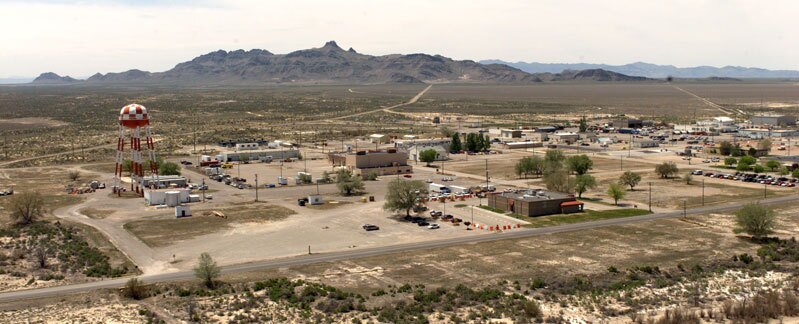
A watchdog group wants to see documents relating to the shipment of anthrax from the US Army’s Dugway Proving Ground in Utah, seen here in an aerial photo. (Image credit: US Army)
“The DOE and NNSA are egregiously out of compliance with the law,” said Tri-Valley CAREs staff attorney Scott Yundt in a statement.
An NNSA spokesperson says the agency does not comment on litigation. FOIA requires federal agencies to produce requested information within 20 business days, unless it is harmful to national security, is proprietary, or is subject to several other narrowly defined exclusions. Agencies can claim unusual circumstances and take an additional 10 business days to furnish the material. The law also requires agencies to provide the requester with written notification of the date when they expect to deliver the information.
The lawsuit claims that the NNSA has supplied only a small fraction of the volumes of information Tri-Valley CAREs had sought in 2012 about the Los Alamos plutonium study and also has produced only a partial response to the watchdog group’s 2015 request for information on the use of fissile or fissionable materials at NIF. A January 2016 request for information about a 2007 shipment of live anthrax to LLNL from the US Army’s Dugway Proving Ground in Utah has elicited no response from the NNSA, the complaint says.
Last year Tri-Valley CAREs and the Natural Resources Defense Council asked LLNL to cancel plutonium experiments at NIF because the environmental, safety, and proliferation impacts hadn’t been adequately assessed. But the lab insisted that those considerations had been addressed as part of previously completed environmental impact statements.
Tri-Valley CAREs initiated similar FOIA litigation on six other occasions between 1998 and 2013 to compel DOE to release documents. In each case Tri-Valley CAREs succeeded in obtaining material, although in some cases the group ended up narrowing the scope of the information requested.
“We should not have to file lawsuits in order to obtain public information,” Yundt said in the statement. “Congress enacted the FOIA specifically so that organizations like Tri-Valley CAREs would have free access to unclassified, non-exempt records that disclose the operation of the government.”