The quest is on to remove petro- from petrochemicals
DOI: 10.1063/PT.3.5136
Experts agree that industry and long-distance transport will be the most difficult sectors of the economy to decarbonize. But the petrochemical industry is doubly challenged: Not only are enormous quantities of carbon dioxide released during the manufacture of chemicals and plastics, but the products themselves embed carbon taken from the geosphere, most often natural gas or petroleum.
The manufacture of petrochemicals—the building blocks of plastics, solvents, detergents, lubricants, synthetic fibers, and many other products—is responsible for up to 5% of global CO2 emissions, according to the United Nations Environment Programme. In the US, chemical plants contribute around one-fifth of industrial CO2 emissions. That doesn’t count the carbon that reenters the atmosphere when the chemicals or plastic products eventually decompose.
Big reductions in CO2 emissions from petrochemical production can be had by decarbonizing the fossil-fueled high-temperature heat and power that’s needed for the steam crackers that thermally break down long-chain hydrocarbons into smaller molecules. But achieving true decarbonization of the industry will require removing the “petro” prefix.
Universities, government labs, and chemical companies are devoting considerable R&D efforts to achieving that end. Electrochemical- and biological-based processes can synthesize chemical building blocks from sources of concentrated CO2, such as waste gases from steelmaking, or from future air-capture plants, in combination with hydrogen produced with renewable energy.
A few companies have begun making chemicals directly from captured CO2 and water. The Stanford University spin-off Twelve, for example, is working with industrial partners to apply its electrochemical process to the production of sustainable fuels, plastic car parts, and detergents. In July, it announced an agreement with Alaska Airlines and Microsoft to commercialize its sustainable aviation fuels made from industrial waste gases. The company says it will build a commercial-scale production plant next year at an unannounced site. It’s also supplied material for sunglasses made by Pangaia.

Three-dimensional printing can shorten the time it takes to make improved versions of devices to electrochemically convert carbon dioxide to chemicals. Shown here is a rendition of a 3D printer with a palm-sized reactor housing being printed. Assembled reactors are on the table. The research is a collaboration between Stanford University, the oil and gas company Total American Services, and Lawrence Livermore National Laboratory.
VERONICA CHEN/LLNL

In October, LanzaTech, based in Skokie, Illinois, reported that it had made ethylene, the most widely used petrochemical, directly from CO2 using engineered microbes. Since 2018, the company has made ethylene, a precursor to polyethylene and other plastics, from ethanol that’s fermented from CO2 in industrial waste gases. Its products include packaging, polyester fabrics, and detergents. A LanzaTech spinoff, LanzaJet, converts ethylene to the longer double- and single-bonded hydrocarbons that are used in aviation fuel.
Earlier this year, LanzaTech reported it had manufactured acetone, a solvent that can be used to make acrylic glass, and isopropanol, an antiseptic and precursor chemical, using engineered microbes feeding on industrial waste gases. Michael Köpke, the company’s vice president for synthetic biology, says that process is carbon negative. “Typically, per kilogram of acetone, you emit two and a half kilograms of CO2,” he says. “We can avoid those emissions but also lock in 1.8 kilograms of CO2 per kilogram of acetone.”
In October the Department of Energy awarded a team from Northwestern University, LanzaTech, Yale University, and the National Renewable Energy Laboratory $18.5 million for R&D aimed at accelerating biosystems design for carbon‐ negative biomanufacturing. Michael Jewett, director of Northwestern’s Center for Synthetic Biology and the project’s principal investigator, says the goal is to reduce to two days the amount of time needed to engineer a carbon-hungry microbe to make different bioproducts, biofuels, and biomaterials; the process currently can take up to a year.
“We need to advance and apply our capacity to partner with biology to make what is needed, where and when it is needed, on a sustainable and renewable basis,” Jewett says. “This project will allow us to grow US-based manufacturing through fundamental research insights.”
Improving on photosynthesis
One potential method for transforming CO2 into useful compounds is artificial photosynthesis, where sunlight, CO2, and water are transformed directly into useful chemical compounds. Tobias Erb is one researcher working on enzymatic pathways to solar-driven chemical synthesis. Erb, director of the department of biochemistry and synthetic metabolism at the Max Planck Institute for Terrestrial Microbiology in Marburg, Germany, and colleagues have found or engineered multiple enzymes that improve on the efficiency of RubisCO, the enzyme used by plants to fix CO2 into their biomass. One of their early carbon-fixing cycles required 17 enzymes from nine organisms, including three that were synthesized or had their active sites altered to react with more substrates. Compounds they have made include terpenes, a class of 5-carbon compounds, and a soon-to-be-published paper will describe the synthesis of a 15-carbon compound that serves as the backbone of erythromycin, a commonly used antibiotic.
The artificial photosynthetic approach can accomplish simultaneously in a continuous process cycle reactions that might require 10 or more steps in chemistry, each one requiring new solvents and energy to purify the product for the next step, says Erb. He’s developed a microfluidic platform that spits out tiny droplets of artificial chloroplasts, and he is working to move them into the cells of living organisms such as Escherichia coli. He stresses that the work is still in the basic research stage.
Genetically engineered microbes have the capacity to produce a wide array of diverse, high-value chemicals and compounds, and R&D has advanced rapidly in the last decade, says a September report from the Engineering Biology Research Consortium. But the document, Engineering Biology for Climate and Sustainability, says those processes still must be engineered to capture and recycle all of the CO2 that is emitted by the organisms as they digest and transform it into useful compounds.
Electrochemical pathways
As cheap renewable energy makes electrochemistry more affordable, the technique is finding new applications, including decarbonizing petrochemicals, says Adam Weber, a senior scientist at Lawrence Berkeley National Laboratory. “We like to say that electrochemistry is the thermal chemistry of the 21st century,” he says.
One of the costliest petrochemical processing steps is the post-cracking separation of ethylene from ethane that remains in the mix. Weber works to optimize an alternative: the electrochemical reduction of CO2 to carbon monoxide. The CO is combined with electrolytically produced hydrogen to make syngas, which can further be converted to ethylene.
Berkeley Lab is a partner in the Caltech-led Liquid Sunlight Alliance (a successor of the Joint Center for Artificial Photosynthesis), which has long worked on electrochemical CO2 reduction using photons to produce sustainable fuels. “What we see is if you want to be industrially relevant, you need to go to higher fluxes. And in any photosynthetic or artificial photosynthetic process, if you are tied to the flux of light coming in, you won’t get to high fluxes,” Weber says. Higher reaction rates can be achieved with the use of electricity and catalysis. “That’s where we see industry wanting to go when we talk to them about electrochemistry, electrochemical refining, and CO2 production.”
Researchers at Lawrence Livermore National Laboratory have demonstrated that three-dimensional printing can be used to rapidly enhance vapor-fed electrochemical reactors designed for CO2 conversion, increasing their efficiency while broadening the fundamental understanding of the reactions. “Mass transport is key,” says the principal investigator, Jeremy Feaster. “We can have the best catalysts in the world, but if we can’t get the reactants to the catalyst surface, then it doesn’t matter.” The team has been repurposing electrolyzer designs used in water splitting that can take weeks to make and cost thousands of dollars each. He estimates that his team has built around 150 palm-sized reactors in varying geometries, printing them in a few hours for about $10 apiece. They are now scaling them up in size, using much larger printers.
A team effort
The most efficient production process for petroleum-free chemicals could team electrochemistry with biology. Electrochemically generated CO or formic acid, for example, might be fed to microbes that are genetically engineered to spit out more-complex hydrocarbons, such as polyhydroxyalkanoates, a class of polymers that is compostable.
The cleverly titled Bio-Optimized Technologies to Keep Thermoplastics out of Landfills and the Environment (BOTTLE) consortium, headed by the National Renewable Energy Laboratory, published a paper in Science in October in which the researchers described a process that would allow recyclers to skip sorting plastic by type. In their approach, first the different polymers were broken down to their building blocks through a catalyzed oxidation process that accomplished in minutes the degradation that naturally takes place over years or decades.
The researchers next fed the mixture of chemical compounds—including benzoic acid, terephthalic acid, and dicarboxylic acids—to a genetically engineered soil microbe, Pseudomonas putida, for conversion to either polyhydroxyalkanoates or beta-ketoadipate, the latter of which can be used to make new performance-advantaged nylon materials. An experiment selected to fly aboard the International Space Station next year will test whether microgravity conditions can improve the bacterial conversion rate.
Energy inputs
Despite their promise, however, technologies to displace fossil carbon in the raw-materials feedstock are still in their nascent stages, and bringing them to industrial scales is likely to take decades, says Julia Attwood, the principal author of a May analysis by the consulting firm BloombergNEF, Decarbonizing Petrochemicals: A Net Zero Pathway, that explored the industry’s route to net-zero emissions by 2050. The R&D thus might do little to help the chemical sector achieve net zero in 28 years. The industry is likely to focus mainly on removing fossil energy inputs to the chemical manufacturing process, says the study.

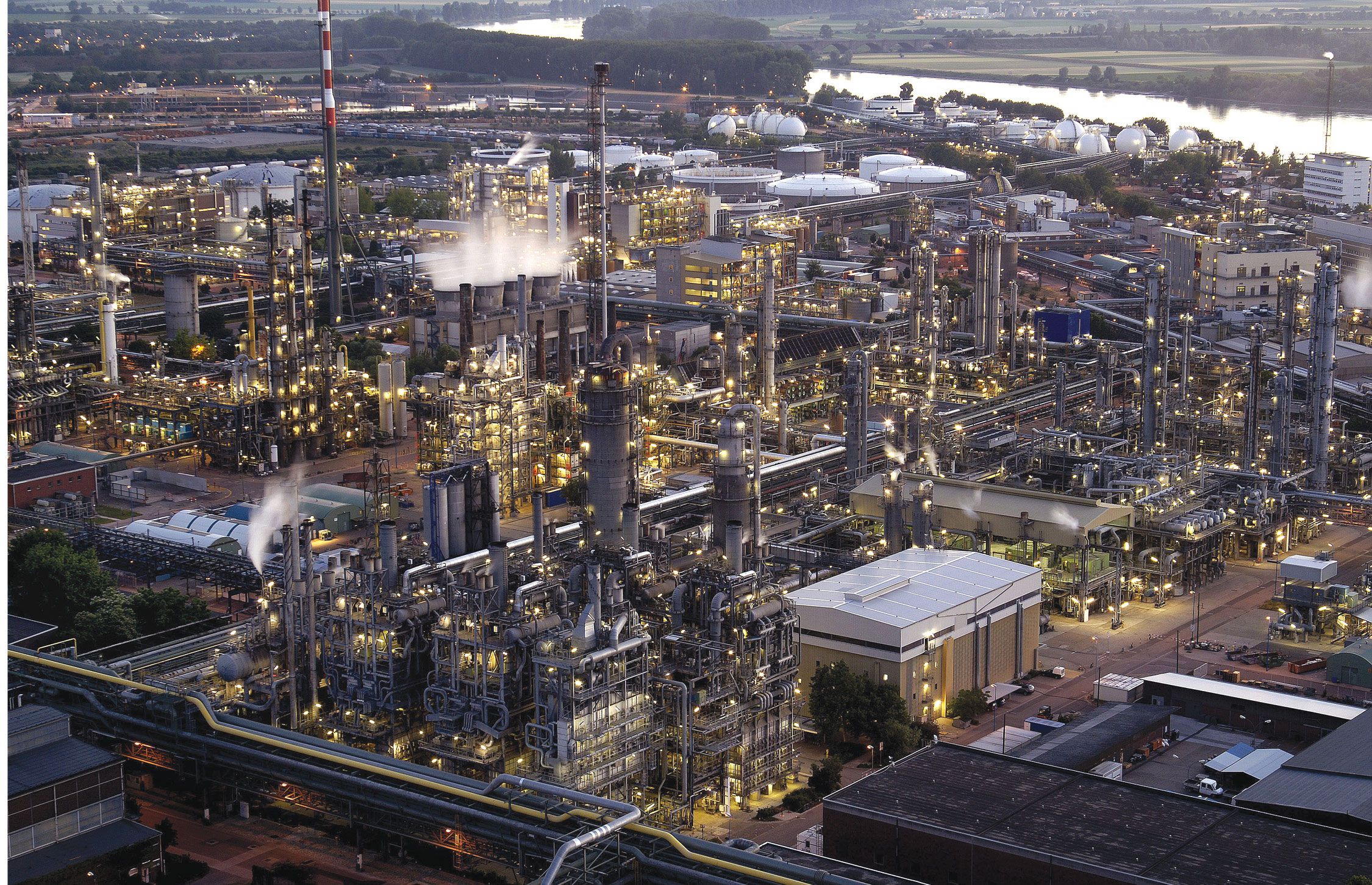
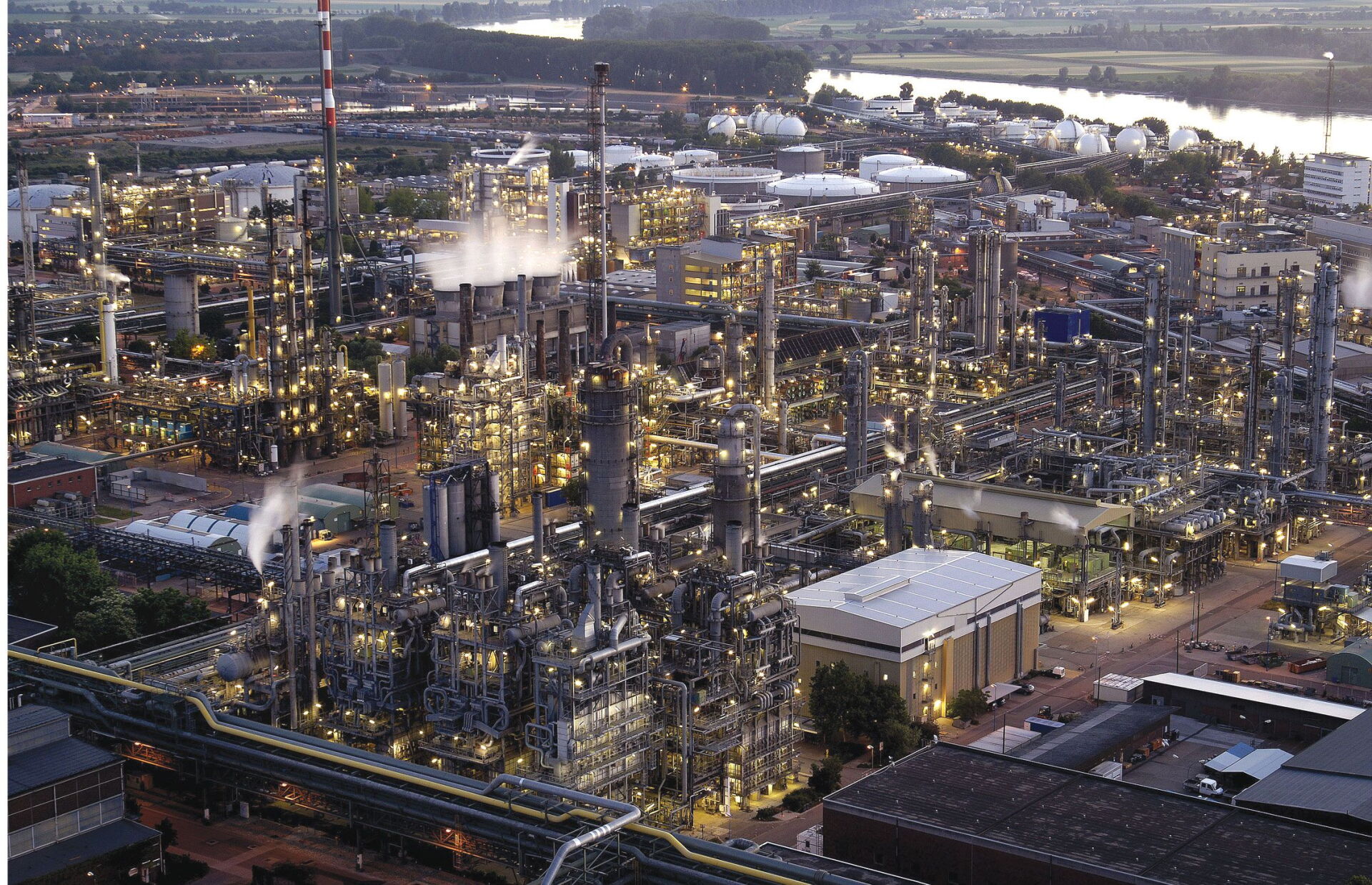
Steam crackers, such as the ones in this BASF facility in Ludwigshafen am Rhein, Germany, require a significant amount of fossil energy to break down long-chain hydrocarbons into smaller, more usable products. The reactions are typically conducted at about 850 °C. Crackers are one of the largest sources of CO2 emissions in the manufacture of petrochemicals.
BASF
The report estimates that the chemical industry can achieve near-net-zero status in the 2050 time frame for a cost of $759 billion. The largest reduction, 40% from current levels, would come from adding carbon capture and storage systems to the crackers and to the combined heat and power plants at the manufacturing sites. The introduction of electrified steam crackers, which are still in development, could cut emissions by 35% more.
The study does foresee industry’s having to turn to renewable methanol, very little of which is produced today, to provide the feedstock for around 20% of its output. Most aromatics—benzene, toluene, and xylene—essential for some plastics are a by-product of oil refineries, Attwood explains, and that supply will likely plunge as refineries either close or sharply curtail their output of gasoline and diesel fuels because of vehicle electrification.
Methanol is the most likely option for replacing the lost aromatics, but nearly all methanol is derived from gas and coal today. Green ethanol will triple the cost of the petrochemical products that are made from aromatics, says BloombergNEF. Not surprisingly, dozens of renewable methanol projects are in development globally, the largest number of them in Europe, according to the Methanol Institute.
A study by George Mason University and other contributors released in September said that 80–90% of CO2 emissions from polyvinyl chloride production could be eliminated by 2050 through a combination of carbon capture and storage and replacing fossil fuels with hydrogen to provide heat and power. PVC is the third-most-produced plastic by volume, behind polyethylene and polypropylene. The researchers said their recommendations would add 5–15% to PVC prices. Stringent regulatory policies or breakthroughs that reduce the capital costs of carbon capture and storage would drive substantial abatement more rapidly.
Those estimates, however, assume an existing infrastructure is available to transport green hydrogen from its source and to move CO2 to where it will be injected underground for permanent storage. Last year’s bipartisan infrastructure law included $8 billion for hydrogen production and infrastructure (see Physics Today, August 2022, page 22 ). The high concentration of refineries, petrochemical plants, hydrogen-production facilities, and associated pipelines along the Gulf Coast could be adapted for those purposes, notes Brett Perlman, CEO of the nonprofit Center for Houston’s Future. The organization is preparing a bid to become one of 6–10 regional hydrogen hubs the Department of Energy is planning to support.
The authors of the PVC study said that petroleum-free processes won’t likely be ready in time to meet the urgency of the CO2 emissions challenge. Adoption of electric crackers will be dependent on more affordable electricity from a decarbonized grid.
More about the authors
David Kramer, dkramer@aip.org