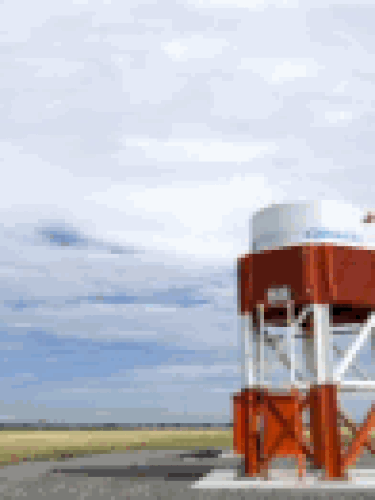
The Independent: The usual way that runways are inspected for any foreign objects or debris is by eye from a moving vehicle four times a day.
Graham Binns, chief engineer at the research company Qinetiq, says that this method is by no means ideal as it leaves large time gaps between inspections and makes it especially difficult to inspect runways at night.Instead, Qinetiq has developed a system called Tarsier that is a camera coupled with a radar system which works throughout the day and night.The radar sweeps the runway and looks for small changes to identify objects appearing. When an object is identified the coordinates are sent to the camera system, which accurately focuses in on the object and gives the human operator the opportunity to look at the debris and decide whether to do something, such as close the runway, or whether its debris that can be ignored.In two years in operation at Vancouver, Tarsier has found over 400 items, including several classed as “posing significant risk.”