Portugal builds on renewables effort with $78M solar plant
DOI: 10.1063/1.2364233
An 11-megawatt solar power plant that’s among the largest photovoltaic projects in the world will provide power to some 8000 homes in Portugal after it’s completed in January 2007.
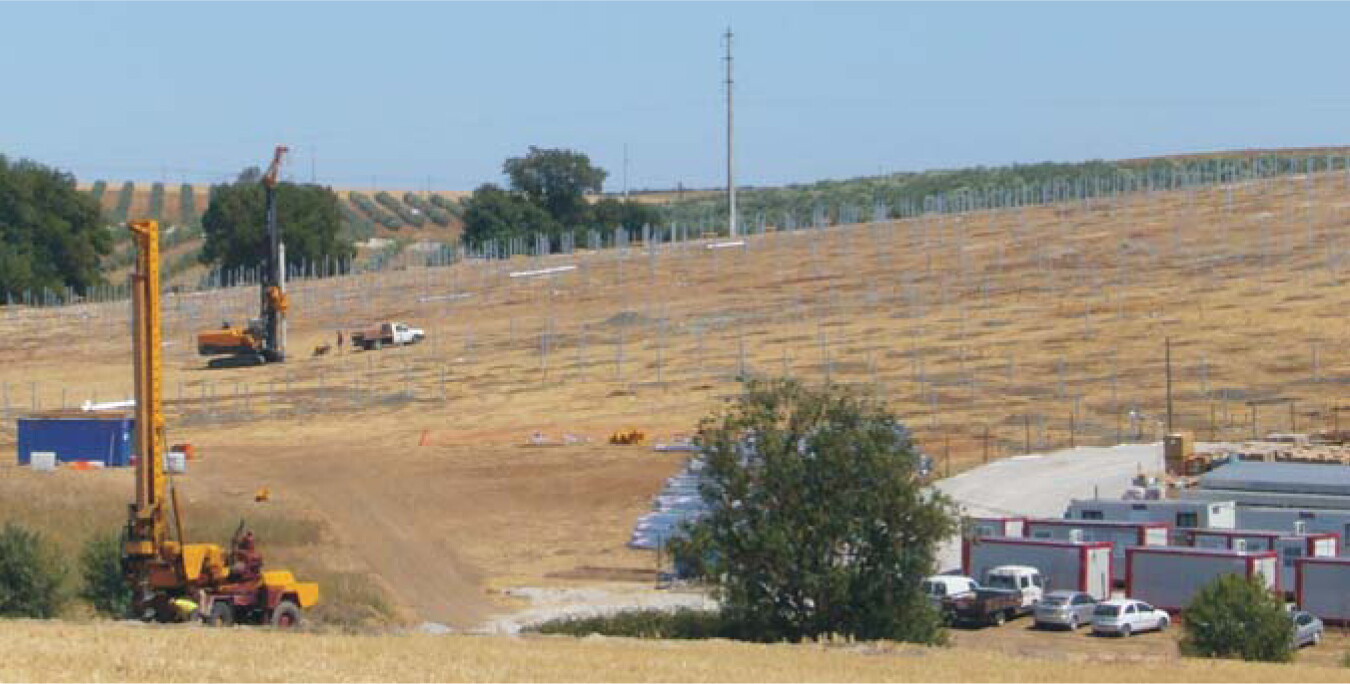
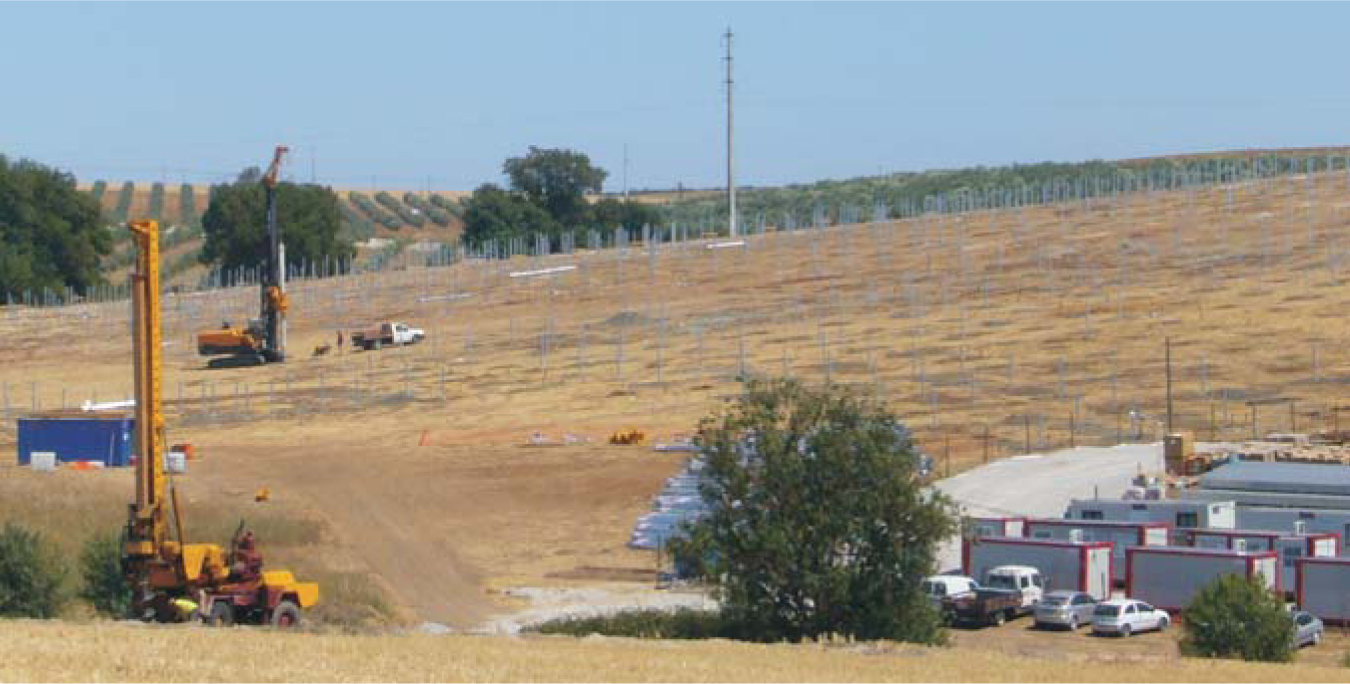
The plant will use a ground-mounted PV system comprising 52 000 modules and is being built on a 150-acre hillside in Serpa, a sleepy agricultural hilltop town in southeast Portugal, one of Europe’s sunniest regions. Two local farmers are renting out the south-facing parcel under a 25-year contract.
Three businesses are involved in the €61 million ($78 million) project. Portuguese renewable-energy company Catavento Lda developed the project; GE Energy Financial Services of Stamford, Connecticut, is financing it and will own the plant; and PowerLight Corp of Berkeley, California, a solar power system provider, designed the plant and will operate and maintain it.
Portugal was attractive to GE EFS for such an investment because of the region’s perpetually sunny climate and because the nation has created renewable-energy development incentives, said Andrew Katell, spokesman for the GE unit. GE EFS, whose renewable-energy portfolio totals some $1 billion, invests annually in environmentally friendly technologies, he added. (See Physics Today, August 2005, page 25 .)
According to a 2004 Energy Information Administration report (http://www.eia.doe.gov/emeu/cabs/portugal.html#renew ), Portugal plans to produce 39% of its power through renewable sources by 2010—which translates into an installed capacity of 150 MW of electricity—but as of July 2005 the nation was generating only 2 MW of solar power. The country expects to meet its renewable-energy goal through wind and wave projects already under development in addition to building solar plants, the EIA report said. A 2000 annual report by the International Energy Agency (http://www.iea-pvps.org/ar00/prt.htm ) pointed out that Portugal has no fossil-fuel energy resources and depends heavily on imports of coal and oil.
One of the Portuguese government’s renewable-energy development incentives, called a feed-in tariff, guarantees utilities’ purchase of solar power at specific rates. “That makes it attractive from a developer’s standpoint,” Katell explained. “The developer [is] able to sell the power at a predictable rate that isn’t subject to fluctuations in the market.”
Project manager Marco Miller of PowerLight said the plant’s modules range from 12.6% to 17.7% efficiency. The system’s actual daily output will be governed by available sunlight, the season—which influences sun angles and number of daylight hours—clouds, and temperature. Because the plant’s solar panels track the sun throughout the day, the plant will generate up to 20% more electricity on days with the most sunlight than more conventional fixed-mount systems.
“On a typical sunny day, the system ramps up slowly as the sun rises,” Miller said. “The [rows of solar panels] track the sun from east to west and [the plant] achieves its maximum output by around 9:00am [depending on the season] and remains [at that output level] until 3:00pm when it begins ramping back down, shutting down at sunset.”
Output would drop during cloudy or rainy periods.
The current top solar power plant worldwide, Solarpark Pocking, began operating in April 2006 on a former military base in Bavaria. With a peak output of 10 MW, it has 58 000 PV modules and generates electricity for about 3000 homes.
Miller said the Serpa plant will store no power and that the electricity it generates will be delivered to the Portuguese power grid. Construction of an electric substation on-site is under way.
The plant was designed with a life expectancy of at least 25 years, and as the modules wear out, they will simply be replaced. They’ll need only regular cleaning to maintain peak efficiency—and the task won’t require a crew with industrial ladders, as the modules are mounted only about five feet from the ground.
The plant is expected to reduce greenhouse gas emissions by more than 30 000 tons a year compared with equivalent fossil-fuel energy generation.
Although use of solar radiation to generate energy is highly desirable for many environmental reasons, the process is still too costly for solar power plants to replace other traditional energy sources on a mass scale worldwide, said Piero dal Maso, co-CEO of Catavento Lda. PV cells represent much of that cost, he added; presently no automated system exists that can manufacture them, and the silicon used in their production is also expensive.
When the Serpa plant is completed, it won’t be the hillside’s only occupant. Some 500 sheep now roaming the property will remain there, but they’ll do more than just look picturesque. “We don’t want bushes growing up over the modules, and the sheep will eat them,” dal Maso said.

Construction is under way on a 52 000-module solar power plant on a 150-acre hillside in Serpa, southeast Portugal. When the plant is completed in January 2007, it will be among the largest in the world.
POWERLIGHT CORP