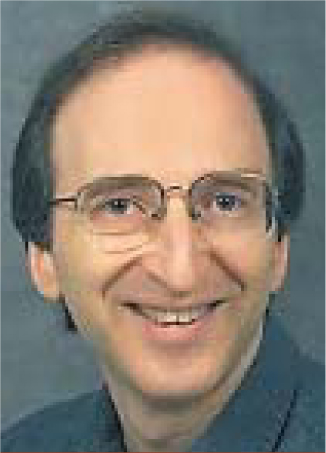
Perlmutter wins Feltrinelli Prize
DOI: 10.1063/1.4797432
Saul Perlmutter, whose research on the nature of dark energy has brought him great renown, is the winner of the 2006 International Antonio Feltrinelli Prize in the Physical and Mathematical Sciences. The honor is awarded every five years by Italy’s Accademia Nazionale dei Lincei, one of whose earliest members was Galileo Galilei.
Perlmutter is a senior scientist and astrophysicist in the physics division of the US Department of Energy’s Lawrence Berkeley National Laboratory and a professor of physics at the University of California, Berkeley. He is the cofounder and leader of the international Supernova Cosmology Project, principal investigator of the proposed SuperNova/Acceleration Probe (SNAP) satellite, and leader of other efforts to discover more about the nature of dark energy.
The Lincei Academy—literally “Academy of Lynxes,” named for the animal’s supposed powers of observation—was founded in 1603, at the dawn of the scientific revolution. Today it is regarded as Italy’s premier scientific academy. The Antonio Feltrinelli Prizes, including the International Prize, are the academy’s most important awards and among Italy’s highest scientific and cultural honors. Antonio Feltrinelli, an industrialist and financier, bequeathed his fortune to the Lincei Academy to support the recognition of eminent scholars in the arts and sciences; Feltrinelli Prizes were first awarded in 1950.
In addition to a cash award of €250 000 (about $315 000), the prize includes a certificate and a gold medal. The 2006 prizes will be presented at a ceremony in Rome on 10 November, during which Perlmutter will give an address.

Perlmutter
LAWRENCE BERKELEY NATIONAL LAB