New international scientific organization is launched
DOI: 10.1063/PT.3.1638
Representatives from 44 nations gathered at NSF headquarters in Arlington, Virginia, in May to endorse a set of principles to guide each country’s scientific peer-review systems. The two-day meeting marked the debut of the Global Research Council (GRC), an organization that will convene annually to address topics of concern to the international scientific community.
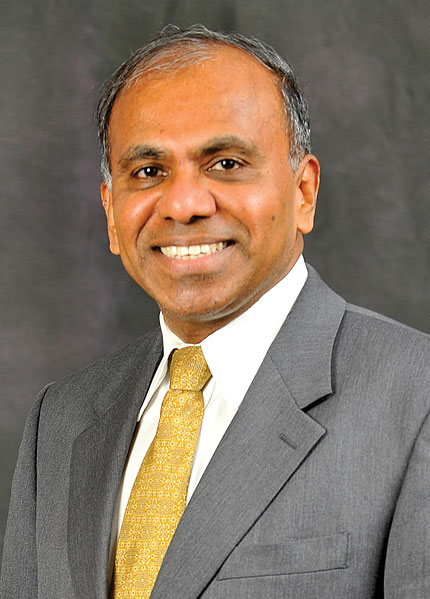
“By forming the research council, we have taken the first step towards a more unified approach to the scientific process on a global scale,” NSF director Subra Suresh told reporters. The council, he said, “is intended to be a voluntary, virtual organization that discusses shared goals and aspirations and principles but also provides a vehicle to further science in a unified way across the globe.”
The council traces its origin to a 2010 meeting called by the now defunct European Heads of Research Councils, which the US, other developed nations, and nations with emerging research capabilities also attended. David Stonner, deputy director of NSF’s Office of International Science and Engineering, says that the idea floated then was to encourage international collaboration in research by harmonizing each nation’s research policies. He notes that funding agencies often can impede international collaborations because of their varying requirements for grant recipients.
“In the 21st century, it’s essential that any developing country look to the incorporation of knowledge into their economies,” said Glaucius Oliva, president of Brazil’s National Council for Scientific and Technological Development. “We’ve been doing that in many countries, but it’s essential to have a shared forum where experiences can be exchanged and collaboration can be improved.”
Confidentiality threatened
Attendees agreed on the principles of expert assessment, transparency, impartiality, appropriateness, confidentiality, and ethical integrity for their peer review systems. The principles are to ensure that “there is no disconnect between what is commonly accepted in institutions with an established history and in those institutions that are just evolving,” Suresh said. NSF’s requirement that all grantees show how their research will produce societal benefits beyond the narrow confines of the work is not among the principles.
In welcoming the principles, Oliva expressed concern that new federal law in Brazil and court rulings there threaten the confidentiality of peer review. “People are going to court to have access to the confidential [review] reports, and an international statement that [confidentiality] is a fundamental principle is very important for all of us.”
The GRC will have a governing board with equal representation from developed and developing countries. Fifteen of the nations represented at the NSF meeting were developing nations. The GRC has no permanent staff, and each nation covers its attendees’ costs to participate.
Germany and Brazil are slated to co-host next year’s GRC meeting in Berlin, which will cover the topics of scientific integrity and open access to the results of government-funded research.
Matthias Kleiner, president of the German Research Foundation, said that achieving a consensus on scientific integrity will be easier than will agreement on the more complex question of open access, for which situations vary widely from one nation to another. Brazil, for example, has a single organization that provides access to scientific journals for the country’s entire research establishment. Kleiner called for an international “action plan” to be developed by the research funding agencies, publishers, and other stakeholders that will set forth the steps to be taken toward open access over the next five years.

NSF director Subra Suresh
SANDY SCHAEFFER
More about the authors
David Kramer, dkramer@aip.org