New Hughes Center a Biological Reflection of the Old Bell Labs
DOI: 10.1063/1.1839373
Geneticist Gerald Rubin sat in the nondescript conference room of a leftover building that once belonged to a now-defunct software company and talked like a scientist possessed by a vision.
“This is the mythical ivory tower,” he said, referring not to his surroundings but to architectural drawings of a mammoth, $320 million laboratory building that is under construction a hundred yards away. “We’ll have good coffee, and you just have to do science, nothing else. And that is the empowering thing—or frightening thing. We’ll eliminate all of the excuses for not doing science.”
Rubin, vice president of biomedical research for the nonprofit Howard Hughes Medical Institute, is, with a few notable colleagues and about $500 million in HHMI money, trying to create a biology-focused version of Bell Laboratories in its heyday. The new HHMI facility, called the Janelia Farm Research Campus after the historic farmhouse that still sits on the site in Ashburn, Virginia, will eventually be home to between 200 and 300 scientists who will have the money, equipment, and support to do high-risk science.
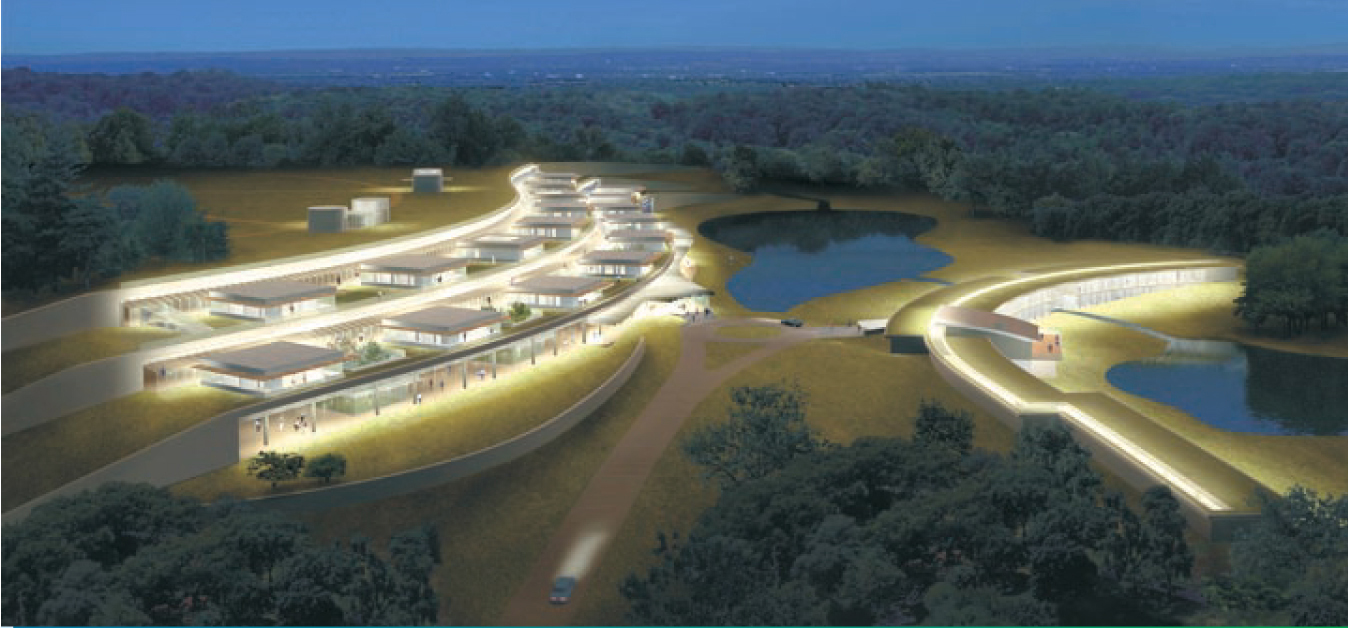
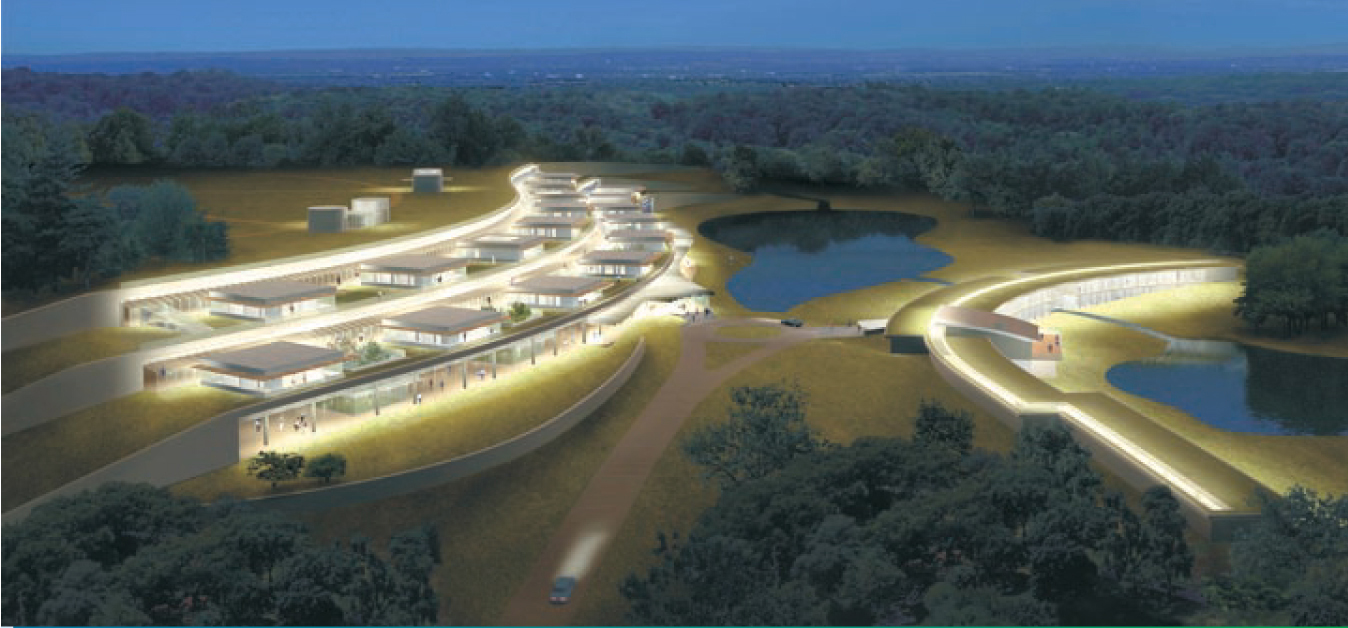
The laboratory, a three-layered, earth-sheltered curve of a structure being built into the side of a hill overlooking the Potomac River, will house 24 small research teams, none larger than six members, that will focus on two fundamental problems: how the human brain works and how to visualize what goes on inside living cells. Researchers are being recruited from the fields of neurobiology, molecular biology, chemistry, genetics, physics, computer science, mathematics, and instrument design. The first 50 are expected to begin work at the lab in the summer of 2006.
The scientists, regardless of background, age, or experience, will be signed for an initial six-year term, during which they will not be required to publish results. They will not be allowed to have outside grants of any sort. Nor will they get tenure. After six years, they will either be invited to stay for another five years or be asked to transition out of the lab over a two-year period. Departing scientists will be given HHMI research funding, which will make them attractive candidates to universities or other more traditional research organizations.
“The staff turnover will be high,” said Rubin. “We want people to want to leave. They might stay for 10 or 15 years, but not 30. We want them here when they want to be real, working scientists.” Many researchers eventually want to move into administration, teach, or do other types of work, he said. Great, he added, but not at Janelia Farm.
The lab is looking for risk takers, Rubin said, people who want “to do things that are too adventuresome for other kinds of labs.” Prospective scientists must convince the lab they have an idea in the relevant fields “that has a 20% chance of success,” Rubin said. “If you’ve got a 90% chance of success, then we’ll tell you to go back and think of something more adventuresome.”
The idea for the lab started almost as a cliché, drawn on the back of a napkin in a Boulder, Colorado, restaurant by David Clayton, HHMI’s chief scientific officer. Clayton, Rubin, and Nobel laureate Thomas Cech, HHMI’s president, spent a couple of years developing the idea of the freewheeling lab based on the Bell Labs model. HHMI already funds about 350 university-based scientists, and creating the lab was an alternative to simply funding more university researchers. To determine the focus of the lab’s work, Rubin said, they set out to find a “biomed problem” that was interdisciplinary, couldn’t be done easily at university labs, and would “make a difference in the world.”
The facility, designed by architect Rafael Viñoly, will include the lab, a hotel, and a housing complex for visiting researchers. Rubin is already thinking about the lab’s legacy. “Twenty years from now, I want discoveries that, if we hadn’t built Janelia Farm, wouldn’t have happened. I want to be able to say we did good stuff. That’s why we want to do something different.”

When completed in early 2006, Howard Hughes Medical Institute’s Janelia Farm Research Campus will consist of a laboratory building (left) with enough space for several hundred researchers, a hotel (right), and a small housing development. The 280-acre campus is on the Potomac River about 30 miles northwest of Washington, DC. (Artist’s rendition courtesy of HHMI.)