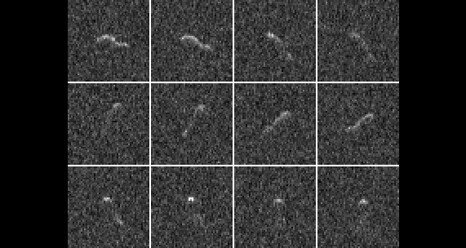
Guardian: NASA’s Epoxi mission will sweep past the Hartley 2 comet on Thursday and take detailed measurements and images. Comets are formed from space rubble and vary in size from a few hundred meters in diameter to tens of kilometers. “Comets were once thought to be roughly similar in shape and structure,” said Mark Bailey of Armagh Observatory in Northern Ireland. “But the more probes that we fly past them, the more differences we find.” Because scientists believe that water and complex organic materials detected on comets may have played a key role in the evolution of life on Earth, they are interested in studying them close up. Hartley 2 was also in the news last week. Astronomers attributed two meteors to the comet, which, being small, is not expected to shed such fireballs. The images below of the comet come from the Arecibo Observatory in Puerto Rico.