NAS Taps Atmospheric Scientist
DOI: 10.1063/1.4796298
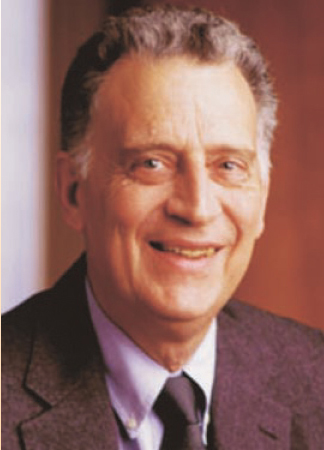
Ralph Cicerone, chancellor of the University of California, Irvine (UCI), has been unanimously nominated to become the next president of the National Academy of Sciences. The nomination by the NAS council means Cicerone will stand unopposed for election in December and is expected to begin a six-year term on 1 July 2005.
Known for his groundbreaking research on ozone depletion and the impact of greenhouse gases on the climate, Cicerone said, “The importance of science and technology to the United States and the world has never been greater and I look forward to serving if I’m elected.” He was elected as a member of the NAS in 1990. UC president Robert Dynes said Cicerone’s rise to the NAS presidency “is a richly deserved acknowledgement of his talents as a scientist and leader.”
Current NAS president Bruce Alberts, a biochemist, will complete his second six-year term. Alberts said he was “very pleased” that Cicerone had accepted the nomination. He said Cicerone “has been an energetic and thoughtful leader for many of our academy’s efforts, as well as for the larger science community.”
At UCI, Cicerone served as chair of the department of Earth systems science from 1989 to 1994. He became UCI’s fourth chancellor in 1998. In 2001, he led an NAS study of the current state of climate change and its impact on the environment and human health; that study was requested by the Bush administration. Cicerone holds a PhD in electrical engineering from the University of Illinois.

Cicerone
UNIVERSITY OF CALIFORNIA, IRVINE