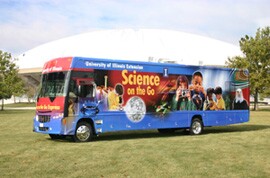
The result âmdash; mobile science laboratories that bring science education to students—is expanding across the USA.Mobile labs are active in at least 10 states and are an important tool in attracting young people to the so-called STEM courses—science, technology, engineering and math, Franzblau says.The labs are buses or semis outfitted with the basics of science education: electricity, distilled water, freezers and refrigerators, scales, microscopes and even computer systems in some cases, he adds.They are designed to travel to schools that don’t have the resources to teach modern science to students, but they also are crucial in providing training to teachers in a field that can see a new discovery change curriculums overnight.