MacArthur Foundation Names 2005 Fellows
DOI: 10.1063/1.2169451
From studying complex molecules to analyzing computer networks, from researching the history of acoustic design to building a better laser, the work of five scientists and a historian recently named as 2005 MacArthur fellows is broadly diverse.
Claire Gmachl, Jon M. Kleinberg, Michael Manga, Todd Martinez, Emily Thompson, and Michael Walsh are among 25 people honored by the John D. and Catherine T. MacArthur Foundation in September. The fellowships, presented in recognition of recipients’ originality, creativity, and potential, carry an un-restricted grant of $500 000 over the next five years.
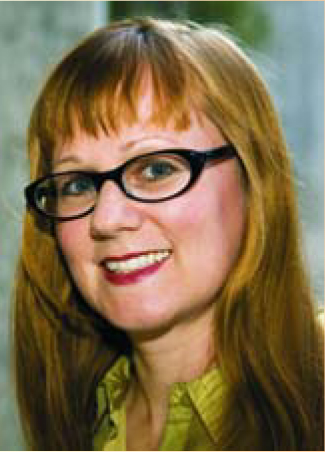
Gmachl is focusing on making better quantum cascade lasers for such applications as chemical trace-gas sensing, which, she points out, may be useful for environmental, medical, or security purposes. The foundation recognized her efforts in “engineering state-of-the-art lasers for novel applications in environmental monitoring, clinical diagnoses, chemical process control, and homeland security.” An associate professor of electrical engineering at Princeton University in Princeton, New Jersey, Gmachl is also working on expanding potential applications.
“A typical quantum cascade laser has a core with maybe 50 subunits. Most folks use 50 identical subunits, but my group likes to break up those 50 and do different things with them,” she explains. “The different subunits have different wavelengths, or colors, so instead of a single wavelength you get a rainbow of light—and you can measure different concentrations of many things at the same time.” In this way, she says, a medical technician could simultaneously check several of a patient’s organs. “There’s a very applied, real-world focus,” Gmachl says of her work.
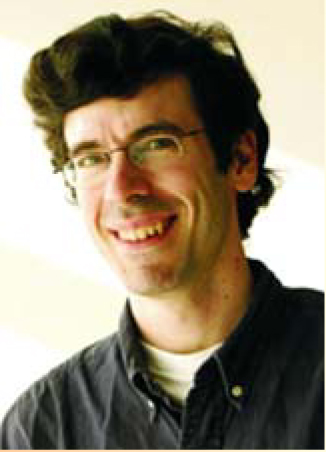
Kleinberg, a professor of computer science at Cornell University in Ithaca, New York, is fascinated by computer and information networks. The foundation is honoring him for “revealing the deep structure of complex networks such as genomes or computer networks, and creating new methods to extract the information embedded in them.”
Kleinberg says the results of his early work helped Google, Ask Jeeves, and others build their powerful search engines. Today, he’s still interested in “short paths”—a shortcut through a maze of information to a destination within a computer network. “How, with very limited information, can you still perform a search, can you still find your destination in a network?” he asks. “One thing I did was to create a mathematical network model where this kind of search is possible.”
His work, he says, has at least two practical applications. One is developing peer-to-peer file-sharing systems, ways in which content may be shared without use of an index. The second application, Kleinberg says, is understanding and improving the structure and operation of blogs and other online communities. “We need to be thinking about ways to make communication and search as easy and fluid as possible,” he says.
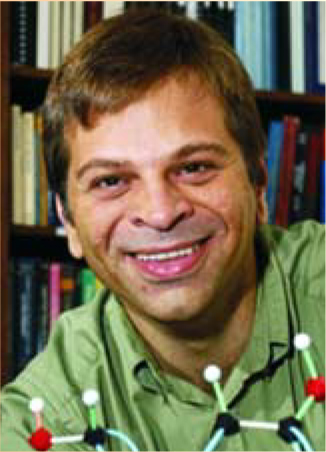
An associate professor of Earth and planetary sciences at the University of California, Berkeley, Manga studies geological processes involving fluids, including problems in physical volcanology, geodynamics, hydrogeology, and geomorphology. Diverse? Sure. But Manga says the common thread is to develop a better quantitative understanding of physical processes operating in Earth. The foundation recognized his work of “identifying within fluids, such as molten magma and subterranean water, clues for understanding basic geological forces.”
Such knowledge has a great number of practical applications, Manga says. For example, understanding how and why volcanoes erupt is vital for saving lives and communities where volcanoes exist. Already, Manga says, he’s discovered that the presence of bubbles changes the nature of magma, which in turn affects the way lava erupts.
“We propose that by fragmenting magma—and releasing gases—we can keep lava from erupting explosively,” he explains. There’s another, more basic reason he likes to study volcanoes. “They’re pretty spectacular,” he says.
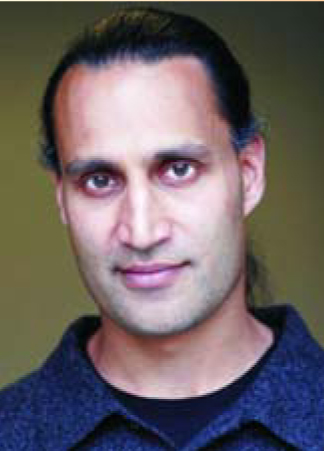
Martinez, a chemistry professor at the University of Illinois, Urbana-Champaign, a faculty member at the university’s center for biophysics and computational biology, and a faculty affiliate at the Beckman Institute for Advanced Science and Technology, also at UI, works with complex molecules. The foundation recognized him for “revealing fundamental insights into the physical basis for chemical reactions by developing new strategies for computing the quantum mechanical properties of complex molecules.”
Martinez says he has developed a new method, ab initio multiple spawning (AIMS), to solve the electronic and nuclear Schrödinger equations simultaneously, an approach that allows for direct simulation of molecular optical response without input from experiment.
“We are currently applying AIMS and related methods in studies of photoactive proteins, light-harvesting molecules for use in solar cells, and photodamage of DNA. The next direction we are pursuing is the development of a combinatorial strategy using AIMS to redesign photoactive proteins,” he explains. He says his ultimate goal is to create light-powered or light-controlled molecular machines that can be used to affect chemically specific transport at the nanometer scale. “This would allow transference of the exquisite spatiotemporal control over light available with modern lasers to direct control of chemical concentrations,” he says.
Aural historian Thompson, an associate professor of history at the University of California, San Diego, and an affiliated researcher at the California Institute for Telecommunications and Information Technology, maps the history of the design of sound and acoustics. According to the MacArthur Foundation, Thompson’s work is “bridging the history of the United States and the histories of technology, science, sound, and acoustics to examine transformations in the American soundscape.”
In her recent book The Soundscape of Modernity (MIT Press, 2002), she examined the history of the science of sound as applied to the design of rooms. In her current project, she is studying the transition from silent to sound film in the American film industry in the 1920s. Thompson believes that understanding this historical transformation may help film-makers today navigate their own ongoing technological transition from film to digital data.
“I’ve loved the movies ever since I was a child. I had this longstanding interest in sound and audiotechnology,” Thompson explains. “With this award, I now have wonderful resources, and this project is a nice way to bring those two interests together.”
If your new car were spewing out hazardous gases, Michael P. Walsh wouldn’t have been doing his job. The Arlington, Virginia—based international technical consultant and vehicle emissions specialist has dedicated his life to cutting pollution by reducing discharges from cars, trucks, and other vehicles. The owner and publisher of CarLines, a bimonthly newsletter that covers international and national auto pollution issues, Walsh got his start in the field about 40 years ago.
“The first job I had was in the 1960s, in an auto research lab, where I helped design experiments evaluating fuels and looking at catalytic converters that cleaned up pollution,” Walsh remembers. A few years later, in 1970, the city of New York invited him to work at a vehicle pollution control bureau it wanted to set up. Four years later, he took a position at the US Environmental Protection Agency, where his work led to the adoption in 1980 of the first diesel particulate standard in the world. Walsh credits his years with the EPA for teaching him about particulates’ harmful health consequences. Part of his work as a consultant involves educating other nations about the danger of particulates and how to prevent their production.
Though based in the US, Walsh operates internationally. At present, he’s working with China and Mexico on cutting vehicle-related air pollution, and in July he completed a similar project with Vietnam. In recognition of his broad-based work, the foundation is honoring him for “designing and implementing inventive, cost-effective programs to improve air quality for populations around the globe.”
“This is an area where I think I can have an impact,” he says.


PHOTOS-ASSOCIATED PRESS