MacArthur Fellows Announced
DOI: 10.1063/1.2408442
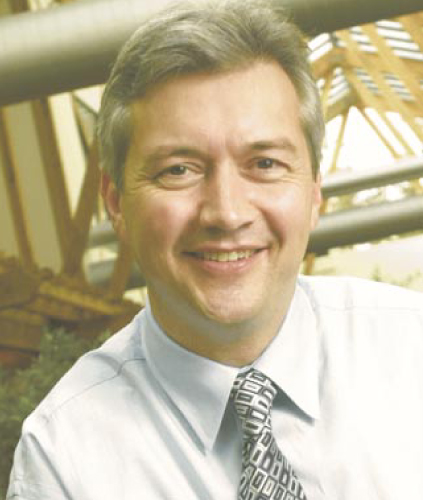
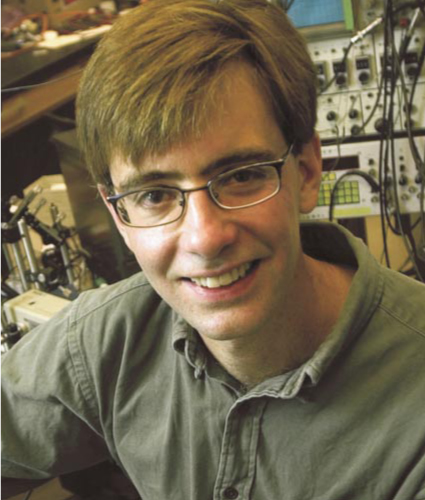
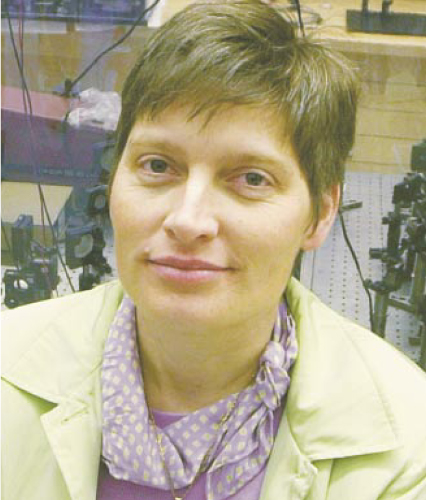
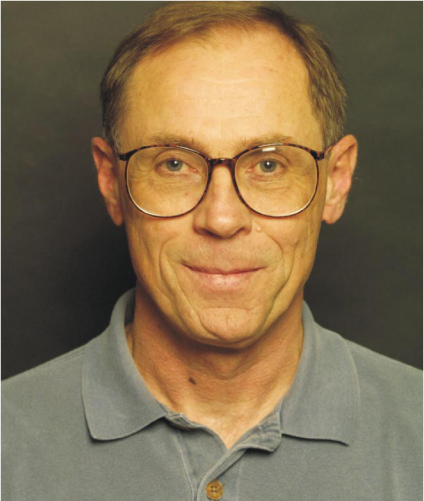
In October, the John D. and Catherine T. MacArthur Foundation presented fellowships with “no strings attached” financial support to 23 individuals. According to the foundation, it selects “talented individuals who have shown extraordinary originality and dedication in their creative pursuits, and a marked capacity for self-direction.” Of the fellows, five work in physics-related fields. They are Christopher Chyba, Michael Dickinson, Lene Hau, Brooks Pate, and David Spergel. Each MacArthur fellow will receive $100 000 a year for the next five years.
Chyba is a planetary scientist and science policy specialist and the Carl Sagan Chair for the Study of Life in the Universe at the SETI Institute in Mountain View, California. He is also codirector of the Stanford University Center for International Security and Cooperation and an associate professor of geological and environmental sciences at Stanford. His research focuses on reconstructing the conditions that spawned terrestrial life and exploring the similarities and differences among other objects in the Solar System. The foundation described Chyba as being “dedicated to the idea that scientists share a dual responsibility for enhancing our understanding of the natural world and for participating in the public discourse that affects our collective futures.”
Dickinson is an insect physiologist and professor of integrative biology at the University of California, Berkeley. His research is helping to solve the mysteries of insect flight (see Physics Today, December 2000, page 22 ). He has created a robotic fly model with which one can carefully control each of the parameters of wing movement and assess their effects on aerodynamics. His research has also provided insight into how the fly’s brain controls aerodynamic properties. According to the foundation, Dickinson “has continually demonstrated the capacity to master any relevant scientific discipline necessary, and his ‘magic hands’ in the laboratory enable him to generate the key empirical data from which to build a comprehensive description of insect flight.”
The foundation recognized Hau’s research, which “extends the limits of our capacity to control light and opens uncharted territory for novel research and future engineering applications.” A Gordon McKay Professor of Applied Physics and a professor of physics at Harvard University, Hau has shown how it is possible, under precise experimental control, to dramatically extend the time it takes for photons to pass through laser-manipulated ultracold gases and Bose-Einstein condensates (see Physics Today, April 1999, page 9 ; July 1999, page 17 ; March 2001, page 17 ). The foundation said Hau’s “experiments provide a proof-of-concept for the development of optical switches that preserve the quantum state of photons passing through them. Such switches may be an invaluable component of future computers that use quantum physics to perform calculations.”
A physical chemist at the University of Virginia in Charlottesville, Pate has revealed new insights into chemical reactions of excited molecules. Much of his research has focused on a special class of reactions, known as unimolecular isomerization, in which a single molecule changes the configuration, but not the number, of its constituent atoms. Using spectroscopic techniques that he has developed, such as microwave-infrared double resonance, he has examined the effect of vibrational and rotational nuclear motion on overall chemical reactivity. “By revitalizing this branch of physical chemistry, Pate’s research brings us closer to realizing the long-anticipated promise of laser technology for unprecedented control of chemical reactions,” said the foundation.
Spergel “takes risks with his ideas and, even at an early stage in his career, has left a marked impression in several areas of astrophysics,” acknowledged the foundation. A professor of astrophysical sciences at Princeton University and the editor of the Princeton Series in Astrophysics , Spergel has been exploring such astrophysical issues as the interpretation of the solar neutrino flux, the role of dark matter in the formation of the Galaxy, the early history of galactic formations and gravitational deformations, and the shape of the universe. His work on NASA’s Microwave Anisotropy Probe “has the potential to transform our understanding of the history and topology of the early universe,” said the foundation. Recently, he proposed a method for masking direct light from a star so that much dimmer light reflected off orbiting planets might be detected.

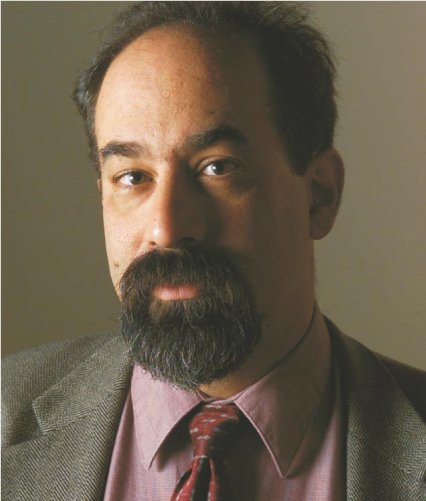
Dickinson
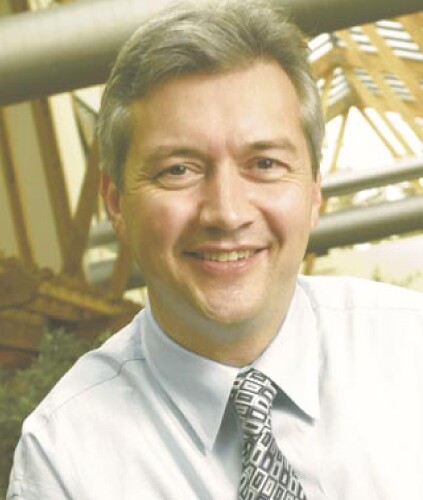

Spergel


Chyba


Pate


Hau