Kirshner Elected President of AAS
DOI: 10.1063/1.1580062
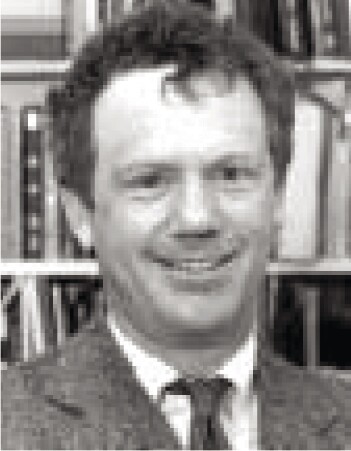
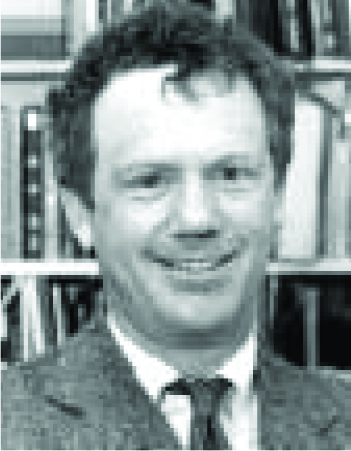
Members of the American Astronomical Society recently elected Robert Kirshner as their president for 2003. Kirshner, who takes office at the society’s annual meeting next month, will serve as president-elect in 2003 and as president in 2004–05, and succeeds Catherine Pilachowski (see Physics Today, May 2001, page 77 ).
Kirshner received his AB in astronomy in 1970 from Harvard University and his PhD in astronomy from Cal-tech in 1975. After completing a postdoc at the Kitt Peak National Observatory in Tucson, Arizona, he became a member of the astronomy faculty at the University of Michigan, Ann Arbor, in 1977. In 1986, Kirshner joined Harvard’s astronomy department and served as chair from 1990 to 1997. Beginning in 1998, he was the associate director for optical and infrared astronomy at the Harvard-Smithsonian Center for Astrophysics (CfA), a position he held for five years. The same year he joined the CfA, he was elected to the National Academy of Sciences.
Currently, Kirshner is the Clowes Professor of Science at Harvard. His research interests include supernovae and observational cosmology, especially the recent discovery of dark energy using supernovae. Kirshner has written several books directed toward the nonphysicist on astronomical topics and is a frequent public lecturer on the subject.
“The AAS has been important to me, as to every astronomer in North America,” Kirshner says. “I hope I can do something useful for an organization that has helped me so much.”
In other AAS election results, Chris Impey (University of Arizona) will serve a three-year term as a society vice-president and Geraldine Peters (University of Southern California) will begin a three-year term as one of the AAS representatives on the US national committee of the International Astronomical Union. The new education officer will be George D. Nelson (Western Washington University in Bellingham, Washington). Also, Todd Boroson (National Optical Astronomy Observatory), Carol Christian (Space Telescope Science Institute), and Alycia Weinberger (Carnegie Institution of Washington) will serve three-year terms as AAS councilors.