Holt Holds onto Congressional Seat, Keeps Science in Politics
DOI: 10.1063/1.1349604
As Congressman Rush Holt (D-N.J.) looked at the final vote tallies in his unnervingly close reelection bid in November, his thoughts turned to measurement design theory and the role of noise in ballot tabulations. This was political science with a twist, because Holt is the Princeton University plasma physicist who won a seat in the House of Representatives in 1998, and he can’t help but approach politics with a great deal of science. Vern Ehlers (R-Mich.) is the only other physicist in Congress.
Holt kept his seat from New Jersey’s 12th district by surviving a strong challenge from Republican Dick Zimmer, who had held the same seat for three terms in the early and mid-1990s. The 30‥000 voters in the district gave Holt the victory by a mere 500 votes and, in an echo of the presidential drama in Florida, Zimmer insisted on a recount.
“Each day of the recount I gained votes and when the margin grew from about 500 to 750, he pulled the plug,” Holt said of Zimmer. Holt said he has already drawn up legislation calling for a commission to come up with recommendations of ways to standardize voting procedures in federal elections. His goal, he said, is to come up “with a lower noise measurement system” for voters.
Beyond that, Holt said he wants to double federal nondefense R&D spending, make the R&D tax credit permanent, improve and expand programs for science and math education in the public schools, and rekindle the debate over the need for a progressive federal energy policy.
As he watched CNN coverage of the Bush–Gore battle in Florida, Holt explained the difference between hard science and political science: “In science you’re supposed to follow the evidence wherever it leads and let the chips fall where they may. But where the chips fall is what politics is all about.”


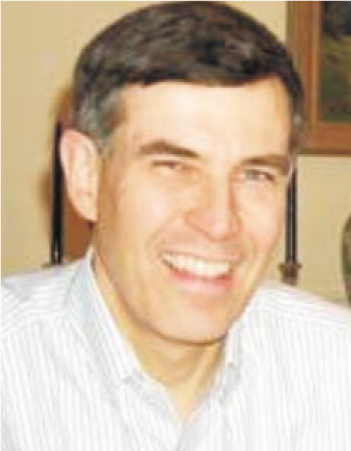
Holt

More about the authors
Jim Dawson, American Center for Physics, One Physics Ellipse, College Park, Maryland 20740-3842, US .