Atomic Plans Return to Japan
DOI: 10.1063/1.4796561

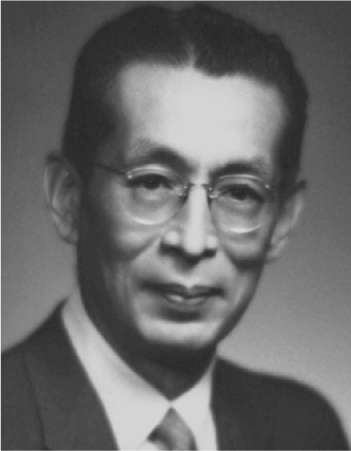
Fifty-seven years after they were believed to have been destroyed, papers describing plans for a Japanese nuclear bomb have been returned to the Institute of Physical and Chemical Research (RIKEN) outside Tokyo. At the close of World War II, and despite orders to destroy it, the 23-page document was secretly entrusted to Kazuo Kuroda, a research assistant who worked on the project with Yoshio Nishina, the scientist who headed the atomic bomb development team. The papers, written by a military officer who interviewed Nishina, include details and diagrams of a weak atomic bomb. In 1949, Kuroda emigrated to the US and eventually became a professor at the University of Arkansas. After his death in April last year, RIKEN personnel asked his widow to return the papers.
This is not the first time fresh evidence has come to light about Japan’s nuclear weapons program. In 1997, newly declassified documents revealed that, in 1945, a German submarine bound for Japan was captured carrying two Japanese officers and 1200 pounds of uranium oxide, an ingredient for an atomic bomb. But there was “no chance” that the Japanese could develop a bomb in time to stop their defeat, says Herbert York, a nuclear weapons expert in San Diego, California. “I believe that, at the close of the project, Nishina said that not even the US could develop an atomic bomb during this war,” says York. Kuroda’s documents will be made available to historians through RIKEN’s archives.

Kuroda
RIKEN

More about the authors
Paul Guinnessy, American Center for Physics, One Physics Ellipse, College Park, Maryland 20740-3842, US . pguinnes@aip.org