Aerobics Acoustics Can Harm Hearing
DOI: 10.1063/1.1628998

Working out at a gym may improve your muscle tone, but both the staff and exercise participants could damage their ears from the loud music, says physicist Eugenie Mielczarek of George Mason University in Fairfax, Virginia. Over the past three years, Mielczarek measured sound levels in aerobics and other exercise classes at three fitness clubs in Fairfax County. At some clubs, sound levels reached 120 decibels, “close to that of using a jackhammer,” she says.
Regular exposure to loud music slowly destroys the delicate hair cells inside the ear, which reduces the volume and frequency of information transmitted to the brain. Since 1991, the American Council on Exercise (ACE) has published noise level guidelines for its members, but few instructors follow them. The guidelines, based on recommendations by the Occupational Safety and Health Administration, limit noise levels over an eight-hour period to under 85 dB—the equivalent of noise from heavy traffic. But some national fitness club chains hold 45-minute-long classes at 110 dB, says Mielczarek, and most instructors teach six to eight classes each day. “The club staff were either unaware that [ACE] guidelines existed or asked me to leave the class when I asked them to turn the sound down,” she adds.
But the volume may soon be turned down for a different reason, says Cedric Bryant, ACE’s chief exercise physiologist. “We’ve been finding that a lot of instructors are suffering voice damage from shouting over the music,” he says.

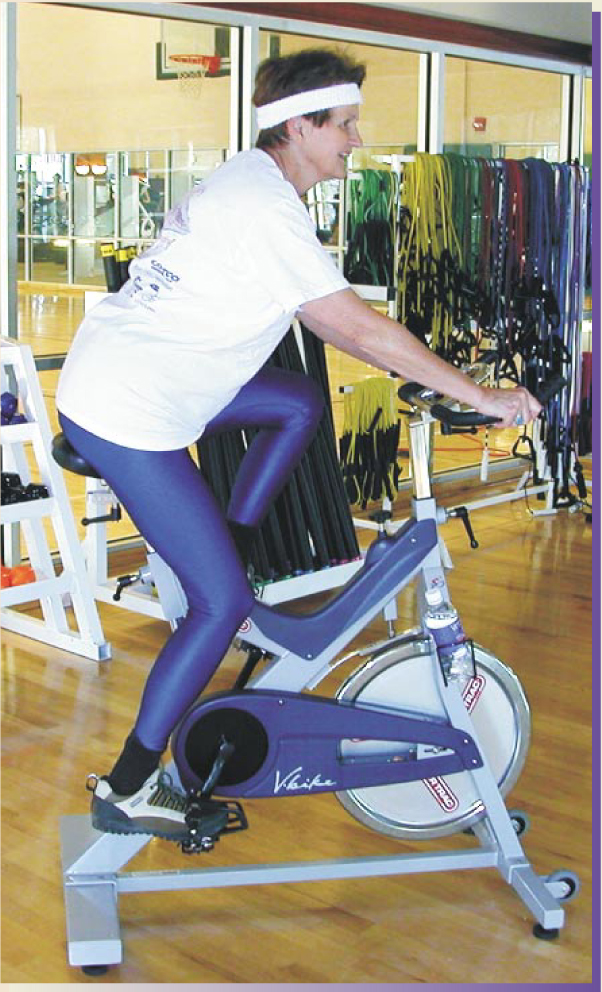
Loud music at fitness clubs may destroy your hearing, says physicist Eugenie Mielczarek (above).
EUGENIE MIELCZAREK

More about the authors
Paul Guinnessy, pguinnes@aip.org