AAS Honors Rees and Others
DOI: 10.1063/1.2408591
The American Astronomical Society recently named the winners of its awards and prizes for contributions to astronomy for 2004.
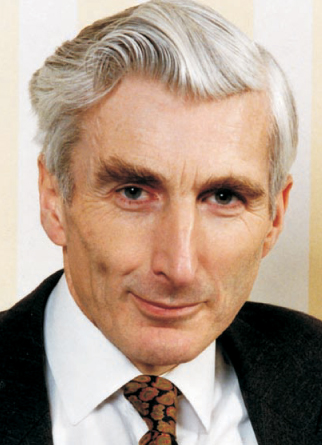
The Henry Norris Russell Lectureship, the society’s most prestigious award, goes this year to Martin J. Rees, professor of cosmology and astrophysics and master of Trinity College at the University of Cambridge in the UK. He is being honored for his “significant contributions to high-energy astrophysics and cosmology, including predicting super-luminal expansion, analyzing the role of black holes in galactic nuclei and binary x-ray sources, and developing the theory of galaxy formation and evolution.”
The George Van Biesbroeck Prize recipient is Rodger Doxsey, senior scientist and head of the Hubble mission office at the Space Telescope Science Institute in Baltimore, Maryland. He is being recognized for his “outstanding, unselfish dedication to making HST [the Hubble Space Telescope ] one of the most scientifically productive telescopes of all time.” The society further noted that the scientific success of HST owes much to “his personal efforts over the past 22 years, including operational developments, efficiency innovations such as the Snapshot Program, as well as the resolution of innumerable problems and emergencies. His calm confidence and inspirational leadership over many long hours has earned him the respect and admiration of NASA space mission teams as well as the gratitude of the international scientific community.”
Thomas G. Phillips garners the Joseph Weber Award for Astronomical Instrumentation. He is being acknowledged for his “substantial and pioneering contributions over several decades to the development of millimeter and submillimeter wave astronomy.” Phillips is the Altair Professor of Physics at Caltech and directs the Caltech Submillimeter Observatory, located in Hawaii.
The Helen B. Warner Prize goes this year to William Holzapfel, associate professor of physics at the University of California, Berkeley. He is being honored for his “innovative work in designing and building numerous experiments to measure the fluctuations of the cosmic microwave background as well as for his leadership in the analysis and interpretation of these results.” The society further praised his contributions, which are “widely credited with ushering in the current era of precision cosmology, in which we are able to use experimental data to usefully constrain various models of the universe.”
Niel Brandt has been awarded the Newton Lacy Pierce Prize for his “outstanding contributions to x-ray astronomy.” According to the citation, “his leadership of the Chandra Deep Field North Survey, his investigation of high-redshift and broad absorption-line quasars, and his analysis of x-ray grating spectra of AGNs [active galactic nuclei] have all played a key role in increasing our understanding of the accretion process around massive black holes.” Brandt is a professor of astronomy and astrophysics at the Pennsylvania State University in University Park.
Owen Gingerich, Research Professor of Astronomy and History of Science at the Harvard–Smithsonian Center for Astrophysics, in Cambridge, Massachusetts, has been selected to receive the AAS Education Prize. The society commended him for his “inspirational teaching of Harvard [University] undergraduates for 35 years; for the training of several generations of graduate teaching assistants (whom became far better teachers as a result); for introducing the fascination of the history of astronomy to readers around the world through his books and articles; for the creation of laboratory activities that instruct both students and teachers; for his advice and dedicated work on films and exhibits that have brought astronomical ideas to audiences far beyond the classroom; for his work ensuring the accuracy of historical information in textbooks at all levels; for his hundreds of public lectures in a wide array of scientific, historical, and public forums; and for his many years of service as editor, reviewer, annotator, and mentor.” The citation adds, “His service to education has truly been historic!”
The Beatrice M. Tinsley Prize goes this year to Ronald J. Reynolds, professor of astronomy at the University of Wisconsin–Madison. He is being honored for his “discovery of the warm ionized medium in our galaxy using Fabry–Perot spectroscopy, his leadership in understanding its origins, and for his development of the Wisconsin H-Alpha Mapper that has revealed its spatial structure.”
Bruce T. Draine receives the Dannie Heineman Prize for Astrophysics, given jointly by AAS and the American Institute of Physics. He is being recognized for his “fundamental, pioneering studies of interstellar processes, especially the physics and radiative properties of dust and of magnetized shock waves.” Draine is a professor of astrophysical sciences at Princeton University in Princeton, New Jersey.

Rees
UNIVERSITY OF NEWCASTLE UPONE TYNE