AAPT Presents Awards at Miami Meeting
DOI: 10.1063/1.2408559
Several individuals were recognized for their achievements in physics education at a ceremony held in January during the winter meeting of the American Association of Physics Teachers in Miami, Florida.
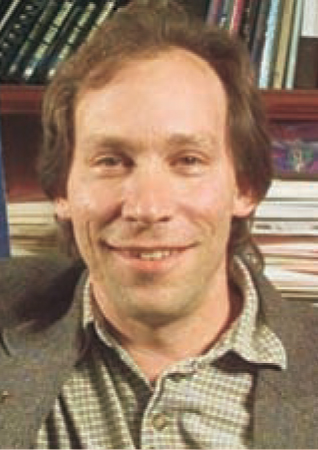
Lawrence Krauss received the 2004 Oersted Medal, the association’s most prestigious award. According to the citation, Krauss is a “pioneer in the field of astrophysics” and through his writing and speaking has “contributed significantly to the public’s understanding of science on an international scale.” Krauss, Ambrose Swasey Professor of Physics and physics department chair at Case Western Reserve University, gave a talk entitled “A State of the Universe Address.”
The Floyd Richtmyer Memorial Lecture Award went this year to Lene V. Hau, Gordon McKay Professor of Applied Physics and professor of physics at Harvard University. Hau was recognized by AAPT for her “groundbreaking research” that has focused on using the Bose–Einstein condensate to manipulate light. Her presentation was entitled “Light at Bicycle Speed–and Slower Yet!”
His “manifold contributions to AAPT and science education” garnered the Melba Newell Phillips Award for Robert Beck Clark, professor of physics at Brigham Young University. Clark spoke on “Some Lessons Learned.”
Distinguished Service Citations for contributions to AAPT and the teaching profession were bestowed on Lila M. Adair (Piedmont College, Demorest, Georgia), Jennifer Bond Hickman (Wellington Management Co, Boston), Ruth H. Howes (Marquette University), James Watson (Ball State University), and Nancy Watson (Burris Laboratory School at Ball State University).

Krauss