Small nuclear reactors raise big hopes
DOI: 10.1063/1.3480289

Billions of dollars in cost overruns, the economic crisis, and technical delays are pushing back the schedules of various large reactors worldwide. In response, the nuclear industry has begun to think smaller than the 1700 MW of power a typical nuclear reactor produces. Modular reactors that generate between 30 MW and 300 MW per module and work in sync with other modules to produce up to 600 MW, the equivalent of an average gas-fired power plant, are on the rise.
“One size doesn’t fit all situations,” says Michael Anness, manager for advanced reactors at Westinghouse, “and our customers are asking for smaller, more efficient designs.” A small modular reactor (SMR) could cost anywhere from $300 million to $3 billion, depending on the design—light water reactor (LWR), gas-cooled reactor, and so forth—and the number of modules required for the plant.
A crowded field
By aiming for smaller power generation, reactor builders can triple the size of their market. Some 60 countries interested in developing nuclear power are evaluating more than 43 SMR designs. Last month, the Russian engineering company Rosatom launched the Akademik Lomonosov, a 21 500-ton barge equipped with twin modular 35-MW LWRs that will be used in the Arctic. In the US, three reactor designs are close to commercial development: Westinghouse’s integral pressurized water reactor (IPWR), an LWR from NuScale Power, and the mPower reactor from Babcock and Wilcox Co.
Small reactors aren’t new—nuclear submarines use them—but they still face regulatory, technical, and licensing hurdles. The main attraction for both electrical utilities and reactor builders is the potential cost savings: Producing electricity could be 10-20% cheaper per kilowatt-hour than with a standard reactor.
Modular benefits
“There is an economy of scale with these modular reactors,” says Anness. If it takes more than 10 modules to reach 500-600 MW, then it becomes too expensive. If the modules are too large, then building a traditional reactor on site is more economical. “We believe 300 MW is the optimal point for each IPWR module,” he says. The IPWR modules are 20-45 m long and 20 m wide, ideal for factory construction and transportation by rail or ship. The modules are assembled on site, with power generated—and revenue for the utility produced—as soon as the first module is installed. For safety and security, US SMRs, such as IPWRs, are designed for underground use, which also means they can get by with fewer operators and security workers.
One of the biggest selling points is that as the power output is the same as fossil-fuel plants, SMRs can easily hook into existing electrical grids; expensive grid upgrades required by typical nuclear reactors can be bypassed. That makes nuclear power an option for smaller utility companies. And smaller reactors are easier to cool, a benefit for water-scarce regions.
The builders claim that SMRs are safer than older reactors because they have fewer parts. The designs eliminate piping and remove heat by using natural forces such as gravity, evaporation, and condensation. An emergency boron-injection system can shut down the reactor.
Although SMRs do not burn fuel as efficiently as larger reactors, some, like the mPower, can operate for 4.5 years without refueling, twice as long as the average for large reactors. The US designs are also easily refueled. For example, in a NuScale Power module, the bottom part that holds the fuel can be snapped off and a new fuel assembly attached. A plant can be refueled one module at a time without interrupting overall power generation. Most SMR plants are designed to keep spent fuel on-site in air- or water-cooled underground storage for 60 years, the expected lifetime of the plant, or send it back to the SMR builder. Those procedures, claim the reactor builders, will keep spent fuel safe and thus not pose a proliferation risk.
“Strategically, these new reactors represent a real opportunity for us to reestablish US global leadership in nuclear power,” Senator George Voinovich (R-OH) told an SMR meeting in June. Voinovich has introduced a bill in the Senate to provide additional resources for designing and building SMRs. As the market expands internationally, Voinovich sees SMRs as an opportunity for job creation, in which the reactors, but not the jobs, get exported.
A few roadblocks
Although US reactor builders are optimistic that orders will be placed, some challenges remain: Finishing the design phase is costly—South Africa recently cancelled its gas-cooled pebble bed SMR when its cost tripled—and the licensing process is expensive and time consuming.
Competing against fossil fuels is still tough. Nearly all SMR cost studies, including an upcoming report from the US Nuclear Regulatory Commission (NRC), assume that a carbon tax will eventually be introduced in the US. Such a tax would, as a side effect, help make running SMRs cost competitive. “Climate change [tax] legislation isn’t a matter of if, it’s a matter of when,” says Paul Lorenzini, president and CEO of NuScale Power.
At the June SMR conference, the general hope was that NRC licensing will become cheaper and faster. “Nuclear power is a mature technology,” says Andrea Sterdis, manager of nuclear licensing at the Tennessee Valley Authority (TVA), “and we have 30 years worth of experience with it. It shouldn’t take four years to go through the process.”
Newly appointed NRC commissioner William Ostendorff is more cautious. Technical reviews must be carried out “before we can change the rules,” he said at the conference. “But the NRC is looking at issues specific to SMRs that could help speed up licensing.” Ostendorff said the NRC won’t conduct a formal design review until the first US customer is announced, which highlights a problem. “Everyone is rushing to be the second customer of these reactors,” says Lorenzini, “but government financial and regulatory help is needed [to attract] the first customer.”
A green DOE?
Some help may come from the US Department of Energy. In its 2011 budget, DOE plans to offer up to $54 billion in loan guarantees to reactor builders, and it has doubled its spending on SMRs. Now DOE is considering providing money to commission an SMR.
Oak Ridge National Laboratory (ORNL) is the largest producer of carbon dioxide emissions in the DOE complex, due to its reliance on two fossil-fuel plants to produce power for its many energy-intensive programs, one of which is the Spallation Neutron Source. This month, TVA is considering whether Clinch River, Tennessee, the home of a failed fast breeder reactor near ORNL, might host an SMR—most likely an mPower design—to replace the two fossil-fuel plants. Either ORNL would pay for the power from the reactor in advance (a lump sum to help start construction), or Congress, which controls TVA, would raise the TVA debt ceiling to finance the reactor. Once the order is placed, the NRC can start licensing work on the design. In that case, the plant could be built by 2020, just in time for DOE to make the Obama administration’s deadline for cutting its CO2 emissions by 28%. “There aren’t many solutions for this country if we want to do something about climate change,” says Michael Shepherd, Bab-cock and Wilcox vice president for business development. “Nuclear power is one of them.”

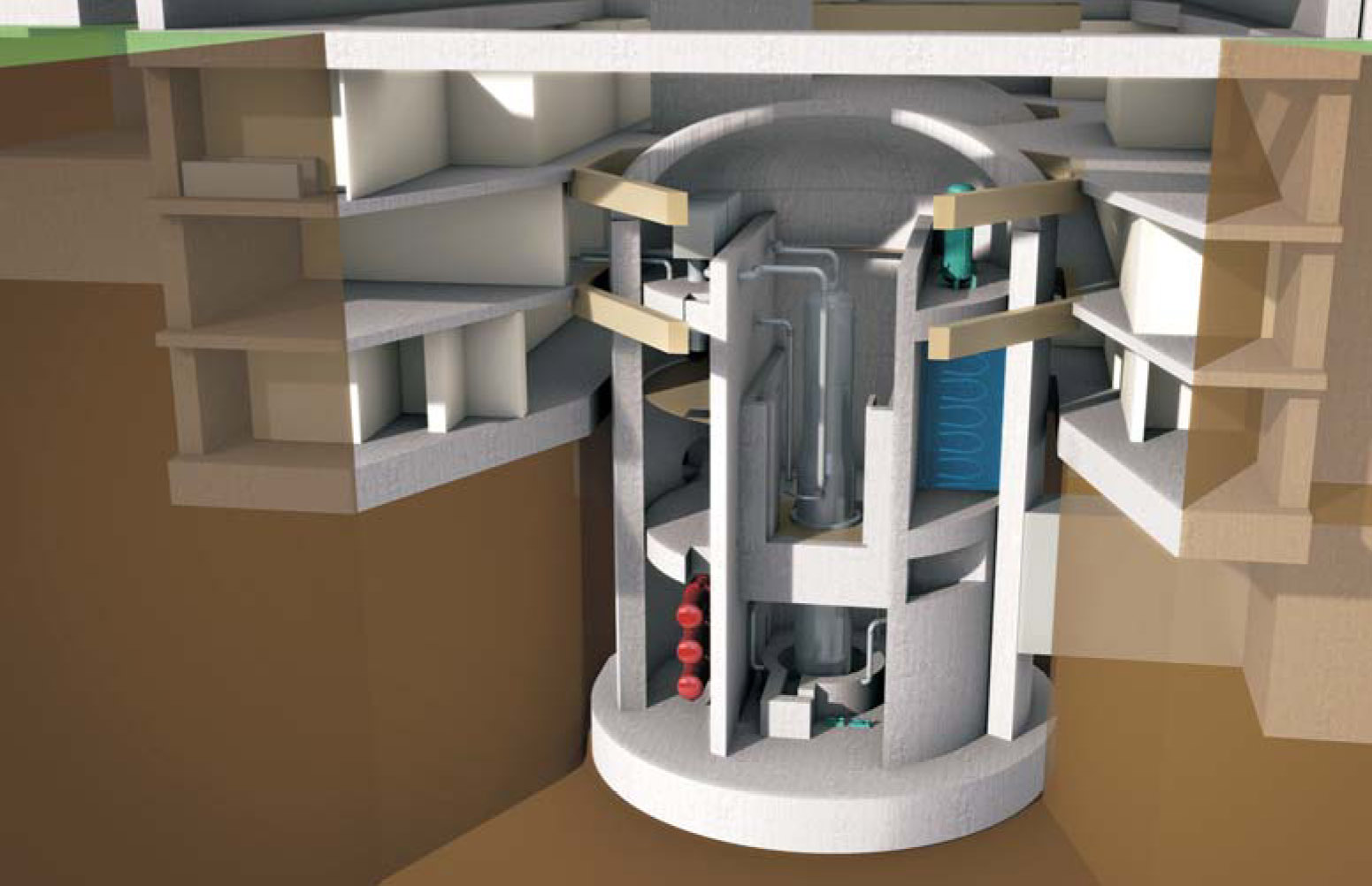
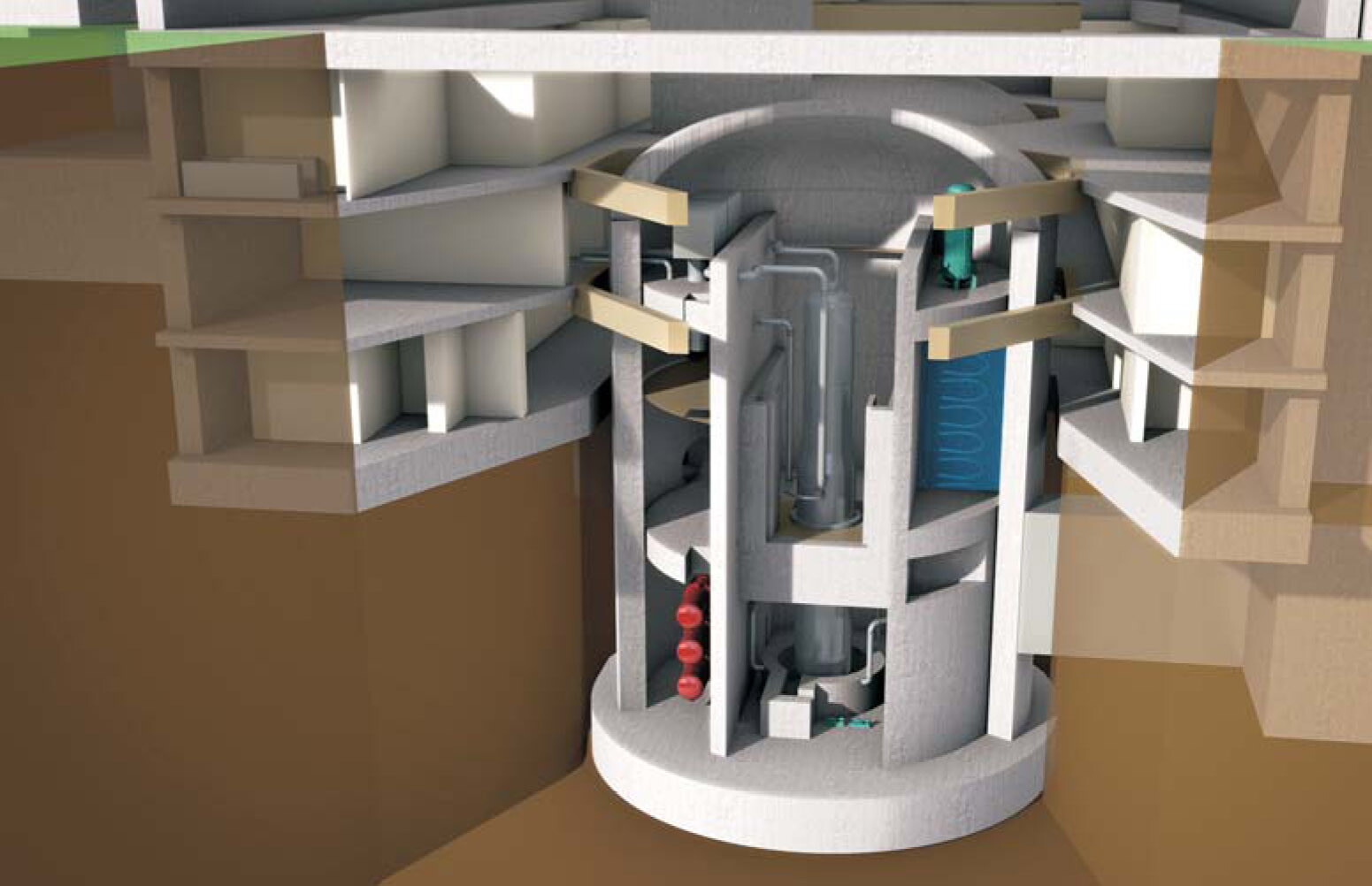
A single 125-MW mPower nuclear reactor module inside its underground containment vessel. The module is the narrow tube in the center.
BABCOCK & WILCOX CO.

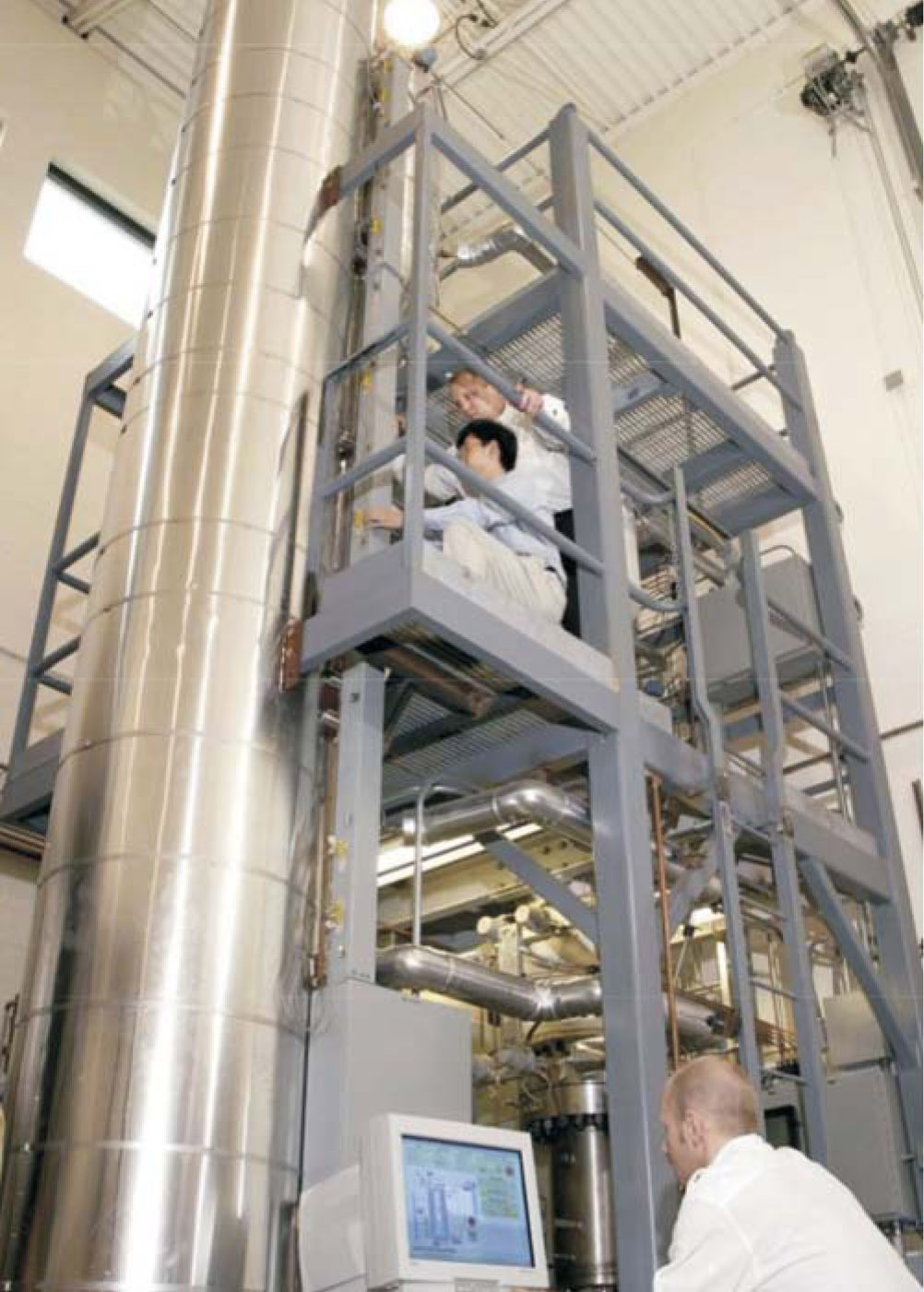
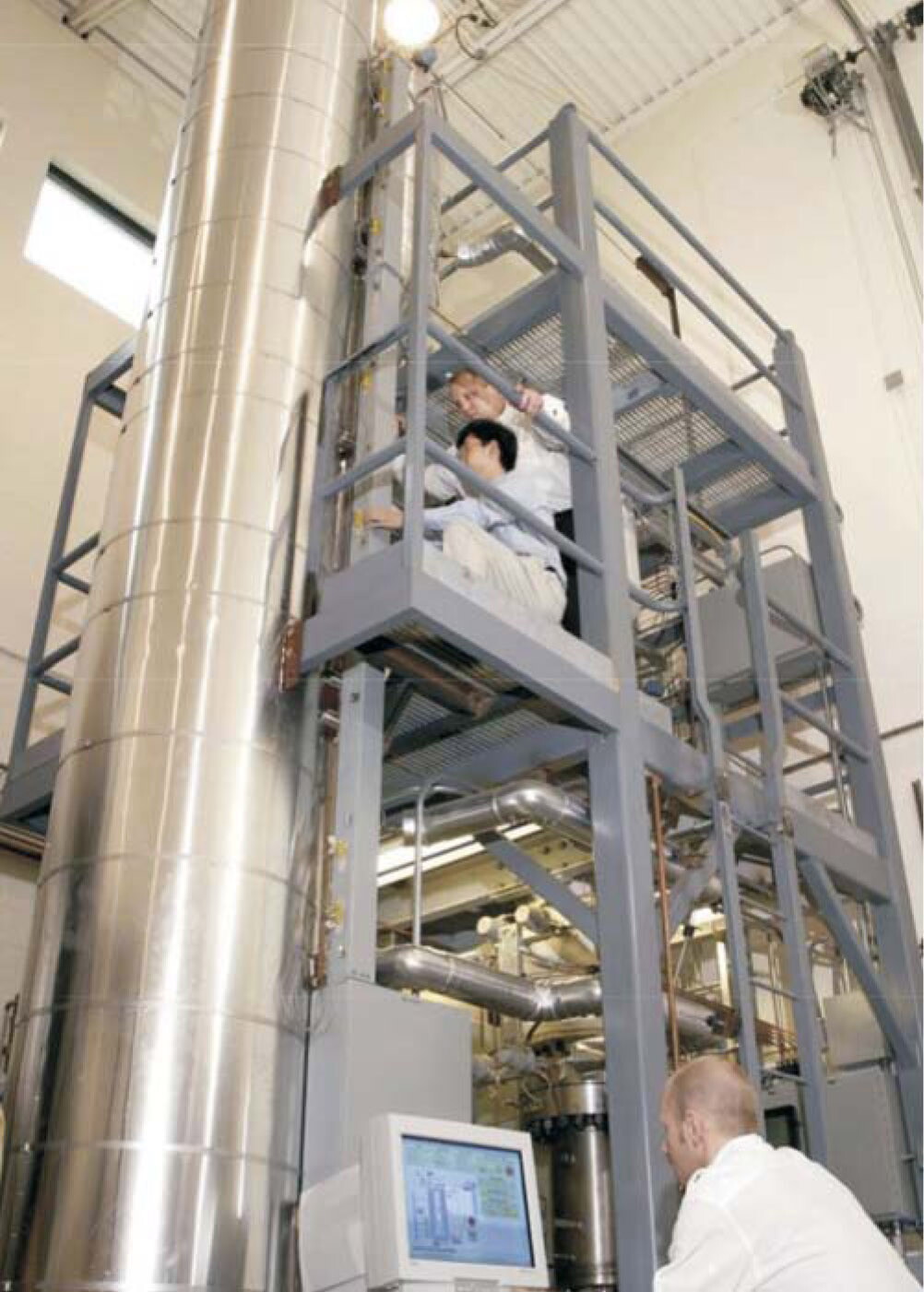
A one-third scale mockup of a NuScale 45-MW modular reactor used to test the thermal performance and safety of the design.
NUSCALE POWER
More about the authors
Paul Guinnessy, pguinnes@aip.org