Russian Prize Aims to Stimulate Energy Research
DOI: 10.1063/1.1595050

Three physicists will share the first annual Global Energy Prize, to be bestowed by President Vladimir Putin on 15 June in St. Petersburg, Russia. The $900 000 purse will be split by Nick Holonyak of the University of Illinois at Urbana-Champaign, Gennady Mesyats, a vice president of the Russian Academy of Sciences in Moscow, and Ian Douglas Smith of Titan Corp in the San Francisco Bay Area.
The new prize was the brainchild of Zhores Alferov, a physics Nobelist and scientific leader of the Ioffe Physico-Technical Institute in St. Petersburg. “It had to be in a branch of science and technology not covered by the Nobel Prizes. I consider the energy problem to be the most important problem for human beings,” says Alferov. The prize is intended to recognize and stimulate research and applications in all areas of energy and power generation.
His vision quickly won the blessing of President Putin, and then financial pledges from Russia’s three largest energy companies, Alferov says. An administrative and oversight body, the Global Energy Foundation, was established in time for the first awards ceremony to take place this month during the city of St. Petersburg’s 300th birthday celebration.
In the prize citation, Holonyak is recognized for his invention of “the first semiconducting light-emitting diodes in a visible part of the spectrum” and his “serious contribution to the development of energy-saving technologies” such as the thyristor, a switch for high currents and voltages. Mesyats and Smith, who have worked separately on the generation and use of powerful electrical pulses, are honored for “[giving] birth to a new direction in the field of energy—powerful pulse energy” and for research leading to the design of “unique pulse energy systems and equipment … now used successfully around the globe.”

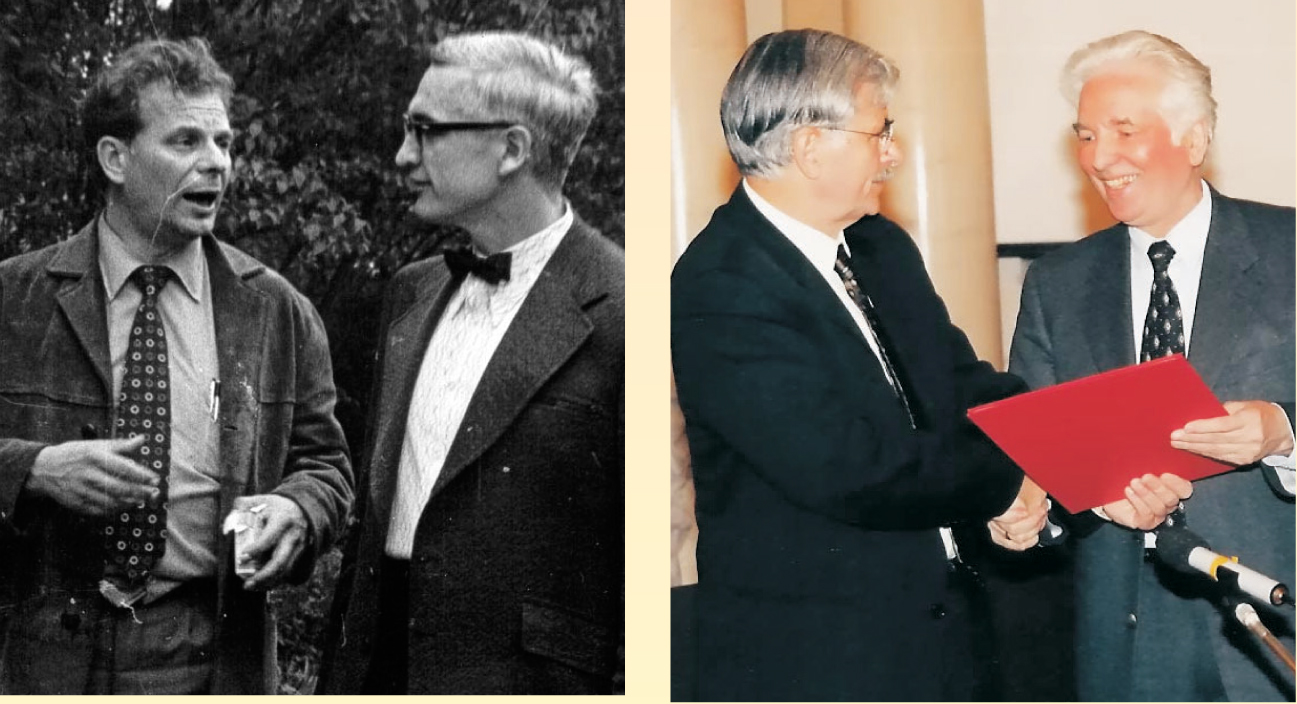
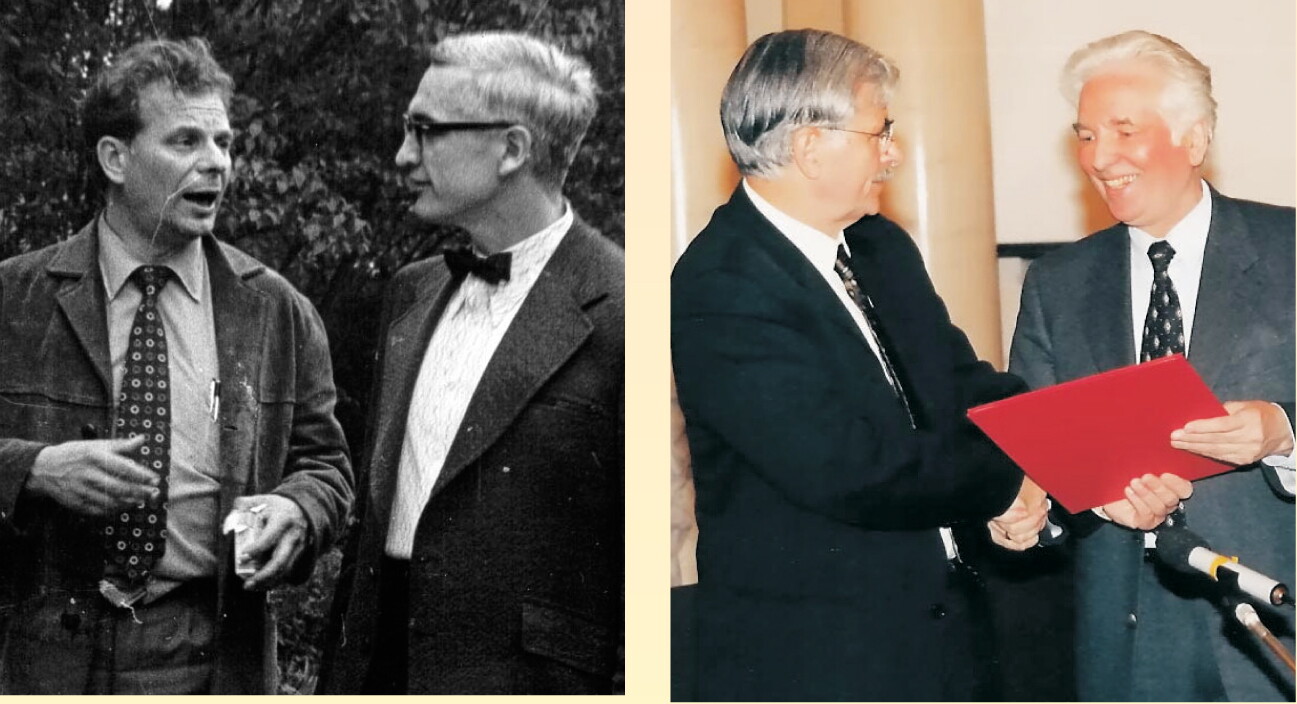
The inaugural winners of the Global Energy Prize are Nick Holonyak (right in black-and-white photo, shown with prize instigator Zhores Alferov during a 1974 visit to Leningrad), Gennady Mesyats (right in color photo), and Ian Smith.
(left in color photo, which shows him receiving an honorary degree last year in Moscow)/RUSSIAN ACADEMY OF SCIENCES
More about the authors
Toni Feder, American Center for Physics, One Physics Ellipse, College Park, Maryland 20740-3842, US . tfeder@aip.org