Particle Tracking Tunes Up Music
DOI: 10.1063/1.1784295

Thanks to particle physics, creaky old musical recordings can now be restored to pristine condition. The restoration technique, developed by physicists Vitaliy Fadeyev and Carl Haber of Lawrence Berkeley National Laboratory, is a modification of a method used to measure the alignment of silicon detectors on CERN’s upcoming ATLAS experiment. “We heard about the problem of audio preservation from a report on National Public Radio. So we thought first, why not use the same optical methods with which we were familiar?” says Haber. “The concept is groundbreaking and we believe it will have a major impact on sound archiving and preservation,” says Mark Roosa, director for preservation at the Library of Congress.
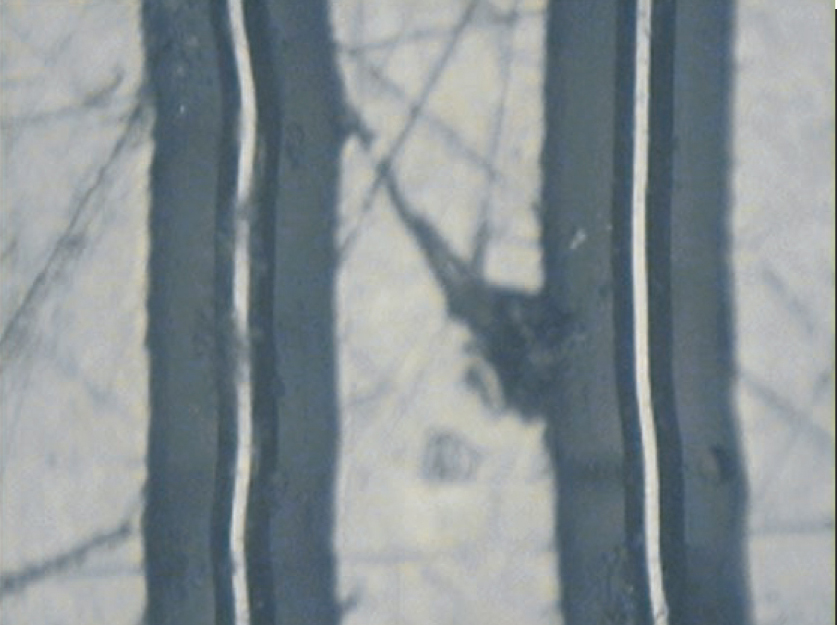
Traditional remastering involves playing records with a stylus or a laser. In both cases, the audio is degraded by the record’s rotating on a turntable. The Berkeley technique avoids the problem by placing the record in an $80 000 optical metrology system that takes images while moving a camera in a spiral pattern following the path of the groove. A single 78 rpm record results in thousands of two-dimensional snapshots—100 to 1000 gigabytes of data. The snapshots are cleaned up to compensate for scratches, dirt, and warping, and then converted to a pure audio signal. The method draws on decades of experience in finding elementary particle tracks buried in large noisy data sets from high-energy experiments. “We thought these methods, which demand pattern recognition and noise suppression, could also analyze the grooved shapes in mechanical recordings,” says Haber.
The restoration technique works with vinyl, shellac, wax, acetate, and metal. “It also has the potential to digitally reassemble broken discs,” says Fadeyev. Examples of restored music are available at http://www.cdf.lbl.gov/~av .
Last year, Haber and Fadeyev contacted the Library of Congress and discovered that archivists were particularly concerned about how to save deteriorating and damaged phonographic wax or metal “Edison” cylinders—the earliest form of grooved recordings. The library asked Haber to develop a three-dimensional technique to save those recordings, a request that turned into a research grant. “The Library of Congress really took the initiative to engage with us on this,” says Haber.
Early this year, by processing images from a confocal scanning probe, the Berkeley-led team restored a 1910 Edison cylinder recording of George F. Root’s “Just Before the Battle, Mother.” According to Roosa, the library’s holdings include more than 2.5 million music and spoken-word recordings. “A substantial portion of these are grooved media, which could potentially benefit from this new copying technology,” he says.
The current prototypes take 40 minutes to scan 1 second of recorded sound. Haber and Fadeyev say that with a customized scanning machine they could reduce the time taken to copy and process a 3-minute recording to between 8 and 20 minutes; 3D imaging of Edison cylinders takes longer. “What we have done so far are just small experiments to prove that modern optical methods have sufficient precision and sensitivity to do that job and then show that image analysis methods can extract sound and improve the quality and reduce the clicks and pops,” says Haber. “It’s a good example of how basic research in the physical sciences can benefit other fields of science and culture.”

A snapshot like this one contains data for restoring roughly 2 milliseconds of music.

More about the authors
Paul Guinnessy, pguinnes@aip.org