OSA Vice President Elected for 2002
DOI: 10.1063/1.2408445
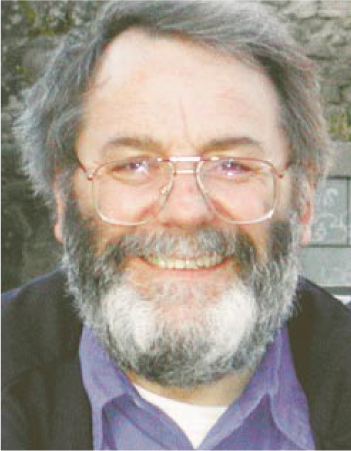
Peter Knight took office as the new vice president of the Optical Society of America on 1 January, succeeding Michael Morris. Knight will become president-elect in 2003 and president in 2004.
Knight earned a PhD in physics from Sussex University in 1972 and then spent three years as a research associate in the department of physics and astronomy at the University of Rochester. During this period of his career, Knight was also a visiting associate at Stanford University, both in the physics department and at SLAC. After stints at Sussex University, Johns Hopkins University, and the Royal Holloway College at London University, Knight joined the faculty at Imperial College, London. Currently a professor of quantum optics and head of the physics department at Imperial College, he focuses on a variety of topics in the application of quantum optics in quantum information theory, on the properties of atoms in very intense laser fields, and on the quantum properties of radiation, especially nonclassical “squeezed states” of light.
In his new capacity, Knight plans to “encourage OSA to be more inclusive of the wider community in optics, using the expertise and enthusiasm of local chapters and student chapters … about 40% of our members are from outside the US. I will seek to involve this wider community more fully in our activities.”
OSA also elected three new directors at large for three-year terms, which began on 1 January: Tony F. Heinz (Columbia University), Wayne H. Knox (University of Rochester), and Antoinette J. Taylor (Los Alamos National Laboratory).

Knight