NOVA Creates String Theory Miniseries
DOI: 10.1063/1.1628994
An ambitious three-hour NOVA television miniseries starring Columbia University string theorist Brian Greene will present one of the more complex and controversial fields of physics, super-string theory, to a broad, non-science audience. The program, based on Greene’s book, The Elegant Universe (Vintage Books, 2000), relies heavily on the multitalented physicist to explain in fairly simple terms not only superstring theory but quantum mechanics and general relativity.
Greene, who also has a background in theater, makes clear that string theory has yet to be tested experimentally and that it could, in fact, be entirely wrong. The show includes longtime string theory skeptic Sheldon Glashow of Boston University. In a background interview on the NOVA Web site (http://www.pbs.org/wgbh/nova/elegant ), Glashow said, “The string theorists have a theory that appears to be consistent and is very beautiful, and I don’t understand it.”
Greene notes that string theorists have reached the point where they “can make some rough predictions for things that might happen at the future accelerators that are now being built, in particular the … Large Hadron Collider. If some of the predictions … are borne out through experiment at that accelerator, then I think it’s quite possible that string theory would be as accepted as general relativity.”
The first hour, “Einstein’s Dream,” airs in the US on PBS stations on 28 October from 8 PM to 9 PM, Eastern Standard Time. It focuses on the incompatibility between general relativity and quantum mechanics. The second hour, “String’s the Thing,” immediately follows from 9 PM to 10 PM EST. It shows how string theory developed and describes its apparent mathematical ability to bring together general relativity and quantum mechanics. The final hour, “Welcome to the 11th Dimension,” airs 4 November from 8 PM to 9 PM EST, and details how Edward Witten of the Institute for Advanced Study in Princeton, New Jersey, united five versions of string theory into a single M-theory.
In addition to Greene, Witten, and Glashow, other physicists featured in the program include the University of Maryland’s S. James Gates; David Gross of the University of California, Santa Barbara; Joe Lykken of Fermilab; Amanda Peet of the University of Toronto; and Steven Weinberg of the University of Texas at Austin.

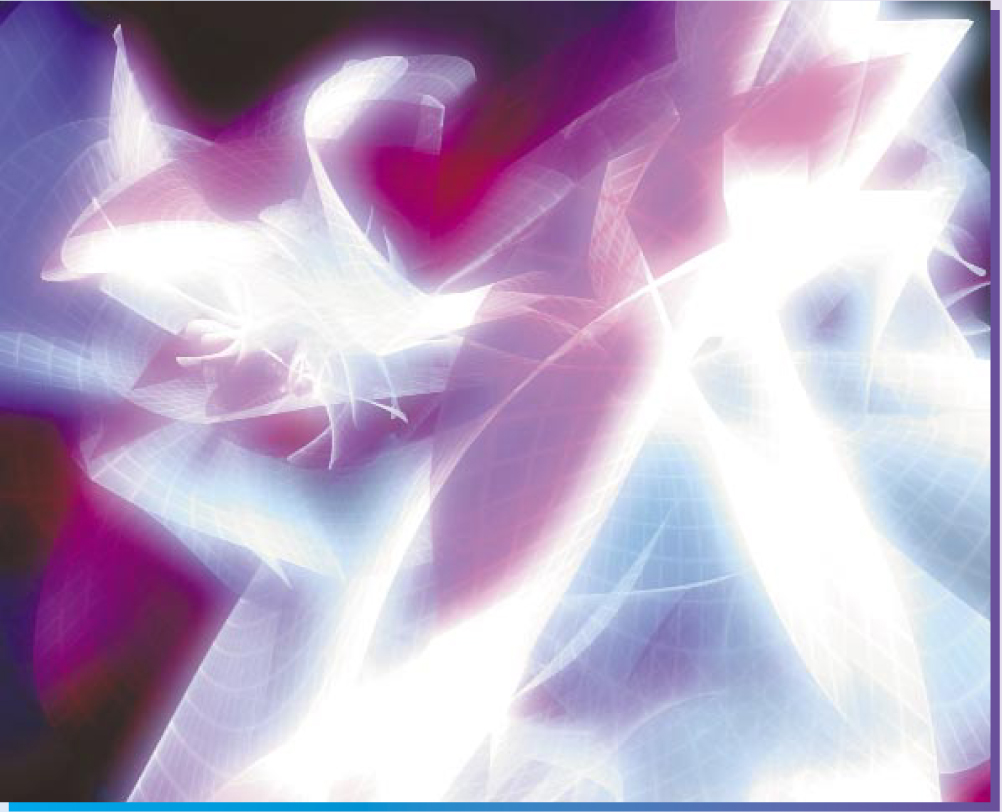
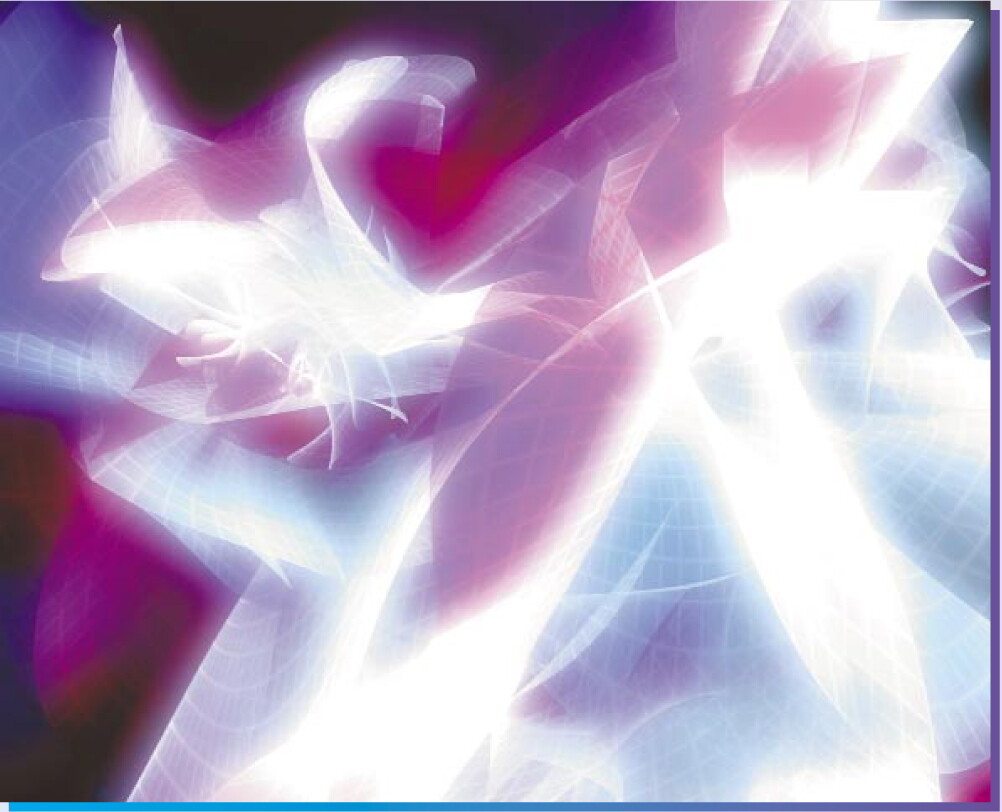
The Calabi—Yau shape shown here is a two-dimensional visualization of the six additional spatial dimensions that string theory requires. Those dimensions, according to string theory, can be folded up in plain sight without our noticing.
NOVA
More about the authors
Jim Dawson, American Center for Physics, One Physics Ellipse, College Park, Maryland 20740-3842, US .