International Science Prize Goes to Two
DOI: 10.1063/1.1366073
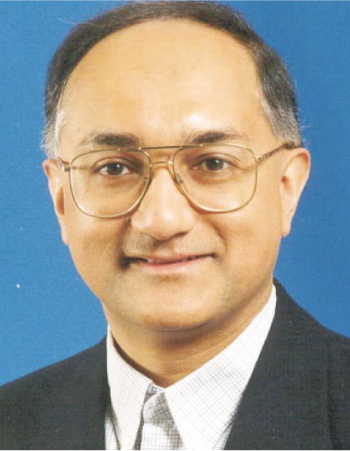
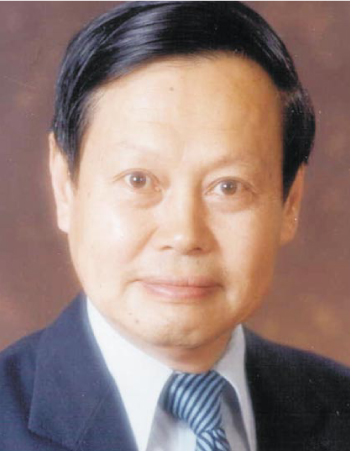
The King Faisal Foundation in Riyadh, Saudi Arabia, announced this past December that Sajeev O. John and Chen Ning Yang jointly won the 2001 King Faisal International Prize for Science. John and Yang will share the cash award of about $200 000. Winners also receive a gold medallion and a certificate describing their work.
According to the awards citation, John, a professor of physics at the University of Toronto, was recognized “for proposing a new method for the processing and transmission of information by optical means. It is hoped that the use of electrons to transmit messages within telecommunications devices and computers can be replaced by light.” The citation added that this new method “would lead to faster, cheaper, and more versatile tools and would transform the computer and telecommunications industries.”
Yang was acknowledged as being “one of the most eminent contemporary physicists. Among his many fundamental contributions to the field of physics, Professor Yang proposed a theoretical framework, which later became the basis of the present theory of the structure of matter at the smallest scales and highest energies.” Yang is Albert Einstein Professor Emeritus at SUNY Stony Brook. Yang and Tsung-Dao Lee shared the 1957 Nobel Prize in Physics for their investigation of parity laws.
The King Faisal International Prize was established in 1977 and first awarded in 1979. This year’s prize was also given in the categories of Arabic literature, medicine, and service to Islam.