Fermi Award Bestowed on Three Scientists
DOI: 10.1063/1.1349617
In Washington, DC, this past December, Secretary of Energy Bill Richardson presented the Enrico Fermi Award to Sheldon Datz, Sidney Drell, and Herbert York. The Fermi Award, the US government’s oldest science and technology award, established in 1956, is administered by the Department of Energy to recognize people of international esteem who have made exceptional contributions during their career to the development, use, or control of nuclear energy. Each winner was given a gold medal and a $66 000 honorarium.
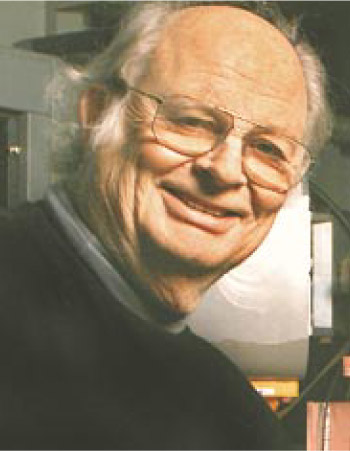
The award acknowledged Datz, a senior corporate fellow at Oak Ridge National Laboratory in Tennessee, for his “pioneering studies in the fields of crossed-beam and molecular beam chemistry and atomic physics, channeling of ions in solids, and recent insightful experiments using the apparatus of particle physics to cast light on the chemistry of the universe,” according to the citation. Datz began his career as a research chemist at the lab in 1951. From 1951 through 1954, he and Ellison Taylor, then the head of the lab’s chemistry division, developed a technique for studying chemical reactions with molecular beams. Their work was the foundation of the current field of chemical dynamics. Later, Datz focused on the physics of atomic and molecular collisions in gases and solids.
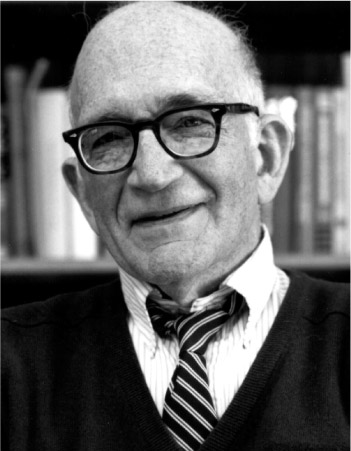
Drell, emeritus professor of theoretical physics at SLAC, deputy director of SLAC until 1998, and a senior fellow at the Hoover Institution, was recognized for his “major contributions to our understanding of elementary particles, and for his major contributions to arms control and national security, in particular for technical studies showing that a Comprehensive Test Ban Treaty is compatible with maintaining the safety and reliability of US nuclear weapons.” An arms control specialist, Drell has provided technical advice to the US government on national security and defense issues. He is a founding member of JASON. Drell also has conducted important theoretical work in quantum field theory and has helped guide long-range planning of national accelerator laboratories.
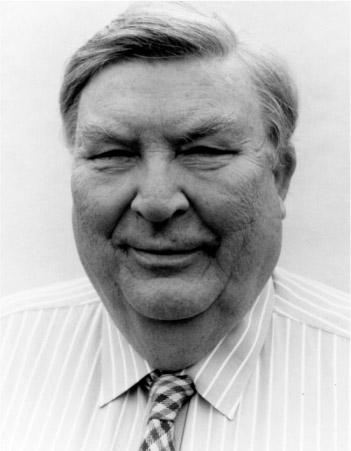
York, founder (in 1983) and director emeritus of the Institute on Global Conflict and Cooperation, a research unit that serves the entire University of California system, received the award for his “contributions to formulating and implementing arms control policy under four presidents, for his founding direction of the Lawrence Livermore National Laboratory and his leadership in research and engineering at the Department of Defense, and for his publications analyzing and explaining these complex issues with clarity and simplicity.” During World War II, York worked on the Manhattan Project at Oak Ridge National Laboratory. He was the first director of Lawrence Livermore Laboratory and the founding chancellor of the University of California, San Diego. He has served as an adviser to presidents Dwight D. Eisenhower, John F. Kennedy, and Lyndon B. Johnson on defense research and arms control, and was an ambassador and chief negotiator for the comprehensive test ban negotiations during the Jimmy Carter administration. York also was the cofounder of the Advanced Research Projects Agency (now the Defense Advanced Research Projects Agency).