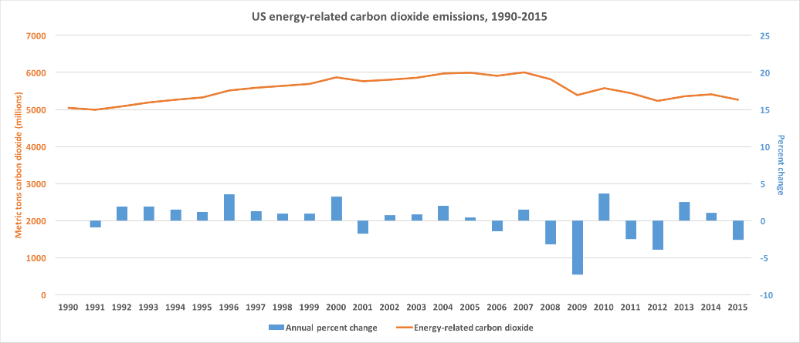
Energy-related carbon dioxide emissions in the US fell by 12% from 2005 to 2015 as the electricity industry switched from coal to natural gas. The Energy Information Administration (EIA) reported on 9 May that annual CO2 emissions declined from 6 gigatons to around 5.3 gigatons during the past decade. The reductions came as the economy grew 15% over the period, with the US using 15% less energy per unit of GDP and producing 23% fewer energy-related CO2 emissions per unit of GDP, compared with 2005.
After a fairly steady rise since 1990, US energy-related carbon emissions dropped 12% from 2005 to 2015. (Data source: US Energy Information Administration)
The EIA said that 68% of the energy-related CO2 reduction was due to fuel switching by the power sector. The largest annual decline in the 10 years occurred during the recession in 2008–9. The lowest annual CO2 output was in 2012, primarily due to the mild winter that year.
Separately, the EIA recently reported that hydraulic fracturing has grown dramatically in the US over the past 15 years and is now the source of one-half of all US crude oil production and two-thirds of natural gas output. EIA figures show that fracked oil has grown from 102 000 barrels per day in 2000—less than 2% of all oil production—to 4.3 million barrels per day in 2015, 51% of the total.
Over the same period, fracked gas production soared from 3.6 billion cubic feet per day—7% of total production—to 53 billion cubic feet per day, about 67% of total production. The figures are for marketed gas, the end product delivered to customers after water and hydrocarbons such as ethane and propane are removed.
Fracking involves injecting a mixture of water, sand, and chemicals under high pressure through deeply drilled horizontal or vertical wells. The pressurized fluid fractures the shale or other tight rock formations. The fluid rises back up the well while the oil or natural gas flows from the newly formed cracks.