Oppenheimer reflects on his early career


J. Robert Oppenheimer, circa 1960.
(Photo from the AIP Emilio Segrè Visual Archives, Physics Today Collection.)

On 18 November 1963, J. Robert Oppenheimer sat down at the Institute for Advanced Study in Princeton, New Jersey, for the first session of a two-part interview with historian and philosopher of science Thomas Kuhn; the second session was two days later. The historian had come not to interview Oppenheimer about his role in the Manhattan Project but to record his memories of a dynamic period in the history of physics that was beginning to fade from collective memory: the discovery of modern quantum mechanics in the 1920s. (For more on the field’s origins, see the April 2025 PT article “Demythologizing quantum history .”)

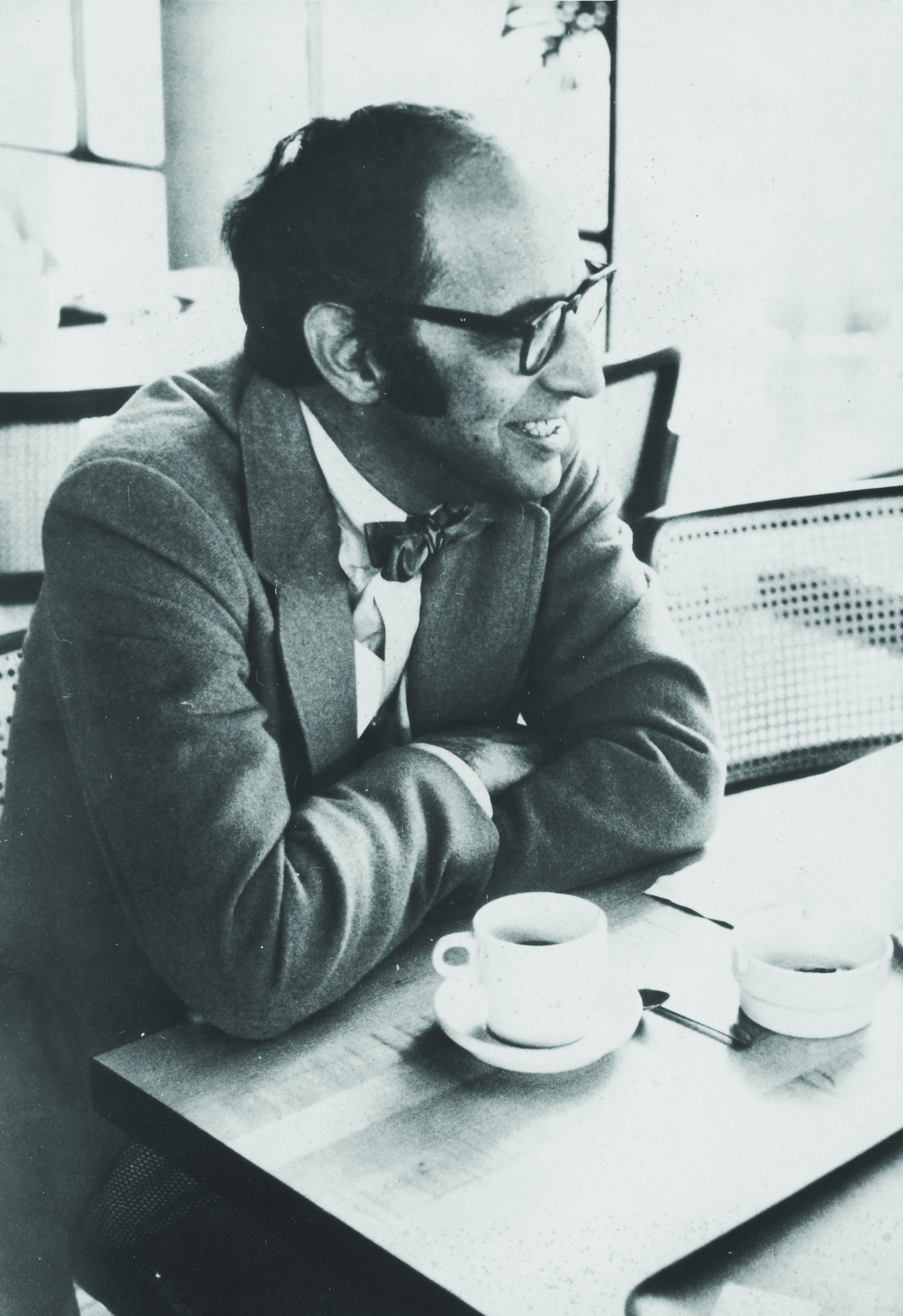
Thomas Kuhn, noted historian and philosopher of science, interviewed J. Robert Oppenheimer as part of a project to document the birth of quantum mechanics.
(Undated photo, courtesy of the MIT Museum.)

The previous year, Kuhn had published what would prove to be his most famous work, The Structure of Scientific Revolutions, in which he posited that scientific fields occasionally undergo revolutions in thought, which he termed paradigm shifts. Seeking to establish an empirical basis for his theory of scientific development, 1 Kuhn had agreed in 1961 to lead the massive NSF-funded project called Sources for History of Quantum Physics , which sought to interview all the major players active in quantum physics from 1913 to 1938 who were still living at the time, with a heavy emphasis on those who participated in the quantum revolution of the 1920s. Oppenheimer was one of about 95 individuals whom Kuhn and two of his then–graduate students, John Heilbron and Paul Forman, spoke with between 1962 and 1964.
Those interviews were transcribed and assembled along with a considerable amount of contemporary correspondence, lecture notes, and miscellaneous materials into a microfilmed collection. Known as the Archive for the History of Quantum Physics (AHQP), it was made available at several international institutions to “bona fide scholars and students working under their supervision.” (One of the institutions was the Niels Bohr Library & Archives at the American Institute of Physics, which publishes Physics Today.) Anyone interested in looking at Oppenheimer’s interview faced an additional restriction: They had to seek permission from his family, a task that for many years involved physically mailing a request to Oppenheimer’s son, Peter, at a post office box in New Mexico.
Open access
As of April 2026 , Oppenheimer’s family and the Niels Bohr Library & Archives (NBLA) have made the Kuhn interview transcript available to the public for nonprofit and educational use. (They have also made public two other interview transcripts held by NBLA: one from 1960 , about the Manhattan Project and the Trinity nuclear test, and one from 1966 , about Enrico Fermi. For more on those interviews, see the two sidebars.) Because the family had allowed scholars to look at the Kuhn transcript, it was often a crucial source for authors writing about Oppenheimer’s early years. Kai Bird and Martin Sherwin’s 2005 biography, American Prometheus: The Triumph and Tragedy of J. Robert Oppenheimer, which served as the basis for Christopher Nolan’s 2023 biopic, Oppenheimer, made countless references to the interview in the early portion of the book. But the 1963 transcript remains an intriguing source worthy of examination: It is one of the few examples of Oppenheimer reflecting at length about his early life.

A page of the original typescript of Oppenheimer’s interview with Kuhn in November 1963.
(Image from the AIP Niels Bohr Library & Archives.)

New to all but what was almost certainly a small number of researchers, though, are the audio recordings of Kuhn’s interview with Oppenheimer. They are now available on NBLA’s website thanks to the efforts of the Philadelphia-based American Philosophical Society , one of the two sponsors of the Sources project and the primary repository for the audio materials from the AHQP. Made on a suitcase-sized tape recorder that was state of the art at the time, the recordings were originally preserved on two 7-inch reel-to-reel tapes at NBLA. They were then remastered onto 10-inch reels for preservation in 2003, when the American Philosophical Society took possession of them.
Unfortunately, the first of the original tape reels seems to have been damaged before it was transferred. At two points that coincide with the beginnings of each side of that reel, the recording is extremely distorted—to the point where it’s only barely possible to make out what’s being said—for approximately 13½ minutes, at which point the sound suddenly snaps into focus. That’s not unexpected, because the medium wasn’t intended to last forever, and the beginning part of a tape, which is more exposed on the reel in storage, tends to degrade more quickly than the end. (The digitized audio that NBLA has made available was copied from the preservation reels onto cassette tape by the American Philosophical Society, which is currently applying for a grant to restore the original interview reels.)
But most of the roughly four-hour interview remains listenable, and the audio recordings bring Oppenheimer to life in a way a transcript never could. All the inflections of voice and interruptions are audible, as is Oppenheimer’s peculiar manner of speaking. You would be hard-pressed to find anyone today who talks like he did. One can detect a trace of the mid-Atlantic accent—an affected manner of speaking that was briefly popular with the US elite (and golden-age Hollywood actors, such as Cary Grant and Katharine Hepburn) in the early to mid 20th century—in the highly enunciated way in which Oppenheimer finishes words that end in a consonant, especially the letter t. It’s probable that he learned to speak like that at the Ethical Culture School in New York City, which he attended from the age of seven until he graduated high school in 1921.
Just as striking is the exceptionally slow speed at which Oppenheimer speaks in conversation. Concomitant with that are the extended pauses he takes in conversation, when he is presumably forming a thought. Several empty seconds could easily go by on the tape—he certainly wasn’t afraid of the proverbial awkward silence. The accent, slow manner of speaking, and long pauses add gravitas to Oppenheimer’s speech: He comes off as a rational, careful, and deliberate thinker—all qualities that in popular culture are associated with a genius.
One final aspect of the interview is also made immediately apparent by the audio: the thick cloud of cigarette smoke that must have been omnipresent. Both Oppenheimer and Kuhn have the gravelly, leathery, sandpaper-like voices of lifelong smokers, and the interview is interrupted on many occasions when Oppenheimer breaks out into massive coughing fits. Both were notorious for their chain-smoking, and both died of tobacco-related cancers.
Oppenheimer’s recollections of the Trinity test
The first of the other two interviews held by the Niels Bohr Library & Archives (NBLA) is the transcript of a February 1960 interview of Oppenheimer by journalist Robert Cahn , who was conducting research for an article he was writing for The Saturday Evening Post on the 15th anniversary of the Trinity nuclear test. The article, “Behind the first A-bomb,” appeared in the 16 July 1960 issue of the magazine. Although Oppenheimer was directly quoted only once in it, the interview clearly provided the groundwork for Cahn’s depiction of the test. (Interestingly, he was quoted far more extensively in an adapted version of the article that appeared in July 1995 in The Christian Science Monitor on the 50th anniversary of the test. 4 )
A copy of Cahn’s interview transcript was donated to NBLA in the late 1990s by physicist Albert Allen Bartlett , a professor of physics at the University of Colorado Boulder and a veteran of the Manhattan Project . It’s unclear how Bartlett got the transcript, but Cahn moved to Boulder late in life, so perhaps their paths crossed then. The transcript is somewhat mysterious: Cahn’s questions to Oppenheimer are transcribed only in an abbreviated manner, presumably to save time, and the transcript appears to have been annotated by both Cahn and Bartlett. The audio of the interview seems to be lost.
The interview focuses on the Manhattan Project and the events leading up to the Trinity test on 16 July 1945. Of particular interest may be Oppenheimer’s extended recollections of the “I am become Death, the destroyer of worlds” quote from the Bhagavad Gita that, as he had said on several occasions, came to him when he saw the fireball. 5 The first documented appearance of the story is in a 1948 profile of Oppenheimer in Time magazine, and scattered mentions of it can be found in publications from the early to mid 1950s. 6 But it was launched to new fame by Robert Jungk’s 1958 book Brighter than a Thousand Suns: A Personal History of the Atomic Scientists, one of the first popular histories of the atomic age, whose title directly references the Hindu text. (The book originally appeared in German in 1956.)
By 1960, the story was widely enough known that Cahn specifically asks him about it. Oppenheimer’s response is especially noteworthy because it appears to be the longest surviving version of the tale that he gave in his own words:
[Cahn:] (Passage which came to mind from Bhagavad-Gita?)
[Oppenheimer:] (Krishna?[)] Vishnu was trying to convince Argina [sic, Arjuna] who started out as a pacifist that a man must do his duty and that his soul is good, it is affected by whether he does his duty but not by whether he does harm. Real harm cannot be done by man. And this goes on for 30 chapters. And at one point he assumes his most awful form and says to Argina “I am become death the destroyer of worlds.” And this is the line that came to mind. And when he is all through with that, he then goes back and says, “Now I have resumed my normal fore-armed [sic, four-armed] form.” And I remember it always because I read it with a student at Berkeley who said to me the first time, “I suppose that’s how a young man feels when he is behind the wheel of a powerful car.”
This came to my mind (the line from Bhagavad-Gita) when I saw the light of the bomb. I was turned away from it, at the left of the door, looking out toward Mockingbird Gap. It was much brighter than sunlight, it had a golden quality. The first evidence that I had that something had happened was that the whole desert lighted up in the most brilliant golden light, and that’s all. 7
Spoken and unspoken
Human memory is fallible: One’s memory of an event may differ from reality, and one’s recollections of the past may change over time. It’s for that reason that historians often place more weight on contemporary sources than retrospective interviews. That said, it’s interesting to note that many of the stories commonly told about Oppenheimer’s early years went unsaid in his interview with Kuhn. Surviving letters to and from Oppenheimer during those years and later interviews with contemporaries have revealed that he was unhappy and struggled during his time in the UK at the University of Cambridge for the 1925–26 academic year.
But in the interview, he alludes to his unhappiness there only obliquely. He mentions his struggles with the experimental physics he was studying, at one point lamenting the “miseries of evaporating beryllium onto collodion,” and refers to the “troubles of the winter,” which might be a suggestion of his depression. 2 The only portion where his feelings really come out is toward the end of that discussion, when he reflects on that year: “I had very great misgivings about myself on all fronts. . . . I felt completely relieved of the responsibility to go back into a laboratory. I hadn’t been good, I hadn’t done anybody any good, and I hadn’t had any fun whatever.” Perhaps it’s unsurprising that the famous physicist wouldn’t have wanted to admit to his past struggles in an interview he knew would help shape the historical record.
The silver lining of his time at Cambridge, as he tells Kuhn, was that there were “many more visitors,” including Paul Dirac, than at Harvard University. Indeed, another main through line of the interview is a window into the pre–World War II era, a time when the US was a provincial outpost of physics and the main centers of activity in the field were in Europe. Oppenheimer was one of the last US physicists who felt it necessary to go to the Old World for doctoral studies to be where the action was happening. As such, knowledge of European languages—particularly French and German—was critical to becoming a top-tier physicist. Oppenheimer mastered both tongues by the time he finished college and quickly began reading cutting-edge scientific literature in those languages. He was, as Kuhn notes at one point, forced to, for “it would have been hard to get much quantum mechanics from old-fashioned or even new-fashioned English texts.”

J. Robert Oppenheimer, I. I. Rabi, Harold Mott-Smith, and Wolfgang Pauli (from left) sailing on Lake Zurich in Switzerland in 1929.
(Photo from the AIP Emilio Segrè Visual Archives, Fermi Film Collection.)

After his disappointing year in Cambridge, Oppenheimer went to the University of Göttingen in Germany to continue his graduate studies under theorist Max Born. There, he got to know a who’s who of 20th-century physicists, including Werner Heisenberg, Pascual Jordan, John von Neumann, Gregor Wentzel, and Eugene Wigner. The interview brings the vibrancy of that community to life. “In the sense that had not been true in Cambridge and certainly not at Harvard,” Oppenheimer says to Kuhn, “I was part of a little community of people who had some common interests and tastes and many common interests in physics. I remember this more than I do lectures or seminars. . . . Gradually, I guess, they gave me some sense and, perhaps more gradually, some taste in physics, something that I probably would not have ever gotten to if I’d been locked up in a room.”
Oppenheimer describes his experiences participating in the vibrant scientific community at the University of Göttingen in Germany in the 1920s.
(Audio clip from the AIP Niels Bohr Library & Archives, digitized by the American Philosophical Society.)
In the portion of the interview about Göttingen, too, much goes unsaid. In particular, Oppenheimer seems unwilling to talk about—or unaware of—his reputation as a disruptive student in the classroom. Born related in his autobiography that Oppenheimer would interrupt speakers—including Born!—take the chalk, and begin instructing the class at the blackboard as to how things should be done. A group of students that included Maria Goeppert Mayer got fed up with Oppenheimer’s antics and insisted that Born rein in the young prodigy or they would boycott the class. Born managed to finesse the situation by leaving their written list of grievances visible when Oppenheimer stopped by to discuss his thesis. 3
But one can detect a bit of that arrogance when Kuhn asks Oppenheimer about the most famous product of his time in Göttingen: a paper coauthored with Born that presented what is now known as the Born–Oppenheimer approximation, which assumes that the wavefunctions of nuclei and electrons in molecules can be determined separately. As Oppenheimer tells Kuhn, he came up with the initial idea and wrote up a four- or five-page draft, which he sent to Born over a holiday break. But Born was “completely horrified” by the brevity of the paper Oppenheimer had drafted and “said that he would write it up properly.” As Oppenheimer continues:
He produced this thing which must be thirty pages long but which has nothing else in it except a few theorems which are fairly obvious, the mean of the average or the average of the mean are sometimes equal, and so on. I didn’t like it, but it was obviously not possible for me to protest to a senior author. . . . That’s the origin of the dull opus. I think I probably had nothing to do with the writing of the long paper; I may have changed a few things, put in a sentence or taken out a sentence, but certainly very minor, and it was certainly not something that was comfortable between us. It was obviously a rather deep difference of taste which was not something you could argue about.
It’s a funny way to describe the paper that remains Oppenheimer’s most cited work.
J. Robert Oppenheimer discusses his experience collaborating with Max Born on the paper that introduced what is now known as the Born–Oppenheimer approximation.
(Audio clip from the AIP Niels Bohr Library & Archives, digitized by the American Philosophical Society.)
Oppenheimer on Fermi
On 1 November 1966, four months before he died of throat cancer, Oppenheimer was interviewed on camera by Charles Weiner, the first director of the American Institute of Physics’s Center for the History of Physics, as part of a documentary being made about Enrico Fermi. Made under the auspices of Harvard Project Physics , which aimed to reform high school physics curricula by introducing the discipline’s history into classroom instruction, the 46-minute documentary, titled The World of Enrico Fermi, came out in 1970 and has long been available on sites such as the Internet Archive .
But as is the case with most documentaries, the vast majority of Oppenheimer’s 36-minute interview did not make it into the final cut. Along with other materials involved with the making of the documentary, the raw footage was deposited at the Niels Bohr Library & Archives, and it is now also available to the public online, along with the full transcript of the interview. Although many of Weiner’s questions are clearly aimed to elicit responses that would be of interest to high schoolers, it’s still noteworthy to hear Oppenheimer’s thoughts on one of his fellow physicists. Of note are his lengthy reflections on Fermi’s role in the establishment of what one would now term Big Science:I would say that the next thing which made a very big difference to the profession of physics was that he was the first to use adequate analytic quantitative techniques of measurement in the high energy physics domain. And this—when he first had an operating accelerator, he didn’t begin, as some colleagues have been known to do, by letting the beam hit various things and reporting, would [sic, with] wonder, what all happened, but he began by studying the nature of the various beams he could produce, and really got a controllable source of mesons, positive and negative. Then he didn’t scatter the mesons on brass and sealing wax, but on hydrogen, which was a great help from the point of view of theoretical understanding. . . .
The first thing he discovered was that [sic, a] large scattering, in the state of larger isotopic spin common to like and unlike nucleons, and quite marked, which was very soon recognized by theorists as related to one means of approximately describing meson–nucleon interactions—the so-called strong coupling theory, which was started before the war, at least before this country was in the war. And this really gave a new point, a new lead and a new vigor to the theoretical description of strong interactions, and also set an example, a paradigm of what to do with accelerators. . . .
So, although it could have happened in other ways, in fact Fermi was the first person to found modern high energy physical techniques in the laboratory. 8
Learning how to teach
After spending time during the 1928–29 academic year in Leiden, the Netherlands, with Paul Ehrenfest and in Zurich, Switzerland, with Wolfgang Pauli, Oppenheimer returned to the US permanently in 1929 and took a job at the University of California, Berkeley, that also allowed him to teach at Caltech. In that dual role, Oppenheimer became a crucial apostle of the quantum gospel in the US—and thus a key figure in the country’s development as a global physics center. His reflections on that time teaching in California in the 1930s form one of the other main threads of the interview—and include some of its most introspective moments.

Oppenheimer on Caltech’s campus in 1930.
(Photo from the Caltech Images Collection.)

As he tells Kuhn toward the end of the interview, he went from “a person who had been learning and also explaining in European centers . . . to someone who couldn’t much any longer learn from masters but could learn from the literature and from what he did himself; one who had a lot of explaining to do because there was no one else.” Indeed, because quantum theory was so advanced at the time, his course was typically taken by second-year graduate students; today, quantum mechanics is a standard part of the second-year undergraduate curriculum. As he recalls: “I found myself entirely in Berkeley and almost entirely at Caltech as the only one who understood what [quantum mechanics] was all about. . . . I didn’t start to make a school; I didn’t start to look for students. I started really as a propagator of the theory which I loved, about which I continued to learn more, and which was not well understood but which was very rich.”
Oppenheimer speaks with Kuhn about his experiences teaching at the University of California, Berkeley, and Caltech in the late 1920s and 1930s.
(Audio clip from the AIP Niels Bohr Library & Archives, digitized by the American Philosophical Society.)
But, Oppenheimer admits, he was initially “a very difficult lecturer.” Over time, though, as he built stimulating connections with experimentalists on both campuses and the quality of the graduate students began to improve, so, too, did his teaching. His feeling of responsibility toward both his colleagues and the students helped make physics in California flourish. As he tells Kuhn: “I wasn’t an apprentice any longer. . . . I was interested in spreading this part of physics and was really rather widely interested in physics as a whole. . . .
“In a certain sense I had not grown up but had grown up a little.”
Thanks to Alex Wellerstein and Will Thomas for valuable comments that helped shape this piece and to Allison Buser, Elizabeth Wood, and Karina Cooper at the Niels Bohr Library & Archives for tirelessly answering my many questions about the Oppenheimer interviews and their provenance.
References
1. A. te Heesen, “Thomas S. Kuhn, earwitness: Interviewing and the making of a new history of science ,” Isis 111, 86 (2020); Revolutionäre im Interview: Thomas Kuhn, Quantenphysik und Oral History (Interviewing revolutionaries: Thomas Kuhn, quantum physics, and oral history), Klaus Wagenbach (2022).
2. All the quotations in the body of this article can be found in J. R. Oppenheimer, interview by T. S. Kuhn, 18 and 20 November 1963, audio recording and transcript , Oral History Interviews, Niels Bohr Library & Archives.
3. M. Born, My Life: Recollections of a Nobel Laureate, Charles Scribner’s Sons (1978), p. 229.
4. R. Cahn, “How they built the bomb ,” Christian Science Monitor, 10 July 1995; “Countdown at Trinity ,” 12 July 1995; “Over the desert, a nuclear dawn ,” 13 July 1995.
5. A. Wellerstein, “Oppenheimer and the Gita ,” Restricted Data: A Nuclear History Blog (23 May 2014).
6. J. A. Hijiya, “The ‘Gita’ of J. Robert Oppenheimer ,” Proc. Am. Philos. Soc. 144, 123 (2000).
7. J. R. Oppenheimer, interview by R. Cahn, February 1960, transcript , reel 2, p. 2, Oral History Interviews, Niels Bohr Library & Archives.
8. J. R. Oppenheimer, interview by C. Weiner, 1 November 1966, video recording and transcript , p. 5, Oral History Interviews, Niels Bohr Library & Archives.