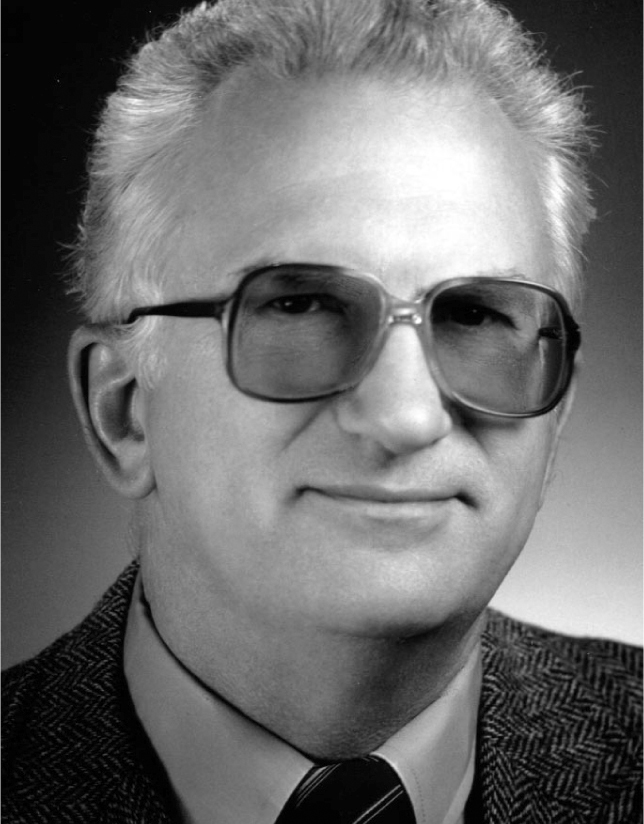
William Thomas ‘Tom’ Pinkston
DOI: 10.1063/1.1457275
William Thomas “Tom” Pinkston, a theoretical physicist of distinction and an emeritus professor of physics at Vanderbilt University, died on 10 May 2001, at his home in Nashville, Tennessee, after a lengthy battle with cancer.
Tom was born on 19 January 1931 in Albany, Georgia. He matriculated at the Catholic University of America in Washington, DC, where he received BS (1952), MS (1955), and PhD (1957) degrees, all in physics. The topic of Tom’s dissertation, supervised by James Brennan, was the structure of lithium-6 based on the nuclear shell model.
Following a term as an instructor at Princeton University from 1957 to 1959, Tom accepted an assistant professorship in physics at Vanderbilt, where he remained until his retirement in 1996. He taught physics courses at all levels, ranging from graduate courses in quantum mechanics and nuclear theory to atmospheric physics for liberal arts students, always with a flair for the elegant as well as for careful and comprehensive analysis.
Tom was best known for developing, in 1965, the Pinkston-Satchler inhomogeneous differential equation still used as the Standard Model for calculating the nucleon overlap integrals for light nuclei. This was the first microscopic approach for treating effective nucleon-nucleon forces and had a significant effect on the development of nuclear shell models. The approach is still in use, a remarkable endurance record for an early model. Tom also contributed important results to the theory of shape coexistence in heavy nuclei, Coulomb fission, and heavy-ion potentials.
Tom was chair of Vanderbilt’s physics and astronomy department for 14 of his 37 years at the university. His gentlemanly demeanor was a serviceable cloak for a resolute firmness; one of the few decorations in the chair’s office during his term was the sign “What part of NO do you not understand?” Tom served on more than 70 councils and committees at Vanderbilt during his career. What one colleague called Tom’s “probity of judgment” made him welcome in the most important policy councils of the university and as chair of the faculty senate from 1995 to 1996.
Outside the university, Tom served as a consultant to the US Army Missile Command in Huntsville, Alabama (1959–65) and the Oak Ridge National Laboratory (1959–66); as a councilor for Oak Ridge Associated Universities (1980–92); as a board member for the Southeastern Universities Research Association in Washington, DC (1988–92); and as chair of the southeastern section of the American Physical Society (1987–88).
Tom directed the PhD work of about a dozen students and published many research papers or book chapters on the theory of nuclear structure and reactions. His research reputation was recognized by the Alexander von Humboldt Foundation in Bonn, Germany, which presented Tom with a Senior US Scientist Award in 1979.
Tom was an exemplary faculty member, a congenial and effective scientific leader and administrator, and a devoted husband, father, and grandfather. Those who were privileged to know him will remember his gentle good humor, the faithfulness of his friendship, his manifold kindnesses to students and colleagues—and the fact that he was an ardent and accomplished fly fisherman.

William Thomas ‘Tom’ Pinkston
More about the authors
Joseph H. Hamilton, Vanderbilt University, Nashville, Tennessee, US .
Wendell G. Holladay, Vanderbilt University, Nashville, Tennessee, US .
Medford S. Webster, Vanderbilt University, Nashville, Tennessee, US .