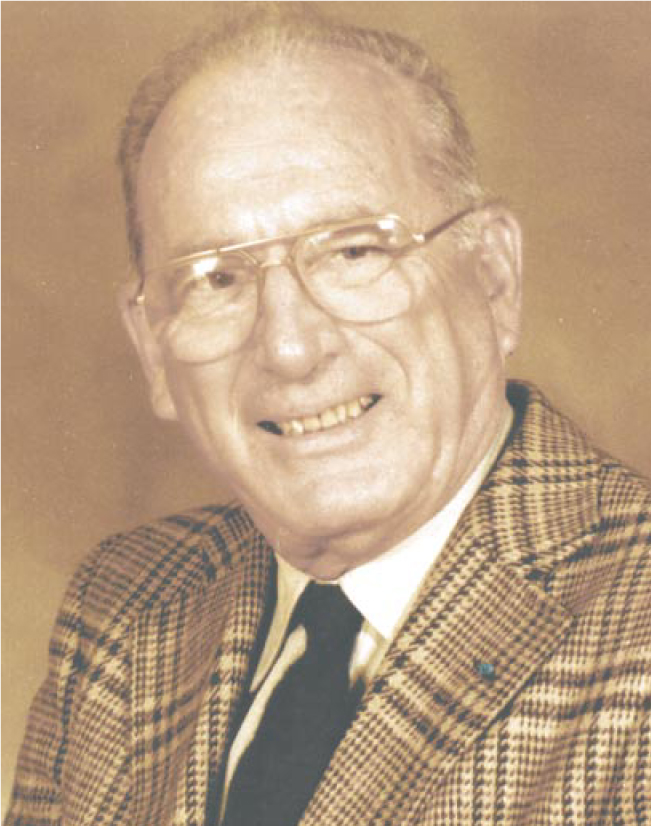
William Aaron Nierenberg
DOI: 10.1063/1.1387603
William Aaron Nierenberg, an outstanding physicist, oceanographer, government adviser, and administrator, died of cancer on 10 September 2000 at his home in La Jolla, California.
Born in New York City on 13 February 1919 to Jewish immigrants from Poland, Nierenberg worked his way from poverty to renown with creativity, energy, and enthusiasm. He obtained a BS in physics from the City College of New York in 1939; his undergraduate education included a year of study at the Sorbonne in Paris (1937–38). He obtained an MA in 1942 and a PhD in 1947, both in physics, from Columbia University. His graduate research was interrupted by work on the Manhattan Project during World War II.
After a physics instructorship at Columbia University (1946–48) and a stay at the University of Michigan as an assistant professor of physics (1948–50), Nierenberg was an associate professor of physics and then a professor of physics at the University of California, Berkeley (UCB), from 1950 to 1965.
On arrival at UCB, Nierenberg formed a group to measure spins and magnetic moments of radioactive nuclei, important parameters for understanding nuclear structure. Near the end of his career at UCB, Nierenberg had five atomic beam systems in operation on campus and at the Lawrence Berkeley National Laboratory. Short-lived radioactive nuclei were flown onto the campus by helicopter for rapid measurement. On one of his laboratory doors was the sign “Every nucleus has its moment”; on another was the following:
Lament of an Ancient Beamist
There are moments to remember.
There are moments to forget.
There are moments to publish.
There are moments to regret.
Nierenberg was responsible for determination of many more nuclear spins and moments than any other individual. He was also an outstanding teacher in theoretical and experimental physics.
Nierenberg became familiar with naval warfare problems as project director of Columbia University’s Hudson Laboratories from 1953 to 1954. There, he developed a method for sweeping for pressure mines. He also served in Paris as NATO’s assistant secretary general for scientific affairs from 1960 to 1962. Both positions brought him into contact with antisubmarine warfare (ASW). In 1965, his career took a sharp turn when he accepted the directorship of the Scripps Institution of Oceanography in La Jolla, a position in which he served for 21 years. His association with oceanography did not come out of the blue, however, considering his earlier experiences with Hudson Laboratories and NATO.
Once at Scripps, Nierenberg threw himself into ocean activities with characteristic passion and imagination. Scripps became the prime contractor for the NSF deep-sea drilling program, which is one of the major scientific advances of the 20th century. It was then common belief that hydrocarbons did not exist in the deep ocean basins. In fact, they were encountered at the very first drilling site in the Gulf of Mexico.
Before Nierenberg’s tenure, the emphasis at Scripps had been on seagoing exploration, but shipboard laboratory equipment had been somewhat neglected. Nierenberg immediately took steps to remedy that situation by establishing a computing facility in partnership with the Supercomputer Center in San Diego, California, and calling for the installation of shipboard computers. He also took a personal interest in the development of satellite capabilities, establishing in 1979 a remote-sensing satellite facility, the first in the US, on the Scripps campus.
Nierenberg was rather unconventional in his approach as director. For example, he did not (as others have) support new techniques at the expense of the traditional seagoing facilities. Furthermore, he allowed beer to be served on Scripps vessels. Overall, during his tenure as director, five vessels joined the Scripps fleet.
Scripps had begun a program of measuring carbon dioxide and other greenhouse gases under Roger Revelle’s directorship from 1951 to 1964. Nierenberg supported Revelle’s work with enthusiasm, and intervened personally when research funds for the program were threatened. In concurrent positions as a science adviser for the President’s Scientific Advisory Committee and for the White House Office of Science and Technology Policy (1969–78), he directed a study on acid rain and climate change and served on a White House panel that examined the Santa Barbara, California, oil spill of 1969.
Nierenberg did not follow conventional wisdom when it came to global warming; he vigorously said that the warming scenarios were exaggerated. He held his views so strongly that it was not easy to disagree with him. To use an analogy from ASW, Nierenberg, in exchanging information, used the principles of active rather than passive sonar, bouncing his idea off a person and observing that person’s reaction.
Nierenberg, who remained closely associated with Scripps until his death, served on many governmental advisory committees; he also was a member of the JASON group. He pursued many different activities with enthusiasm and style. Among his interests were his love of France and the French language; the play Cyrano de Bergerac by Edmond Rostand was a favorite. Nierenberg traveled widely and was especially interested in and knowledgeable about Turkey, where he helped establish an atomic beam group at the Middle East Technical University in Ankara. Nierenberg played the balalaika, carefully tended a rose garden outside the director’s office in La Jolla, and piloted his twin-engine Cessna 310.
He is missed and remembered by his many friends at UCB, at Scripps, and around the world.


More about the authors
Charles Townes, 1 University of California, Berkeley, US .
Walter Munk, 2 University of California, San Diego, US .