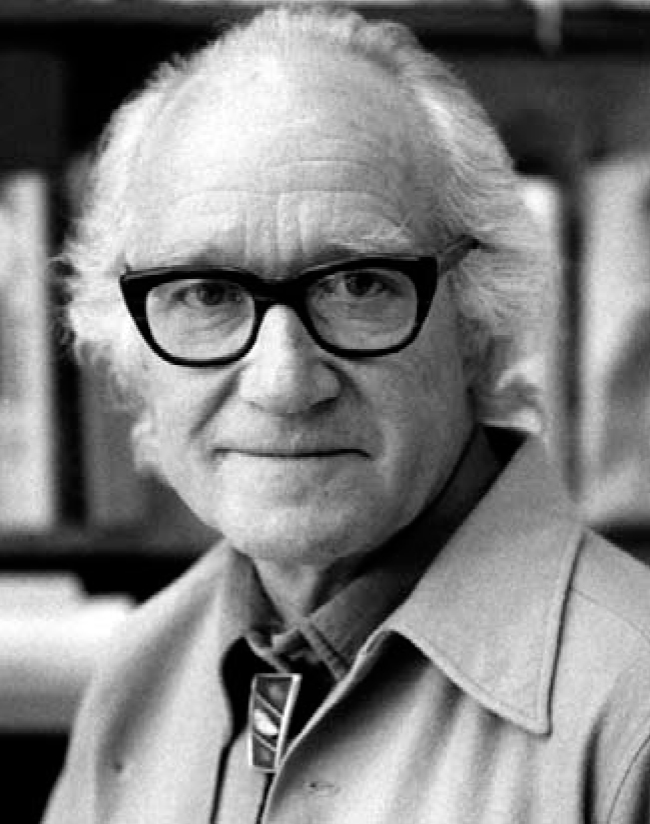
Robert Lee Walker
DOI: 10.1063/1.2117839
Robert Lee Walker, an early leader in the study of meson photoproduction, died at home in Tesuque, New Mexico, on 5 January 2005 of a heart attack.
Bob was born on 29 June 1919 in St. Louis, Missouri. After receiving his BS in physics from the University of Chicago in 1941, he joined the Manhattan Project and worked in Chicago’s Metallurgical Laboratory to help assemble Enrico Fermi’s first nuclear pile. Work on the project later took him to Los Alamos.
After World War II, Bob attended graduate school at Cornell University to study nuclear physics under Boyce McDaniel. Using a pair spectrometer they had invented in 1947, Bob and McDaniel made many measurements of nuclear reactions in which a gamma was emitted. Bob received his PhD in 1948.
He joined Caltech a year later as an assistant professor. His arrival coincided with Caltech’s plans to build an electron accelerator. During the accelerator’s planning stage, Ernest Lawrence of the University of California’s radiation laboratory called Robert Bacher at Caltech and offered the quarter-scale model of the Bevatron magnet for conversion into an electron synchrotron. Adequate space with a large overhead crane was found in Caltech’s optical shop, where the 200-inch mirror for the Hale telescope had been ground. It was an era when machines were built by the intended users, and Bob played a lead role in measuring and correcting the magnet for the initial operation at 500 MeV. A later conversion to 1500 MeV made the machine the world’s highest-energy electron synchrotron.
Bob led the physics effort and in 1953 produced the first paper on the photoproduction of π0 mesons that showed solid evidence for the giant 1232-MeV baryon resonance. The 500-MeV energy enabled the Caltech measurements to be combined with pion-scattering phase shifts measured at the cyclotrons. Bob helped join those two sets of measurements for a coherent theory of pion photoproduction. Major contributions to the measurements resulted from two large magnet spectrometers he built. During the next 16 years, Bob and his graduate students produced a series of papers that helped define the physics of pion and kaon photoproduction in the low-energy region.
In 1960, the Caltech high-energy physics group hosted a study of the feasibility of a 300-GeV proton synchrotron. Bob made key contributions to the study; in particular, he wrote the first analysis of a rapid-cycling booster synchrotron. During that very heady time, the first coherent study for such a machine was produced.
It soon became clear that the Caltech machine’s lifetime was limited. Bob supported the development of Caltech’s users’ group, which Bacher called “the physics elsewhere group.” The users’ group participated in experiments at the Bevatron and the Alternating Gradient Synchrotron at Brookhaven National Laboratory. Later, when Fermilab’s main ring was commissioned, the Caltech users’ group was joined by a small group of physicists from Lawrence Berkeley Laboratory, and the cross section for π−p charge exchange scattering was measured. The experiment used one of the first fine-grained lead scintillator calorimeters to measure the gammas from the π0. Bob made major contributions to the original invention of the Main Ring and superb contributions to the construction of its intricate system of light pipes.
A thesis adviser to 22 students who also helped and advised many others, Bob was a popular teacher in both the classroom and the lab. Many generations of students fondly remember his often droll witticisms from his quantum-mechanics or math-methods lectures. He and his colleague Jon Mathews wrote Mathematical Methods of Physics (W. A. Benjamin, 1964).
Bob retired unexpectedly in 1981 and moved to Tesuque. Building harp-sichords and keyboard instruments that are popular with Southwestern musicians became a passion. He served for a time as chairman of the Southwestern Association for Indian Arts. Bob was a great friend to many people and we all miss him.

Robert Lee Walker

More about the authors
Charles Peck, 1 California Institute of Technology, Pasadena, US .
Alvin V. Tollestrup, 2 Fermi National Accelerator Laboratory, Batavia, Illinois, US .