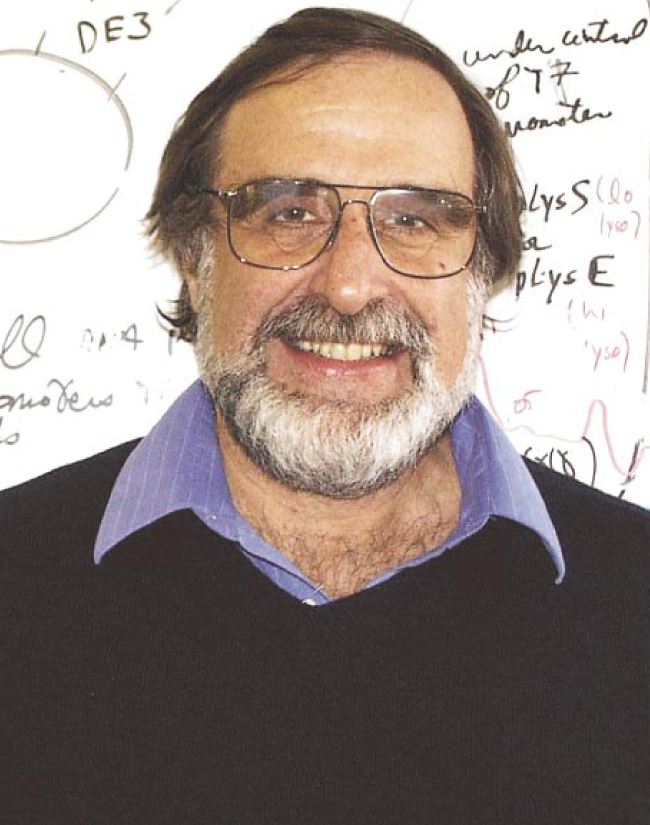
Robert Alexander Mendelson Jr
DOI: 10.1063/1.1472403
Robert Alexander Mendelson Jr was among a wave of physicists who sensed the changes in biology in the 1960s and went on to define molecular biophysics and structural biology during the latter half of the 20th century. He died in San Francisco, California, on 5 August 2001 of lung cancer.
Born in Los Angeles on 24 January 1941, Bob earned an AB in physics in 1962 from Occidental College in Los Angeles. He received his PhD in physics from the University of Iowa in 1967 under the direction of his thesis adviser Raymond T. Carpenter. For his thesis, Bob studied the excited states of nuclei.
Bob moved in 1968 to pursue postdoctoral research in nuclear physics at the University of California, Berkeley. During his period as a postdoc, he decided to bring the precise experimental and theoretical approaches of nuclear physics to the study of biological processes. Perhaps he sensed that biophysics was about to flourish in an unprecedented way.
In 1970, he moved across the Bay and joined Manuel Morales’s group at the University of California, San Francisco. Morales, one of the leaders studying the molecular physiology of muscle contraction, had the vision to see the power of physical methodologies. Bob established nanosecond techniques for following fluorescence in muscle proteins. His was probably the second nanosecond rig to work on biological macromolecules. He expanded his research to include the measurement of fluorescence in different time domains and the use of fluorescence to measure the structure and orientation of organized biological systems. Bob later (1984) attained the rank of professor of biophysics.
During the late 1970s, Bob started what was to become his major research focus: the use of small-angle solution scattering techniques to study the structure, dynamics, and organization of biological macromolecules. Initially, scientists in his laboratory used small-angle x-ray scattering to study the muscle motor protein myosin. They were among the earliest users of the synchrotron facility at the Stanford Synchrotron Radiation Laboratory. Bob then pioneered, in 1984, the application of small-angle neutron scattering to the study of complexes of muscle proteins and how the structures of the individual proteins change while executing their function. These structural studies, together with other work, form the basis for our current understanding of how protein molecular motors generate force and are regulated.
Bob loved experiments and had a passion for developing new instrumentation. He was a hands-on experimentalist until his death. As a physicist, he coupled his experimental prowess with a deep theoretical understanding, analyzing each experimental result with a battery of theoretical and computational techniques. His last work was a tour de force on determining the molecular basis for the regulation of muscle contraction by the troponin system of proteins. The work has all the hallmarks of Bob’s style of science: exquisite biochemistry, state-of-the-art neutron measurements, and computationally intense analysis. He worried about all aspects of an experiment. His laboratory worked via dialectical principles, and Bob often took a contrary position. Although sometimes infuriating to others, his contrary stance often proved crucial. He liked to undertake difficult experiments, breaking new methodological ground.
Bob did not change his lifestyle because of his diagnosis of lung cancer two years before his death. He continued to collect data and write computer programs. He died peacefully, surrounded by his wife and children. Bob will be remembered for his compassion, his integrity, and his honesty.

Robert Alexander Mendelson Jr
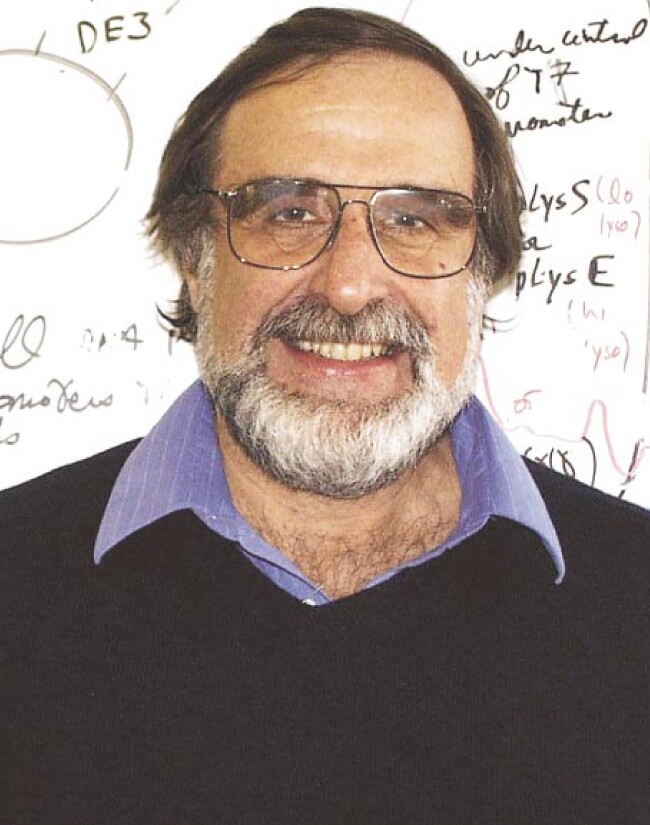
More about the authors
Paul M. G. Curmi, 1 University of New South Wales, Sydney, Australia .
Deborah Bennett Stone, 2 University of California, San Francisco, US .