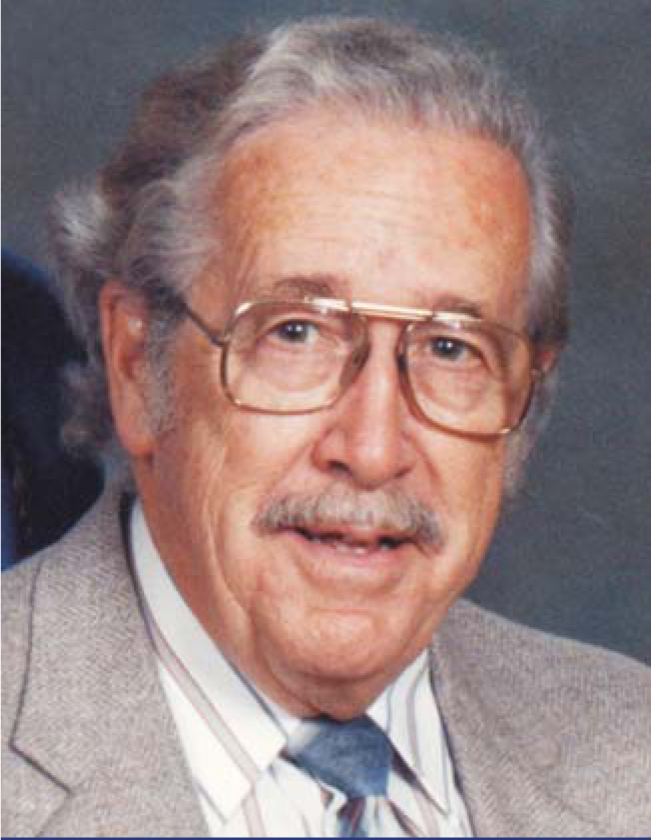
Philip Russell Wallace
DOI: 10.1063/1.2364256
Philip Russell Wallace—“Phil” to all, young and old—played a leading role after World War II in bringing Canadian theoretical physics onto the intellectual stage created by relativity and quantum mechanics. He died in Victoria, British Columbia, on 20 March 2006 of complications of advanced age.
Phil was born in Toronto on 19 April 1915. Like most physicists born around then, he found his options constrained by the Great Depression during his education and prewar career. In Canada at that time, a student of theoretical physics faced an additional hurdle; as Phil recalled, “Our teachers were scarcely aware of relativity and quantum mechanics, which were deemed to be the unique preserve of an esoteric coterie of brilliant but quite impractical minds.” Fortunately for Phil as he finished his undergraduate education, John Synge, head of the applied mathematics department at the University of Toronto, hired Einstein’s assistant Leopold Infeld, who hardly fit the Canadian teacher stereotype. Under Infeld’s direction, Phil earned his doctorate in general relativity in 1940.
Phil was a mathematics lecturer at MIT in 1942 when he was called back by Synge to join the Canadian Atomic Energy Project as one of its first members. Under the leadership of Georges Placzek, an impressive group of young theorists and mathematicians, including Ernest Courant, Robert Marshak, George Volkoff, and Carson Mark, worked on neutron diffusion and other aspects of reactor physics. One open question was how materials – especially graphite – would be affected by continuous intense neutron bombardment. That problem kindled Phil’s interest in solid-state physics, which became the central focus of his research for the rest of his career.
In 1946, Phil accepted an offer from the McGill University mathematics department and became its only associate professor of mathematical physics. He remained at McGill until his retirement in 1981. That he was in the mathematics department conformed to the Rutherford tradition: Many Canadian experimenters who were trained at Cambridge University thought of theory as applied mathematics, not physics; nevertheless, Phil and the young theoretical physicists he brought to the mathematics department taught all the graduate courses for physics PhD students and many of the courses for undergraduate physics majors. Over time that anachronistic classification faded, and in 1961 Phil and the active group he had formed joined the physics department.
During a visit to England not long after World War II, Phil wrote a seminal paper in 1947 on the band structure of graphite, a topic to which he was to return often. His research, and that of his many students, was also devoted to a wide range of condensed matter problems, such as various properties of semiconductors, positron annihilation in liquids and solids, and numerous magnetic phenomena. The quality of Phil’s research was recognized by his colleagues with his election to the Royal Society of Canada and the Indian Academy of Sciences.
Phil was a superb lecturer and demanding instructor. His undergraduate course on mathematical physics was inspirational and allowed many students to see for the first time what a disciplined and well-trained mind could accomplish by applying mathematics to real problems. No wonder that so many of them saw him as a role model and devoted their lives to his craft. And no wonder that many people encouraged him to publish his lectures, which he finally did in 1972 as Mathematical Analysis of Physical Problems (Holt, Rinehart, and Winston).
His classroom performance was just one facet of his persona as an outstanding teacher. He mentored more than 30 graduate students, more than one-third of them to the PhD degree. He was always eager to discuss any problems that students and colleagues were struggling with, to share his broad command of physics, to relate his experiences through a large store of anecdotes, and to engage in discussions on a wide range of topics—especially politics. He was among the founders of the Canadian Association of Physicists in the postwar years. His curiosity about what physics had to say as it evolved went far beyond the areas in which he had actually conducted research.
That theoretical physics in Canada is now conducted at the cutting edge owes much to Phil’s leadership and devotion. Those who had the good fortune to be among his students and colleagues will always remember him with affection.

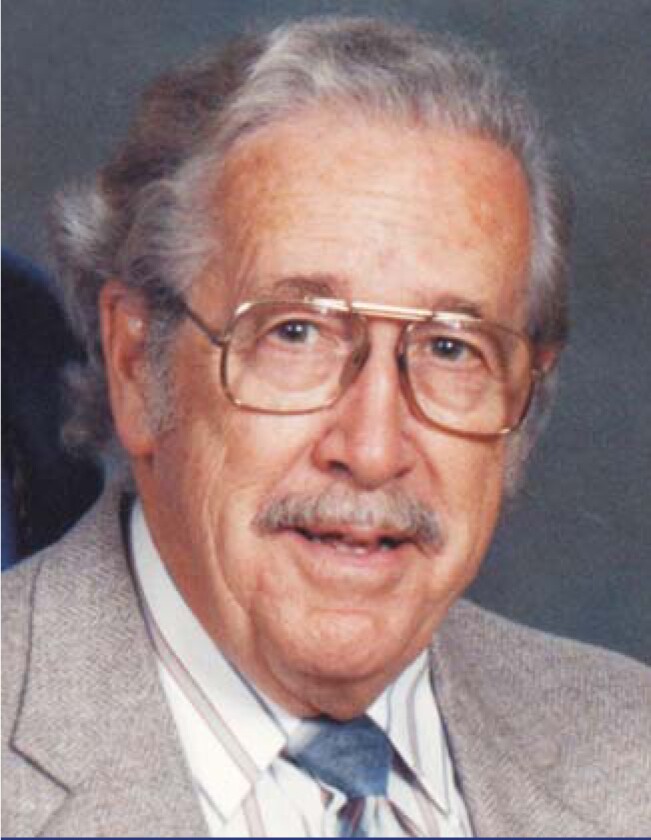
Philip Russell Wallace
More about the authors
Kurt Gottfried, 1 Cornell University, Ithaca, New York, US .
John David Jackson, 2 University of California, Berkeley, US .
Harry C. S. Lam, 3 McGill University, Montreal, Quebec.