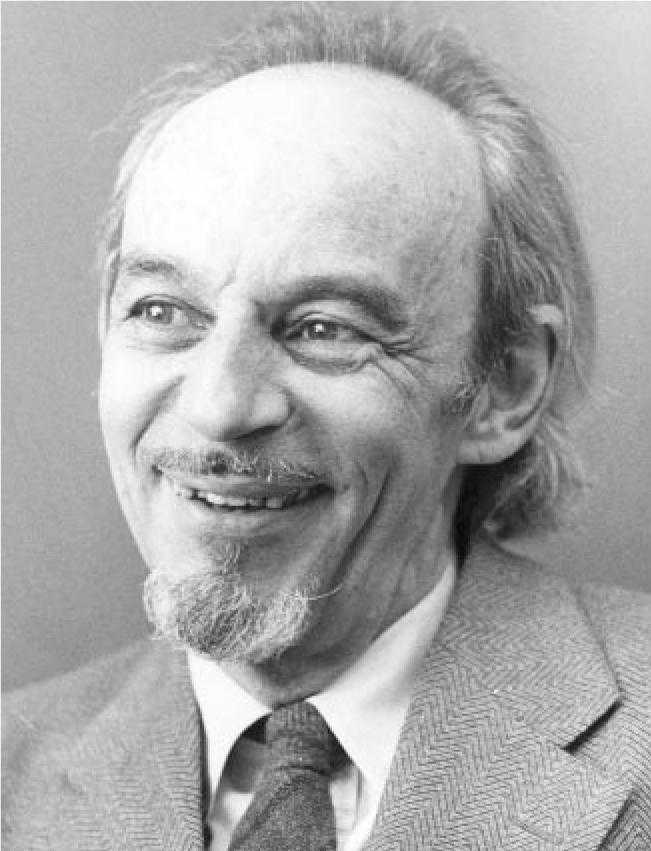
Martin Deutsch
DOI: 10.1063/1.1629014
Martin Deutsch, who pioneered the use of organic scintillators in the US and established the existence of positronium, died on 16 August 2002 of cardiac arrest at his home in Cambridge, Massachusetts.
Deutsch was born in Vienna, Austria, on 29 January 1917. When he was 17, he went to Zürich, Switzerland, and attended a secondary school there. He graduated and subsequently completed one semester at the Swiss Federal Institute of Technology. In 1935, he accompanied his mother to the US, where he later became an American citizen. His parents eventually settled in Cambridge and Deutsch enrolled at MIT, where he received his BS in physics in 1939 and his PhD in physics in 1941. In only 6 years, he had completed a course of study that customarily takes 11 years. His doctoral thesis, prepared under the guidance of Robley D. Evans, was entitled “A Study of Nuclear Radiations by Means of a Magnetic Lens Beta-Ray Spectrometer.”
Deutsch began his career at MIT in 1941 as an instructor of physics. He joined the Manhattan Project and worked at Los Alamos beginning in 1943. Three years later, he returned to MIT, where he spent the remainder of his professional life.
The next several years were notable for Deutsch’s achievements. He was the physicist who first realized the importance of Hartmut Kallmann’s 1947 discovery of organic scintillators and introduced their use in the US. Deutsch used them as a magic wand, performing nuclear spectroscopy experiments that beforehand would have been almost impossible. Thus he was the first to measure the angular correlation of two successive gamma rays. In 1951, Deutsch discovered the “ultimate atom”—positronium—which consists of an electron bound to a positron. In the next couple of years, he and his collaborators measured the most important properties of positronium’s ground state, namely its hyperfine splitting (the singlet-triplet energy difference) and the triplet state’s lifetime. Hyperfine splitting, which is about twice as large as one would conclude from naive estimates, is one of the most striking manifestations of quantum electrodynamics. Through this outburst of creativity, Deutsch dominated the field at that time. Many decades passed before anything substantially new was learned about positronium.
Around 1960, Deutsch switched to particle physics. Among the many topics he investigated were the Compton effect of the proton (at Cornell University) and the excited states of lambda hypernuclei (at Brookhaven National Laboratory). Although those experiments were successful, the glories of his positronium days were never recaptured. Perhaps this field did not quite correspond to his personal style, as he was used to doing everything down to the last detail with his own hands. He became a full professor at MIT in 1953, and headed MIT’s Laboratory for Nuclear Science from 1973 to 1979. Following his retirement from MIT in 1987, he helped to prepare and set up the Borexino solar neutrino experiment at Italy’s Gran Sasso National Laboratory.
Deutsch was a great teacher, both in the classroom and as a thesis adviser. Among his many students was Nobel laureate Henry Kendall (see his obituary in Physics Today, February 2000, page 70 ). Deutsch also was a sharp debater who mixed incisive criticism with Viennese charm. While he was totally committed to physics, he enjoyed gardening and cooking (especially stir-frying).
Those who knew him will cherish their souvenirs, and those whom he considered his friends will always be proud of that.

MARGO FOOT

More about the authors
Valentine L. Telegdi, California Institute of Technology, Pasadena, California CERN, Geneva, Switzerland .